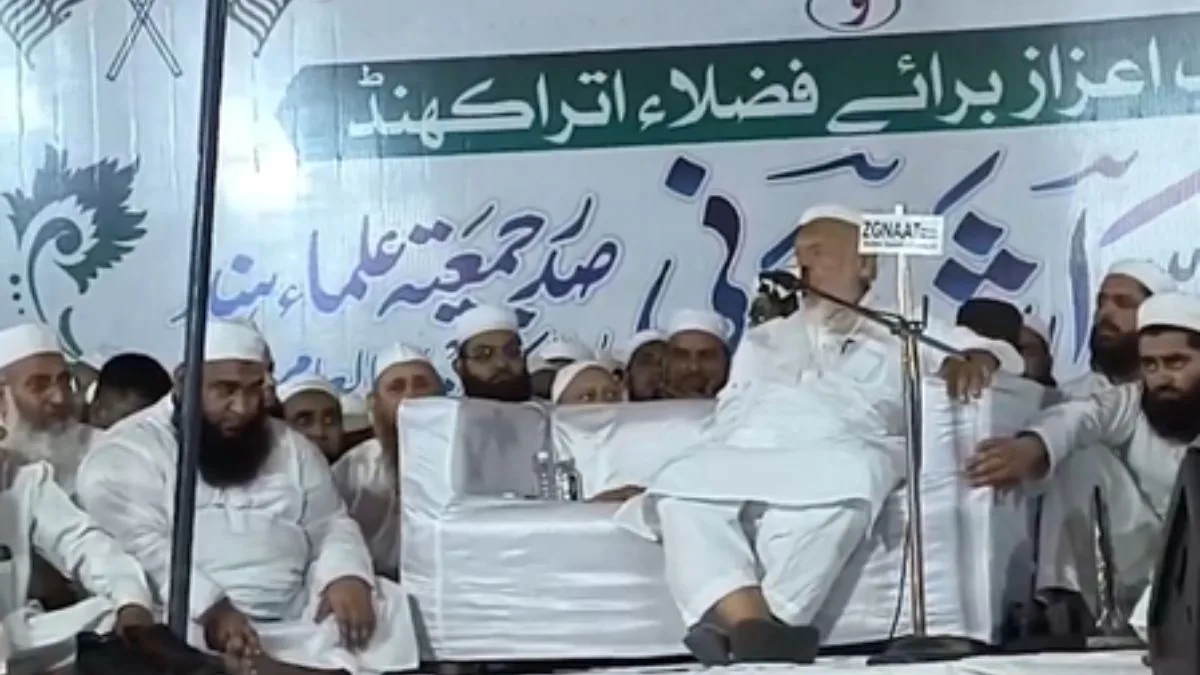
Remarks by Jamiat Ulema-e-Hind president Maulana Syed Arshad Madani on jihad, religious freedom and the condition of Muslims in India drew attention during a community meeting in Uttarakhand’s Haridwar district on Tuesday.
Addressing the Uttarakhand state executive meeting in the Piran Kaliyar area, Madani spoke about the role of Muslims in India’s freedom movement and argued that the concept of jihad had historically been associated with resisting oppression and slavery.
Advertisement
The gathering was attended by ulema, huffaz and members of the Muslim community from different parts of the state.
Speaking as the chief guest, Madani referred to the period of British rule and said, “In 1803, when our country was under slavery, the message of jihad was given for the country’s independence. To free the country, that is, to remove the chains of slavery from the neck, it is every Muslim’s duty to do jihad. This is a teaching that has come from madrasas, and whoever does not know this is ignorant.”
During his speech, the Jamiat chief also alleged that mosques were being demolished and claimed successive governments after Independence had harmed the interests of Muslims.
Madani said Muslims had made substantial contributions to India’s freedom struggle and national development. He added that the country’s future depended on mutual trust, peace and coexistence among communities.
Calls for harmony and rejection of hatred
The Jamiat leader questioned what Muslims had contributed to the nation and what they had received in return. He urged people to move away from hatred and embrace a politics centred on love and understanding.
According to him, compassion and goodwill are essential for maintaining national unity. He said those who live peacefully with others remain loyal to the country and suggested that the absence of such values weakens that bond.
Madani also referred to relief work undertaken by Jamiat Ulema-e-Hind during floods in West Bengal. He said food assistance was provided without discrimination to people from different religious backgrounds.
Citing incidents of violence in Delhi, he claimed Muslims had helped save lives and extended assistance without asking about anyone’s faith. He questioned whether such people could be labelled traitors.
The meeting concluded with discussions on education, community welfare and social unity. Religious leaders present at the event also appealed for peace and coexistence among different sections of society.
(With IANS inputs)