FTII to host admission seminar in Dehradun
The first stage in this selection process is the All India level written examination called Joint Entrance Test which would be held on February 24, 2019.
When a daughter decides to chronicle her father’s life, you would expect the biography to be hagiographical.




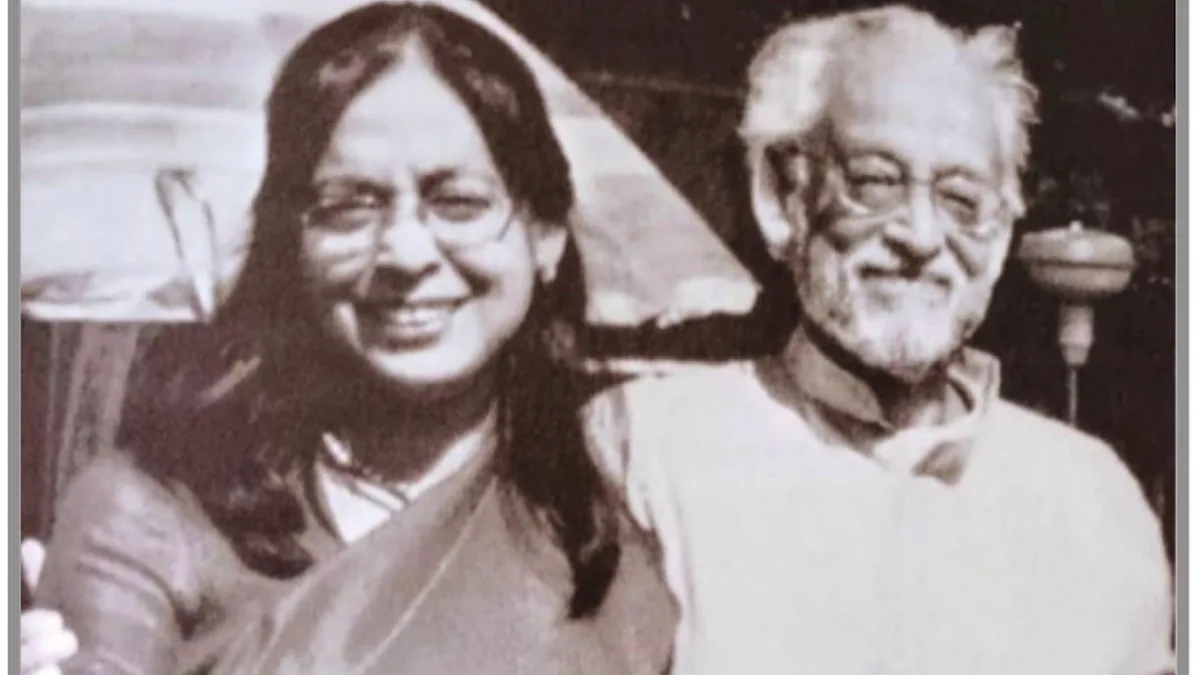
Photo:SNS
When a daughter decides to chronicle her father’s life, you would expect the biography to be hagiographical. Radha Chadha’s account of her father’s life does not fall into this category. The reason is quite simple. An unembellished narration of the exceptional life Jagat Murari led would reveal his immense contribution to Indian cinema; Chadha would have had no need to garnish facts.
But she had unique access and has used it effectively to tell readers just why Murari was the “maker of filmmakers”. She was helped by the fact that Murari himself seems to have been a careful record-keeper who left a treasure in the form of documents and photographs that tell a substantial part of the story. As Principal of the Film Institute of India (which later became the Film and Television Institute of India) almost from its inception, Murari shaped the lives and careers of people who were to achieve iconic status.
Advertisement
Among them were Adoor Gopalakrishnan, Shabana Azmi, Jaya Bachchan, Mani Kaul, Shatrughan Sinha, Ketan Mehta, Jahnu Baruah, Vidhu Vinod Chopra, Naseeruddin Shah, Tom Alter, Asrani, Navin Nischol, Danny Denzongpa, Raza Murad, Om Puri, Rakesh Bedi, Mithun Chakraborty, Saeed Mirza and Subhash Ghai. The institute also turned out national award winning cinematographers such as K K Mahajan, Naresh Bedi and Balu Mahendra. The birth of the institute happened at a time when Indian cinema was attempting to find its feet.
Advertisement
After a decade and more of post-Independence kitsch, interspersed with a few – but very few – gems, cinema was ready to usher in a new phase – the Indian New Wave, as it came to be called, and make a gentle turn left from escapism to realism. While that may not have been its objective, the Institute, guided by its first lot of teachers, drawn from India and overseas, proved to be the catalyst for this transformation. And for the most significant years of its existence, it had Murari at the helm, not just as a creative mentor but as a father-figure to whom a young and impressionablebunch of talents could turn.
Murari was himself an award-winning documentary film maker who had trained in America with Orson Welles, Lewis Milestone and William Witney, and was deeply influenced by the experience. He came back with learnings that helped him teach his flock. For instance, the production board of Welles’ Macbeth, a project on which Murari assisted, shows how – and why – the master director managed to complete the project in 21 shooting days. Later, as Chadha recounts, Murari would use the Production Board method to track the progress of films he made for Films Division, where he was to find a career, and to sensitize his students at the Film Institute to the need for discipline.
But before returning to India from America, Murari stopped over in Britain which excelled in the production of documentary films, and studied the work of masters, an exposure that would help him when he was offered the position of Deputy Director in the Films Division in 1948. A little more than a decade as a documentary film-maker with Films Division proved instructive. While government-produced films were expected to convey jingoistic messages endorsed by the day’s rulers, Murari achieved cinematic excellence as he set out “filming the soul of India” through his documentaries.
As Chadha notes, despite tight budgets, and the need to please the politicians and bureaucrats of the day, Films Division managed to produce several international award-winning documentaries. Murari was initially selected for the post of Professor of Direction at the FII, headed by actor Gajanan Jagirdar who had been invited to take up the assignment. However, rules dictated that Jagirdar go through the rigors of a Government selection process. So the post of Principal was advertised, Murari applied and impressed the interview panel so much that he was asked, soon after his appointment as Professor to take up the role of Vice Principal and later appointed Principal.
Besides classes conducted by the full-time faculty, Murari managed to rope in some of Indian cinema’s best known personalities to come as guest lecturers; among them Ritwik Ghatak, Salil Chaudhury, Hrishikesh Mukherjee, Vijay Bhatt, Minoo Katrak, JBH Wadia, KA Abbas, Marie Seton, Ismail Merchant, James Ivory, Balwant Gargi and Balraj Sahni. The lectures covered topics as diverse as acting, direction, cinematography, music, film appreciation, screenplay writing and sound recording. By 1964, the Institute was finding its feet even as it faced considerable challenges but the appointment of Indira Gandhi as the Minister for Information and Broadcasting gave Murari’s efforts a boost.
Over the course of the next few years, the Institute’s reputation grew. Murari, who had been impressed by Ghatak’s lecture stints, decided to involve the mercurial film maker in a larger teaching role, despite the latter’s propensity to drink for, as he noted, “in between his drinking bouts, there were moments when he came out with gems of creative inspiration which thrilled the students.” This stint though lasted only four months. The biography recounts the challenges Murari faced in getting his students to be accepted by mainstream cinema, his role in building the National Film Archives, the inclusion of television in the teaching programme, the strike that almost caused the closure of the Institute, and finally his return to the Films Division in 1972.
By 1976, Murari had completed another important assignment with aplomb – to set up the Directorate of Film Festivals, and consolidate all festival-related activity under the directorate – until a twist of events the author calls Kafkaesque, he was sent back to the Film and Television Institute. He stepped into an institution with “a highly frustrated student community, an out-of-touch faculty that couldn’t meet student expectations…indiscipline on all fronts,” one that had seen its course and direction altered in the years he had been away.
The second stint was shorter, far more tumultuous, and ended in 1979. The importance of Chadha’s biography lies in the fact that it just does not tell the story of a man’s life, but chronicles the path Indian film-making took after Independence. Serious students of cinema and film history will find in it an invaluable resource. Beyond filmmaking, it describes the naiveté of a man who saw only the good in others, and how that sometimes proved to be his failing.
(The reviewer is Editor, The Statesman.)
Advertisement