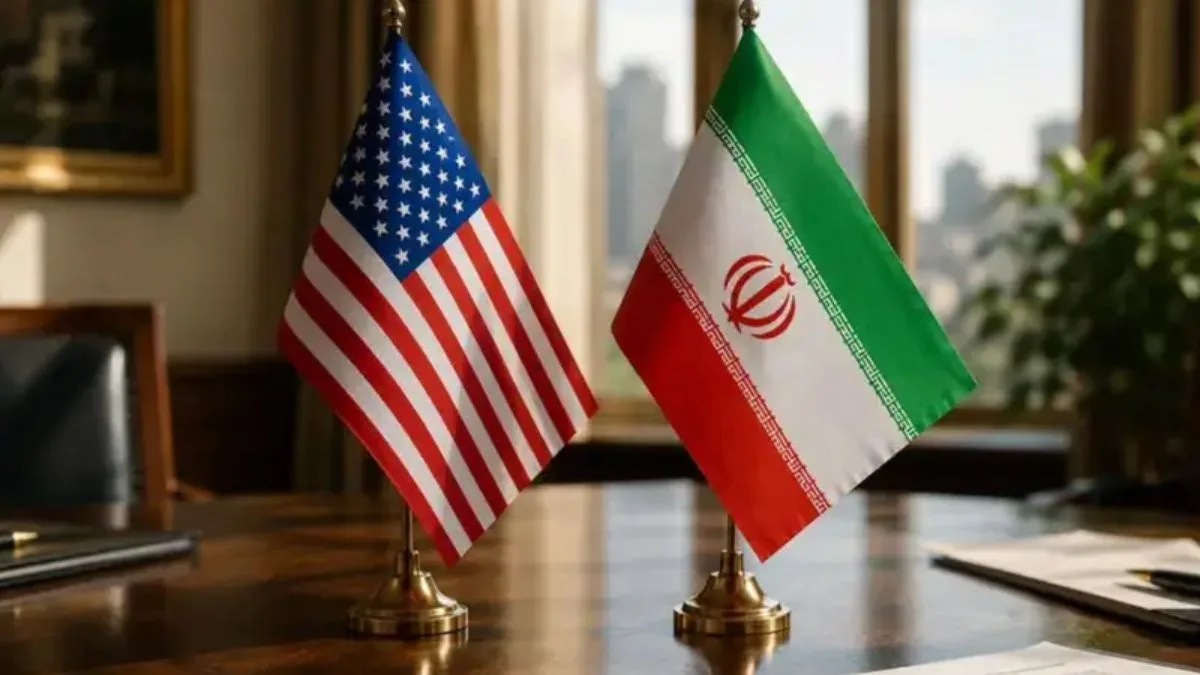
Negotiators from the US and Iran reached Switzerland on Saturday to advance a recently signed ceasefire agreement, even as a dispute over the Strait of Hormuz threatened to complicate the talks before they began.
Iran declares the Strait shut
Iran’s Islamic Revolutionary Guard Corps declared the strait closed on Saturday, with state-controlled Iranian media reporting the IRGC Navy warned all vessels to refrain from any movement in the Strait of Hormuz until further notice.
Advertisement
Iran’s Khatam-al Anbiya Central Headquarters said in a statement carried by state TV that the closure was a response to what it called a breach of promise by the enemy, and warned that further steps would follow if the situation continued.
Tehran cited what it described as continued Israeli military operations in Lebanon. Iran said the closure was directly linked to violations of the first clause of the 14-point memorandum of understanding signed earlier in the week, which called for the war to stop on all fronts, including Lebanon.
US pushes back hard
US Central Command countered shortly after Iran’s announcement, stating that Iran does not control the Strait of Hormuz and that traffic was continuing to flow. CENTCOM spokesperson Captain Tim Hawkins said US forces were monitoring the situation to ensure this remained the case, adding that the US military had not tracked any movement from Iran to close the strait.
US Central Command said 55 merchant ships transited the strait on Saturday, carrying more than 17 million barrels of oil for global markets, and confirmed that US forces would ensure commercial traffic continued.
US Vice President JD Vance said he had seen no evidence that the strait was closed. He suggested that Iran may have been directing vessels away from naval mines, noting the memorandum includes a 30-day period for mine-clearing operations.
The MOU and what it says
The US and Iran announced an agreement to end the war on June 17. The deal requires Washington, Tehran, and their allies to declare an immediate and permanent termination of military operations on all fronts, including Lebanon.
The agreement also provides for the reopening of the Strait of Hormuz and the launch of a 60-day negotiation period on broader issues, including Tehran’s nuclear program.
Neither Israel nor Hezbollah were parties to the MOU. Iran’s position has been that since Trump signed the MOU, if he cannot ensure the ceasefire in Lebanon, then the rest of the agreement is in question.
Lebanon remains the flashpoint
Fighting continued between Hezbollah and Israel overnight Saturday, with Hezbollah launching dozens of projectiles and Israel carrying out strikes that killed more than a dozen people.
Talks originally scheduled for Friday in Switzerland were postponed because of the fighting in Lebanon. One of Pakistan’s top mediators flew to Tehran to persuade Iranian negotiators to reconsider and travel to Switzerland.
Delegations reach, talks set for Sunday
A high-level Iranian team arrived in Switzerland, led by chief negotiator and parliament speaker Mohammad Bagher Ghalibaf. Foreign Minister Abbas Araghchi also traveled as part of the delegation.
Vance departed Washington late Saturday, telling reporters the negotiations would likely span a couple of days. He said he hoped to make progress on Iran’s nuclear program and the Lebanon ceasefire.
Pakistan confirmed the talks would take place in the Swiss resort town of Burgenstock, with Pakistani and Qatari mediators participating alongside the US and Iranian delegations. Pakistani Prime Minister Shehbaz Sharif and Army Chief Field Marshal Syed Asim Munir also traveled to Switzerland for the discussions.
Trump raises stakes on tolls
Trump posted on social media that there would be no tolls in the Strait of Hormuz for 60 days during the ceasefire period, but left open the possibility of the US imposing charges for passage if a final deal was not completed within that window.
The MOU stipulates that the 60-day period can be extended if both sides agree. The IAEA chief Rafael Grossi is also expected to participate in the Switzerland talks, overseeing discussions on Iran’s enriched uranium stockpile and inspection protocols.