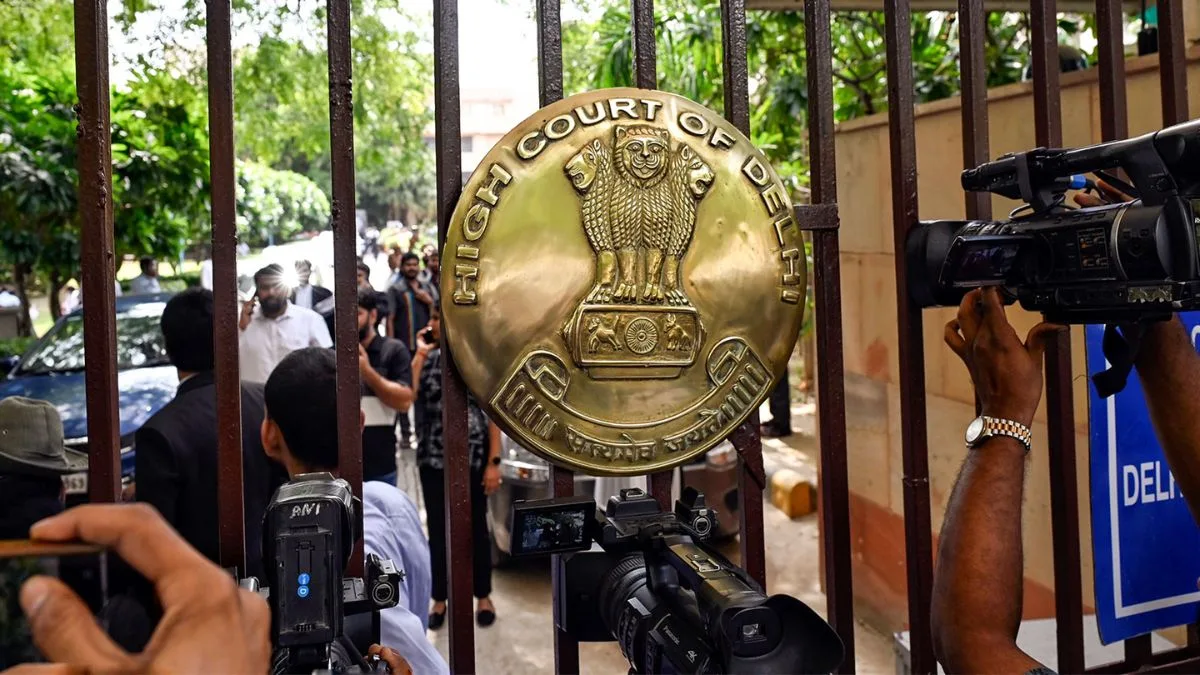
The Supreme Court has moved on front foot into the vexing case of waste management. Its directions last month reflect the growing impatience about heaps of waste which scar India’s landscape, affect the health of citizens and dent its developmental aspirations. Waste menace persists despite well directed public missions, more eminently the Swachh Bharat Mission (SBM) specifically working to clean up urban and rural habitats for more than a decade now.
It’s an irony that India’s top tech and financial centres are dirtier than others, as evidenced in annual Swachh Survekshans of the government and corroborated by global studies. Apex court’s unprecedented drafting of action and accountability in this domain, ordinarily an executive mandate, should be grudged by none. The Court has called out concerned union ministries, top officials in states and union territories, pollution control boards and importantly the district collectors, and purposefully named each office, leaving no scope for passing the buck, that has been the bane of waste handling in the country.
Advertisement
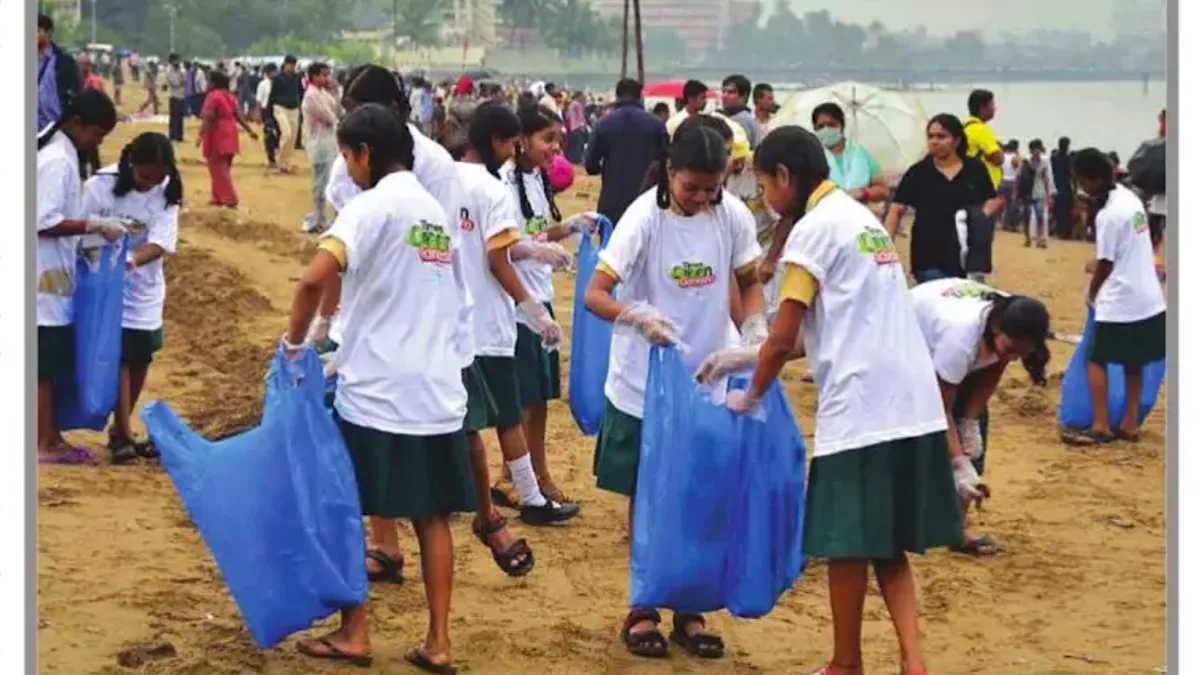
The Supreme Court ordered special efforts at places of tourism and pilgrimage including beaches, where footfalls are heavy and demand for sanitation more critical. It has underlined management of plastic waste and remediation of legacy waste within strict timelines. New Framework The Court has not come up with any inventions but sought to optimize delivery by lending its full weight behind the new Solid Waste Management Rules, 2026 which became effective from 1st April. Compared to the regime of 2016, the new rules stoutly grapple with gap areas like waste segregation and extended producers’ responsibility and seek to integrate waste management with principles of circular economy.
Four buckets of segregation are now mandatory: wet, dry, sanitary and special care waste. Bulk waste generators are more clearly defined and made strictly accountable. Remediation of legacy waste is to follow a time bound plan and must include prevention of further landfilling of solid waste. Rules provide for those polluting the environment to compensate. The SBM Push Water and sanitation remain firmly allocated business of states, with most functions taken up by local bodies. Centrally sponsored schemes like Swachh Bharat Mission are recognition of sanitation as a national priority and that the states do need active support.
Such initiatives, however ebullient, do not substitute the primary responsibility of state and sub-state formations. SBM, commencing from 2014, has pursued two broad goals: Open Defecation Free (ODF) India and clean habitats. The first was achieved within the tight timelines of 2019, though efforts to sustain the ODF status will have to be perennial. The second one, particularly the quest for garbage free cities, is dependent on the complex science of waste management including higher order waste processing and elimination of legacy dumpsites.
To the credit of the Mission, out of 2477 dumpsites countrywide, 1236 have already been remediated, clearing over 17 crore tonnes of waste, 65% of the total accumulation. With almost 100% door to door collection of waste and 89% source segregation in urban India, a distance has been covered. An increasing number of material recovery facilities, waste to compost plants, and sewage treatment plants are in pipeline. Cascading Onus By invoking the Environment Protection Act, 1986, direct responsibility for enforcement of the new SWM rules is henceforth vested in around 800 district collectors, who wield both authority and resources. A majority of the 4800 Urban Local Bodies (ULBs) often fall short of the capacity for execution of their sanitation charge.
Even resourceful local bodies in the National Capital Region (NCR) are found stuck in getting day today garbage clearance done. Displaying a no-nonsense intent, the Supreme Court has asked for time bound action at all levels and across the whole process: manpower, budget, technology, data collection, capacity building, inspection and reporting systems. State governments are required to make performance based disbursement of grants to local bodies. Bulk generators of solid waste like hotels, malls, residential societies and institutions can face retribution in terms of stoppage of water and electricity for violating SWM rules.
Optimising the Market Accountability of public authorities alone will not fully address water and sanitation issues in the constantly rising number of cities. Private resources and entrepreneurship need to flow in. The 1 lakh crore Urban Challenge Fund recently operationalized by the government could catalyse necessary market linkage. Expectation is to generate four times of public funding in infrastructure in Tier-II & III Cities in competition mode. ULBs can take up large scale projects of water and sanitation through municipal bonds, and other modes of private participation. Their dependence on central schemes like SBM, AMRUT, and Smart Cities Mission could moderate down and need to. The scale of the task entails a technological and entrepreneurial approach to actualize resource recovery from waste and help integration with the circular economy.
Manual and informal action may not suffice. Models of circularity The road to circularity in waste management is not unknown. There are localized models informing of the possibilities. Navi Mumbai Municipal Corporation (NMMC) has done pioneering work in transforming textile waste to livelihood for women who make upcycled products through specialized recovery and reuse. The model provides a way to deal with nearly 7.8 million metric tonnes of post-consumer textile waste generated in the country in a year, instead of these loading on landfills.
Gujarat has backed up about 200 institutional biogas plants over the last 5 years with high subsidies. When LPG supply has been hit owing to global situation, everyday cooking fuel comes from inhouse plants by making use of dung from cowsheds, supplemented by kitchen waste and agricultural residue, all in the vicinity. Urgent Job The concern about urban waste is real. Waste is not likely to abate any time soon; judicious consumption is likely to remain only a utopian pursuit. The present level of 1.62 Lakh tonnes per day of municipal solid waste will only grow. Despite the imperious achievements of SBM, especially in dealing with the scourge of open defecation, a lot remains to be done before Indian cities and villages can claim to be clean.
A sense of urgency is palpable. Prime Minister Modi took up SBM 2.0 in his high profile PRAGATI (Pro-Active Governance and Timely Implementation) review last month, typically designed for speeding up high cost infrastructure projects. This was preceded by a two day national review by Ministers and officials from across the country. Piloting in cities is moving forward – with scientific waste management, resource retrieval, energy self-reliance, and environmental sustainability going hand in hand. But speed depends on higher state activism and even higher community response. Every bit of waste must be collected and handled, not left alone or dumped. Without strong all round ownership and focused implementation like during the first phase of SBM, even the Court’s oversight might not usher in a truly clean India too soon.
THE WRITER IS THE FORMER DIRECTOR GENERAL, SWACHH BHARAT MISSION AND A PUBLIC POLICY COMMENTATOR (VIEWS EXPRESSED ARE PERSONAL)