India mounted a strong counterattack against Pakistan at the United Nations Human Rights Council (UNHRC), rejecting Islamabad’s allegations on Jammu and Kashmir, questioning its position on the Indus Waters Treaty and accusing it of continuing to support terrorism.
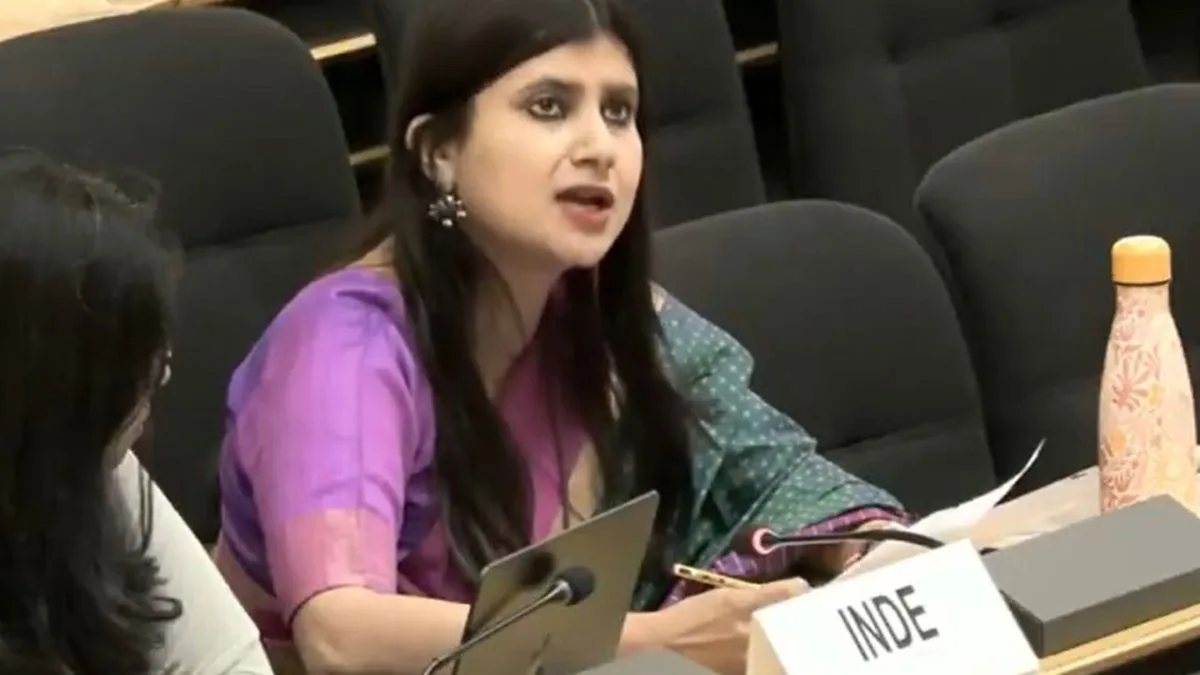
Exercising India’s right of reply during the 62nd Session of the UNHRC in Geneva, First Secretary at India’s Permanent Mission to the United Nations Anupama Singh said Pakistan could not expect the advantages of cooperation under the Indus Waters Treaty while continuing to sponsor terrorism. She also dismissed references to Jammu and Kashmir made by both Pakistan and the Organisation of Islamic Cooperation (OIC).
Advertisement
“Our position on the Indus Water Treaty is well known. It defies logic that a state which exports terror as an instrument of policy continues to demand the privileges of cooperation predicated on goodwill and friendship,” Singh said.
She argued that the 1960 treaty no longer reflected present-day realities.
“It is equally undeniable that the treaty is now outdated. No technical arrangement can remain frozen in time while the world around it is transformed. A treaty negotiated in 1960 cannot be treated as a perpetual entitlement which is insulated from accountability, detached from present-day realities and untouched by the profound changes of the past six decades,” she said.
India rejects Pakistan and OIC references on Jammu and Kashmir
Responding to remarks made by Pakistan and the OIC, Singh said India categorically rejected what she described as “baseless and malicious allegations”.
“Pakistan’s propaganda is designed to mask its domestic failures and support for terrorism. Its misuse of the OIC Coordinator’s role only reinforces this deception,” she said.
Reiterating New Delhi’s position, Singh said Jammu and Kashmir remained an inseparable part of India.
“Jammu and Kashmir was, is and will always remain an integral and inalienable part of India. The only unresolved issue is Pakistan’s illegal occupation of Indian territories and their return,” she said.
India raises concerns over developments in PoJK
The Indian diplomat also referred to recent developments in Pakistan-occupied Jammu and Kashmir (PoJK), including unrest in Rawalakot.
“The ongoing tragedy in Rawalakot, the killing of hundreds of civilians and the brutal crackdown across Pakistan-occupied Jammu and Kashmir are the predictable outcome of a system built on forcible occupation and sustained through repression,” Singh said.
Her remarks came after reports of a June 14 security operation in Rawalakot. According to the Jammu Kashmir Joint Awami Action Committee (JKJAAC), security personnel moved to disperse protesters staging a sit-in at the Eidgah site. The group alleged that at least two people were killed and several others injured during the operation.
JKJAAC also alleged communication disruptions and restrictions on the movement of food and essential supplies after the action.
‘Frankenstein state’ remark targets Pakistan’s terror record
In one of her sharpest comments, Singh accused Pakistan of nurturing terrorism while simultaneously portraying itself as a victim.
“This is the country where the sitting Defence Minister boasts of hosting, training and deploying terrorists as a state policy, and yet Pakistan calls itself a victim of terrorism, indeed a paradox which only Pakistan could sustain. It is a living example of a Frankenstein state, which is shocked when its own monster bites back,” she said.
Singh also said Pakistan would be better served by focusing on its own internal challenges rather than making claims against India.
“Instead of coveting Indian territories, Pakistan would serve itself and its people far better by putting its own house in order. Its seasonal theatrics in this council have long outlived any novelty,” she added.
India had earlier placed the Indus Waters Treaty in abeyance following the Pahalgam terror attack that killed 26 people. New Delhi said the arrangement would remain suspended until Pakistan “credibly and irrevocably abjures its support for cross-border terrorism.”