Amidst powder kegs, will peace hold in West Asia?
It is after more than 100 days that both President Donald Trump and Iran have announced a peace deal, much to the world’s relief.
Trump said Iran had agreed to never possess a nuclear weapon, but Israel and regional experts warned the US-Iran MoU may not end the security crisis.





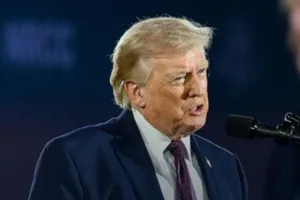
US President Donald Trump (File Photo: X/@WhiteHouse)
A new US-Iran understanding has opened a diplomatic path in West Asia, but the deal is already facing sharp scrutiny from Israel and security experts over whether it can actually stop Tehran from rebuilding nuclear and missile capabilities.
US President Donald Trump said Iran had agreed that it would “never” possess a nuclear weapon. He also rejected reports that Washington would pay Tehran USD 300 million under the agreement, calling them “fake news”.
Advertisement
“Iran has agreed to never have a Nuclear Weapon! Also, the story that the US is paying Iran 300 million Dollars is Fake News, put out by the Dumocrats!!!” Trump wrote on Truth Social.
Advertisement
The remarks came as senior US administration officials said Trump and Vice President JD Vance had signed a memorandum of understanding with Iran. The document sets out a framework for future engagement between Washington and Tehran.
According to US officials, the agreement links sanctions relief and economic engagement to Iran’s cooperation on nuclear inspections, verification measures and commitments against supporting extremism and terrorism in the region.
“The more that the Iranians are willing to work with us on their nuclear program, on verifying that they’re not building a nuclear weapon, on not funding radicalism and terrorism in the region, the more that they’re going to be welcomed into the world economy through a combination of sanctions relief and other economic measures,” senior administration officials said.
Officials described the arrangement as performance-based. They said Iran would receive benefits only if it complied with the terms outlined in the memorandum.
Vice President Vance also said no financial concession had been made to Tehran after the digital signing.
“We already signed the deal digitally yesterday, and there’s been no money released, and that won’t change,” Vance told ABC’s Good Morning America.
He said sanctions relief would follow only if Iran acted on enriched uranium stockpiles and accepted the verification regime sought by Washington.
“If we see the Iranians taking action to eliminate their stockpile of enriched material and allow the verification regime that we need to see, sanctions relief will follow,” Vance said.
Trump has said the full text of the memorandum will be released publicly. Speaking during a bilateral meeting with French President Emmanuel Macron on the sidelines of the G7 Summit in Evian, he described it as a “very powerful document”.
“This is a very powerful document, and I want it to be released. So, probably pretty soon. I would say sometime after Friday,” Trump said.
A formal signing ceremony is expected in Geneva later this week. Switzerland is coordinating with the United States, Iran, Pakistan and Qatar to facilitate the process.
Switzerland has welcomed the MoU as a step toward de-escalation and regional stability in the Near and Middle East.
Iranian President Masoud Pezeshkian also described the memorandum as the result of months of dialogue and diplomatic follow-up.
“The memorandum of understanding that has been drafted is the result of months of dialogue and persistent follow-ups in this regard, and if all its provisions are properly implemented, it can be considered a document of pride for the country,” Pezeshkian wrote on X.
French President Emmanuel Macron welcomed the agreement during his meeting with Trump and said it was important for peace and the global economy.
“I think yesterday what was signed was a very important Agreement – Peace Deal with Iran. It is a very important one because, first, it will fix the nuclear issue. It is a very important matter for peace for the whole world,” Macron said.
Israel, however, has made it clear that it does not consider the agreement a guarantee against future Iranian nuclear activity.
Prime Minister Benjamin Netanyahu said Iran would not be allowed to acquire nuclear weapons, with or without a deal.
“For decades, I have been fighting Iran’s efforts to acquire nuclear weapons. I can define this as my life’s mission. I have upheld it until now, and I will uphold it in the future as well,” Netanyahu said.
“With or without a deal, Iran will not have nuclear weapons. Not today, and not tomorrow. As long as I am Prime Minister of Israel, this will not happen,” he added.
Israel’s National Security Minister Itamar Ben-Gvir also said the agreement does not bind Israel.
“Trump’s agreement does not bind us. Israel is not subject to the United States, and we are an independent and sovereign nation,” he said in a post on X.
Sagiv Steinberg, CEO of the Jerusalem Centre for Security and Foreign Affairs, told ANI that Israel could carry out fresh strikes if Iran rebuilds its nuclear or ballistic missile capabilities.
“If Israel sees again that Iran is rebuilding the ballistic missile industry, rebuilding nuclear capability, we will have a problem, and Israel should, and Israel would go to another attack in Iran even without the US,” Steinberg said.
He said the agreement was between Washington and Tehran and did not apply to Israel.
“The agreement is between the US and Iran. It doesn’t involve Israel. As far as the Israeli government, as I can see now, what they are saying at high levels of the Israeli government, the agreement doesn’t apply to Israel,” he said.
Trump has also claimed that maritime traffic through the Strait of Hormuz has started resuming after the announcement of the agreement.
“Ships are starting to move, many loaded up with Oil, out of the Strait of Hormuz. They are going along the Southern ‘Highway’, which is totally safe, secure, and pristine. There are other areas of travel, also!!!” Trump wrote.
During his meeting with Macron, Trump said the strait was “already partially opened” and would be “completely opened” on Friday.
But Michael Rubin, Director of Policy Analysis at the Middle East Forum, warned that shipping companies would decide movement through the waterway based on security risks, not political declarations.
“When Donald Trump says that the Strait of Hormuz is open, ‘let the oil flow,’ he declared, Donald Trump doesn’t have the power to make that declaration. The fact of the matter is, the owners of those ships will. As long as they fear that they face a grave risk, they’re not going to listen to Donald Trump,” Rubin told ANI.
Rubin sharply criticised the agreement and questioned the role of Pakistan and Qatar as facilitators.
“Iran is buying time again. I never thought that Donald Trump could actually make Neville Chamberlain look like Winston Churchill. The fact of the matter is, what Donald Trump now presents is a deal which almost certainly guarantees another round of conflict in the Middle East,” he said.
He also said India’s energy concerns would not disappear because of the agreement.
“India is still going to have the same problems with regard to its energy that it had before Donald Trump’s supposed peace,” Rubin said.
The Trump administration has maintained that the agreement is not an automatic reward for Tehran. It says the MoU gives Iran a path to economic reintegration only if it meets nuclear and regional security commitments.
The full terms of the document are expected to be released after the Geneva signing.
Advertisement