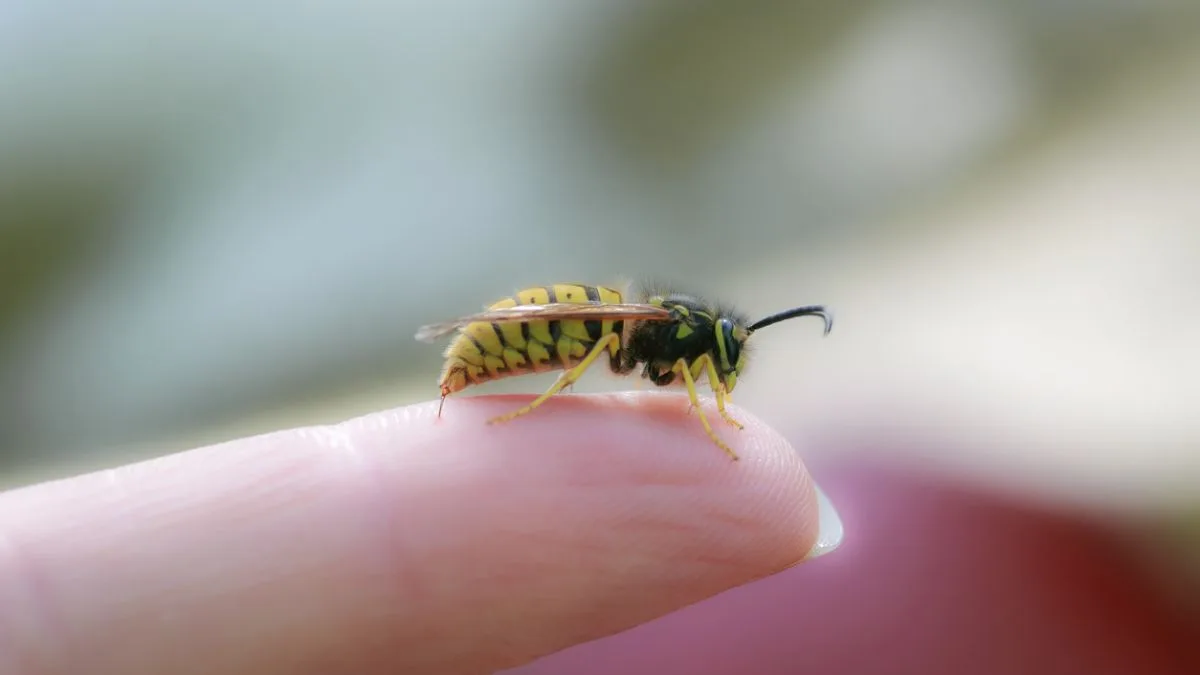
Acharya Balkrishna, the co-founder of Patanjali Ayurved and a well-known Ayurveda researcher, recently shared a practical tip on Facebook. He wrote that when a wasp or bee stings, one should extract the juice of mint leaves and apply it directly to the sting site. He noted that doing so reduces the effect of the venom and calms the pain. The advice is brief, but it rests on a more solid scientific foundation than most people realise.
Advertisement
What actually happens when a wasp or bee stings
Before understanding why mint works, it helps to understand what the body is reacting to.
Venom glands of bees produce a mixture of various enzymes, peptides, and amines, while those of wasps contain a mixture of histamine-releasing factors, enzymes, hemolysins, neurotoxins, vasodilators, and vasospastic amines.
Bee venom is a mixture of histamine, melittin, pheromones, peptides, enzymes, and amino acids, with histamine making up 0.9 percent of the venom and being the direct cause of pain and itching at the sting site. The acids present in bee venom include formic acid, hydrochloric acid, and orthophosphoric acid.
Bees and wasps have two poison glands — one secretes a toxin in which formic acid is a recognised constituent, and the other secretes an alkaline neurotoxin. Acting independently, each toxin is rather mild, but when they combine through the sting, the combination has strong irritating properties.
The immediate result is localised pain, redness, swelling, and a burning sensation. The body’s own immune response makes things worse by releasing more histamine in the area.
What mint contains
Mint, known as pudina in Hindi, is not just a flavouring. It is a medicinal plant with several active compounds that are directly relevant to a sting’s symptoms.
Menthol’s primary action through TRPM8 receptor activation produces a characteristic cooling sensation that contributes to analgesic, antipruritic, and counter-irritant effects. In addition, menthol exhibits significant anti-inflammatory activity and functions as an effective skin permeation enhancer.
In plain terms, menthol works on the sensory nerves in the skin. It triggers cold receptors, which override the pain signal and create a numbing, calming effect on the sting area. This is not folk belief. It is the same mechanism used in pharmaceutical products like pain-relief gels and sting-treatment preparations sold in pharmacies worldwide.
Mint plants contain an antioxidant and anti-inflammatory agent called rosmarinic acid, which has well-documented properties in reducing inflammation.
Rosmarinic acid is a water-soluble phenolic compound with a wide range of pharmacological effects, including anti-oxidative, anti-apoptotic, and anti-inflammatory effects. Its anti-inflammatory effects have been demonstrated through in vitro and in vivo studies of various inflammatory conditions.
This matters because the swelling and redness from a sting are inflammatory responses. A compound that suppresses inflammation at the application site can meaningfully reduce those symptoms.
The science behind the cooling effect
Menthol selectively activates TRPM8 receptors, providing a cooling counter-irritant effect while desensitizing nociceptors. It also engages central analgesic pathways, supporting its use as a safe, non-opioid topical analgesic.
The cooling effect of mint can be experienced when applied on an aching area, giving a numbing and calming effect. Inhaling fumes of mint extracts also hits the nerves and reduces the sensation of pain.
Mint juice, when applied to a sting site, delivers a concentrated hit of menthol directly to the inflamed skin. It does not neutralise the venom chemically, but it does interrupt the pain signal and begin reducing the inflammatory response.
Antibacterial protection at the sting site
A sting breaks the skin. That creates a small wound open to bacteria. This is where mint offers a secondary benefit.
Mint’s essential oils contain antimicrobial and anti-inflammatory elements that benefit skin health. Rosmarinic acid and flavonoids help fight free radicals, reduce inflammation, and protect the body from oxidative stress.
In research testing peppermint essential oil against multidrug-resistant E. coli strains, the strongest antibacterial activity was observed for peppermint oil, which was attributed to its high menthol content, with menthol also being the most effective single component against clinical bacterial strains.
Applying mint juice to a fresh sting wound therefore serves a dual purpose — calming pain and reducing the chance of secondary infection at the site.
Mint as a wasp repellent too
There is an additional layer of science that connects mint to wasps beyond just treating the sting.
Among 66 tested samples screened for repellency against vespid wasps in a published study, menthol from mint showed significant repellent activity, with menthone also being in the same range of activity.
Peppermint essential oil’s active compounds like menthol and menthone disrupt the sensory systems of wasps, making peppermint oil an effective, non-toxic repellent.
This means mint has value both before and after a sting. Applying or planting it in an area can discourage wasps from approaching. Applying it after a sting reduces pain and inflammation.
What to do first: A practical note
Applying mint juice is a sound first-response measure, but there is one important step that comes before it if a honeybee was responsible. For bee stings specifically, the stinger should be removed before applying any treatment to the affected area.
Wasps, unlike honeybees, do not leave a stinger behind. They can sting repeatedly. So for wasp stings, mint juice can be applied directly without this preliminary step.
For anyone who shows signs of a severe allergic reaction — widespread swelling, difficulty breathing, dizziness, or hives beyond the sting site — a doctor or emergency care must be sought immediately. These are signs of anaphylaxis, and no home remedy is a substitute for medical attention in that situation.
For the vast majority of stings that cause localised pain and swelling, however, Acharya Balkrishna’s advice holds. Mint juice is not simply a traditional suggestion. It delivers menthol, rosmarinic acid, and antimicrobial compounds directly where they are needed most.