Mark Zuckerberg says Meta made ‘mistakes’ in AI workforce shift, rules out more layoffs in 2026
According to an internal memo, Zuckerberg noted that further country-wide layoffs at Meta are not expected this year.
SpaceX closed nearly 19 per cent above its IPO price on its Wall Street debut, pushing its valuation past $2.2 trillion and making Elon Musk the first person in history to reach trillionaire status.




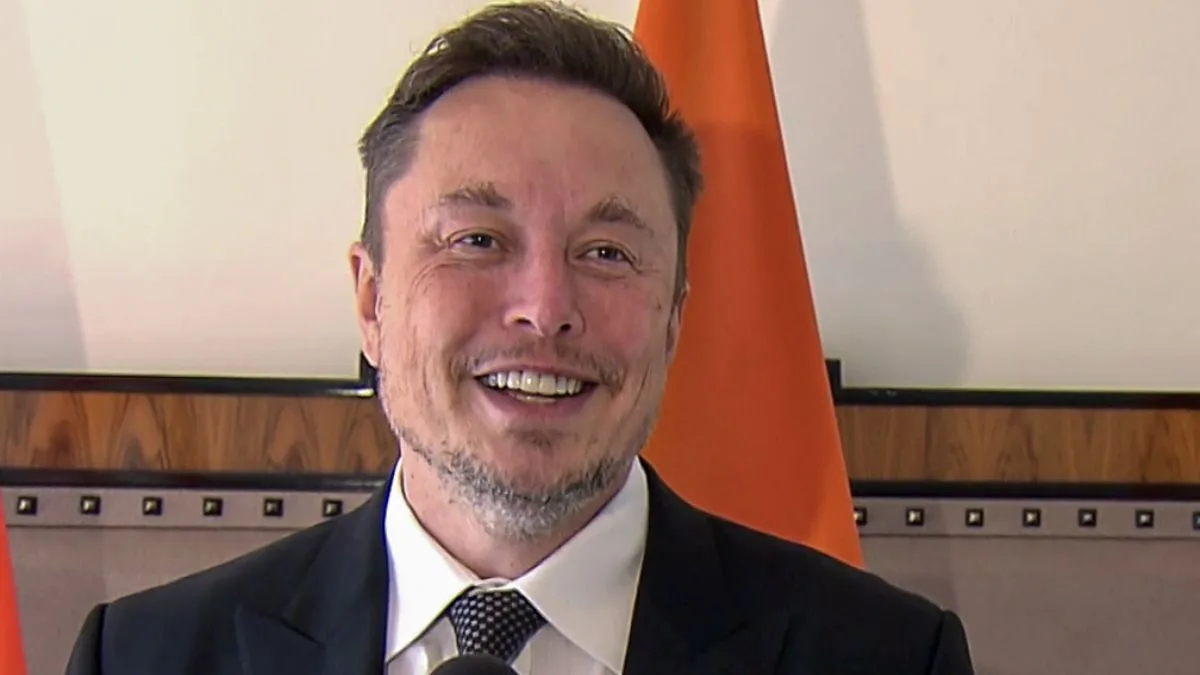
File photo showing SpaceX founder Elon Musk. SpaceX closed nearly 19 per cent above its IPO price on its first day of trading, pushing the company's market value to about $2.2 trillion. | ANI
Elon Musk became the world’s first trillionaire after SpaceX ended its first day on the stock market with a valuation of about $2.2 trillion following one of the largest and most closely watched initial public offerings in US market history.
The rocket and satellite company closed at $160.95 a share, nearly 19 per cent above its IPO price of $135. During trading, the stock had risen as much as 31 per cent before paring gains by the closing bell.
Advertisement
The rally significantly boosted the value of Musk’s holding in the company. SpaceX also entered the ranks of the world’s most valuable publicly traded firms, ending its debut session as the sixth-largest listed company globally by market capitalisation.
Advertisement
The company raised roughly $75 billion through the offering, making it one of the largest IPOs ever completed.
Investor appetite far exceeded available shares. Reports said demand crossed $350 billion, with many institutional and retail investors unable to secure allocations despite heavy interest. Retail investors alone accounted for more than $100 billion worth of orders.
The strong listing comes at a time when Wall Street has increasingly rewarded companies linked to artificial intelligence and advanced technology sectors.
Founded in 2002, SpaceX began as a high-risk venture focused on reusable rocket technology.
The company endured repeated launch failures and periods of financial strain before securing NASA contracts that helped establish it as a major player in the global space industry.
Reflecting on those early years, Musk was quoted as saying: “I told people this: ‘It’s probably going to fail. But we should give it a try.'”
Today, SpaceX dominates the commercial launch market and operates Starlink, the world’s largest satellite internet network. The company is also deeply involved in NASA programmes and US national security missions.
According to reports, the US government remained SpaceX’s largest customer in 2025, contributing around $4 billion in revenue. Starlink generated about $11.4 billion in revenue and posted a profit during the year.
Analysts said investor interest was also fuelled by SpaceX’s growing focus on artificial intelligence after its acquisition of Musk’s xAI earlier this year.
Company filings reportedly outline plans involving AI-focused satellite networks, orbital computing infrastructure and future space-based data systems. SpaceX has estimated its potential market opportunity at $28.5 trillion, with most of that linked to artificial intelligence-related applications.
Future projects are expected to include expanded satellite constellations and services aimed at government and security customers through its Starshield programme.
Despite the enthusiasm, some analysts questioned whether SpaceX’s valuation has moved ahead of its financial fundamentals.
The company reported a net loss of $4.28 billion in the first quarter of 2026, raising concerns about whether current market expectations can be sustained.
The company’s growing influence has also attracted scrutiny from policy experts.
Clayton Swope of the Centre for Strategic and International Studies said: “U.S. space power is built on the back of SpaceX. Period. Full stop.”
He added: “It means SpaceX has incredible leverage over the government right now.”
The listing has also reignited debate over wealth concentration in the United States. Following Musk’s rise to trillionaire status, Democratic lawmakers including Senator Elizabeth Warren and Representative Ro Khanna renewed calls for higher taxes on the country’s wealthiest individuals.
Advertisement