MP Congress leaders plan to meet President regarding Meenakshi Natarajan issue
Patwari said here on Wednesday that the leader of the Madhya Pradesh Congress Legislature Party (CLP) requested an appointment with the President in New Delhi.
Both at the level of the government and several non – government organizations, the importance of natural farming has been increasingly emphasized in recent years in the context of integrating sustainable rural livelihoods with improved climate resilience and protection of the environment.




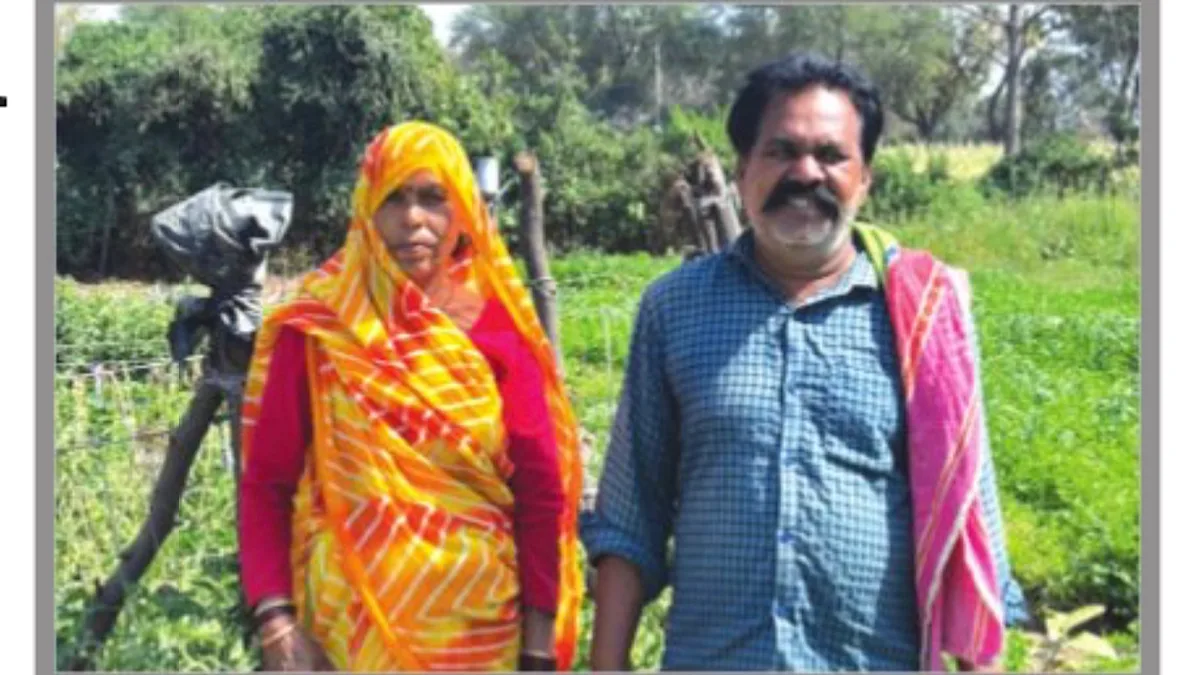
Photo:SNS
Both at the level of the government and several non – government organizations, the importance of natural farming has been increasingly emphasized in recent years in the context of integrating sustainable rural livelihoods with improved climate resilience and protection of the environment. Now with the likely reduction in the availability of chemical fertilizers due to disruption of imports, there is an additional reason for this emphasis.
The good news is that success stories of natural farming are being received from several villages, and small farmers in particular are responding very well, partly also due to their greater need for reducing costs and related debts. Saroj Kushwaha, a small farmer of Pathari village in Tikamgarh district, Madhya Pradesh, is practicing natural farming and climate resilient farming in very creative ways. She has succeeded in reducing the burden of fossil fuels on her farm, planted plenty of trees, improved the soil and at the same time with diversification she has adapted herself well to weather uncertainties in times of climate change, while also increasing her net income.
Advertisement
She has achieved all this on the basis of her small-scale farming, while also improving nutrition and health of family members and also arranging for college education of not just her daughter b ut also her daughter-in-law. She is happy also because the work she is doing is very creative. Her family has about four acres of farmland, scattered at different places. About three years ago, influenced by a campaign for natural farming and farm biodiversity initiated by the Srijan voluntary organization, Saroj and her family decided to make several significant changes in their farming patterns.
Advertisement
Firstly, they shifted from chemical fertilizers to organic fertilizers made on their own farm from cow-dung, cow urine and other local ingredients. Similarly, they now used local organic materials to keep pests away. This reduced their expenses and also drastically reduced the fossil fuel burden of their farming. Secondly, a relatively small part of the land was devoted to vegetable and fruit cultivation. A multi-layer vegetable garden makes it possible for them to grow about 15 vegetables in a small plot of land. In addition, they have planted about 100 fruit trees, including 80 guava trees, and some mango, amla, lemon, litchi and berry trees.
Thirdly, Saroj has also started a nursery for providing plants of fruit trees to others. All along, they have continued to grow the cereal, legume, oilseed and millet crops of the past, although on a smaller area. Saroj has one cow, one buffalo and seven goats. This provides the base for natural farming and adds to the diversity of the family’s nutrition and income, including the capacity for meeting sudden expenses. Thus, Saroj has wisely made changes which have reduced her expenses significantly, and provided her a higher and continuing income through crop and livelihood diversification.
A great source of satisfaction for this family is that their food based on produce of natural farming provides better nutrition to the family and improves their health. It also gives satisfaction that they are making available healthy food to others. Saroj says that her soil is showing significant signs of improvement. With soil-improvement (and its increased capacity to absorb carbon), with planting of so many trees and doing away with several inputs having a strong base in fossil fuels, Saroj contributes a lot to climate change mitigation. Her contribution to climate adaptation is even more obvious, as diversification helps her to save some crops or produce even in times of adverse weather conditions.
Reducing dependence on external inputs helps her to reduce costs and avoid debts. Gaura Devi and Harcharan in Nayakhera village of the same district have also achieved encouraging success in natural farming, particularly in the context of vegetables. They have about two acres of land. A small patch of this land, just 1/20 of an acre, is devoted to creating a multi-layer vegetable garden. With the help of bamboo, wires and ropes, a structure has been created which makes it possible to grow more vegetables in a healthier way on a small plot of land, combining vegetables which grow underground, on the surface and creepers.
Thus, over a dozen or more vegetables can be grown on this small plot of about 200 square meters. Both Gaura Devi and Harcharan work here in creative ways. They have a cow and two calves, and one buffalo. They prepare organic fertilizers and pest repellants on their farm using cow-dung, cow urine, leaves of some trees and local materials. Hence their dependence on any cash purchased inputs is greatly reduced and overall expenses are reduced. Practicing these low-cost methods, they have been able to achieve a significant increase in income from selling vegetables.
Their vegetables grown using natural farming methods are known to be healthier and consumers as well as small traders are willing to give a good price. The good health brought by vegetables produced using natural farming methods should also be considered in any appraisal of their work, Gaura Devi adds. Harcharan said that by providing support for more creeper-based vegetables, the quality of the produce improves, there is less harm from pests and fungus, and the excess water can drain out more easily.
In a similar pattern several other farmers here and in nearby villages have been helped and encouraged to initiate such vegetable gardens on a small part of their land. Rakesh Kumar has been involved with this idea since the early days. He told me that when he first explored such a model on behalf of Srijan by visiting several places, he found the costs to be too heavy for the small farmers of this region. So, they decided to evolve a low-cost model based on natural farming to which even very small farmers have responded very well.
(The writer is Honorary Convener, Campaign to Save Earth Now. His recent books include India’s Quest for Sustainable Farming and Healthy Food, Man over Machine and A Day in 2071.)
Advertisement