Austerity appeal and LiFE align closely
The recent austerity appeal of the Hon’ble Prime Minister aligns closely with his global vision of “Lifestyle for Environment” (LiFE), which he consistently advocates on global platforms.
Someone just cancelled on you. You pretended to be sad for exactly four seconds. Then you pulled up Netflix, got under the blanket, and had the best Friday night of your month.




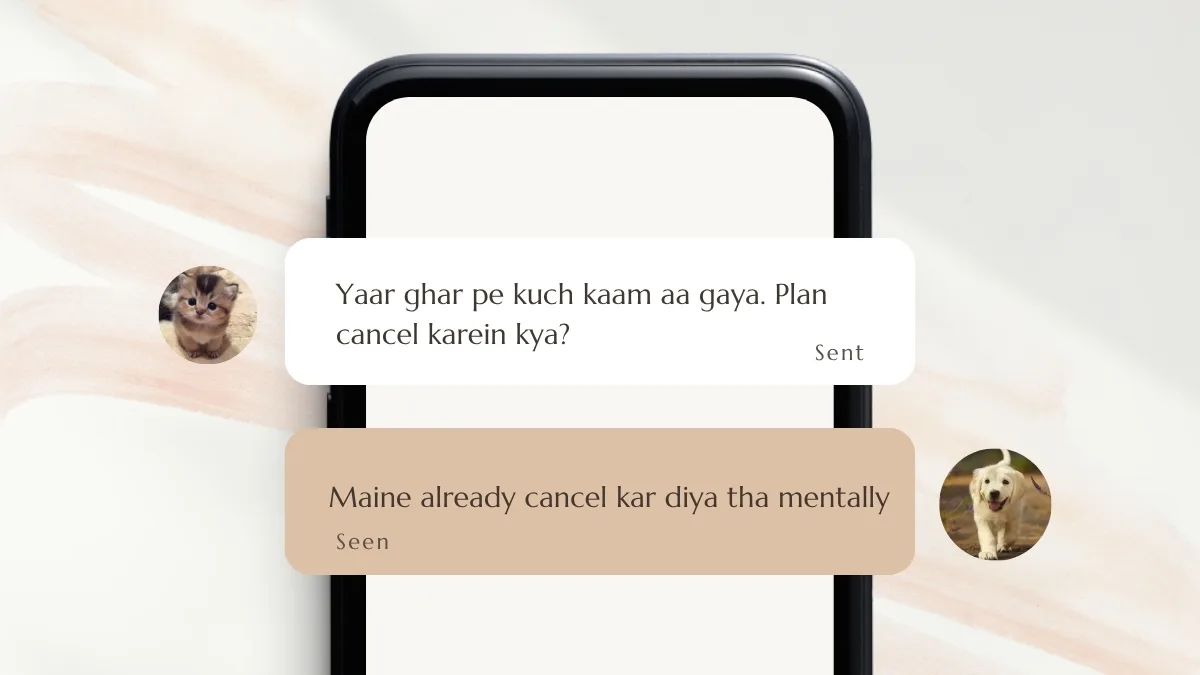
The plan was always to cancel the plan.
There is a very specific kind of joy that comes when someone cancels plans on you. You get the text. You type “aww, no worries!” You put the phone down. Then you walk straight to your couch, pull a blanket over yourself, and order pav bhaji. No guilt. No FOMO. Just pure, uncut relief.
If you have felt this recently, you are not alone. You are actually part of a very large, very quiet, and very fast-growing economic movement. India’s homebody economy is real. It has numbers behind it. And it is only getting bigger.
Advertisement
Let us be honest about something. The happiness of cancelled plans is not new. But what is new is that people are no longer pretending to be sad about it. Indians, especially urban millennials and Gen Z, are openly choosing nights in over nights out. Not because they are broke or antisocial. Because they genuinely want to.
Advertisement
This shift has a name in other parts of the world. South Korea calls it “Honjok,” which loosely translates to preferring to do things alone. By 2023, more than 33% households in South Korea were single-person households. This led to rise of solo BBQ grills, single-serving ready meals, compact apartments. India is not there yet, but the direction is unmistakable.
About 17.4 million Indians lived alone in 2020, and by 2030 that number could make up roughly 5.5% of all households. That is a lot of people with full control of their own remote, their own dinner order, and their own bedtime.
Nothing accelerated the homebody lifestyle faster than affordable internet and OTT platforms. The numbers from that shift are staggering.
As of November of 2025, surveys show around 65% Indian consumers are into streaming portals for infotainment. That is nearly two out of every three people choosing screen at home over stepping out. India OTT market this way is projected to grow from $4.5 billion in 2025 to $19.25 billion by 2035.
India’s OTT reach currently stands at over 547 million viewers. For context, that is more people than the entire population of the United States and Canada combined, all staring at screens from their sofas.
India also has the second-highest per capita consumption of online videos in the world. We are not occasional streamers. We are professionals.
The other pillar holding up the homebody economy is food delivery. And in India, this industry is enormous.
The logic is simple. If you are not going out to eat, the food has to come to you. A 28-year-old marketing manager in Bangalore ordering a single-serve biryani at 9 PM is not a niche behaviour anymore. It is a pattern that food delivery platforms have quietly built entire product strategies around.
Think about what Swiggy and Zomato have done in the last three years. Smaller portion sizes. Late-night menus. “Midnight cravings” categories. None of that exists for people who go out for dinner. All of it exists for people in pajamas watching their third episode in a row.
Even the family unit has changed its habits. Families now order out together but individually. One person orders South Indian, another gets Chinese, a third picks Continental. They eat at the same table but consume completely separately. The dinner table survived. The shared menu did not.
The homebody trend is part of something larger: Indians are increasingly comfortable doing things alone. And doing them at home is just the most extreme, most comfortable version of that.
Indians, led by millennials and Gen Zs, are rewriting the rules one solo plan at a time. BookMyShow reported that more than 1.8 million users attended movies alone last year. Solo cinema. Solo dining. And, solo weekend. The stigma is collapsing fast.
According to travel fintech platform Niyo’s 2025 report, solo travel has emerged as the dominant preference among Indian travellers, with 63.8% of trips undertaken by individuals. Even when people do leave the house, they are doing it on their own terms, at their own pace.
The key insight here is that this is not loneliness. It is preference. There is a very big difference.
It is not just streaming. The gaming industry has moved into living rooms and bedrooms in a way that nobody fully predicted.
More than 32% of Indian mobile users spend 4 to 6 hours a week gaming. Among Gen Z users, nearly 74% spend over 6 hours gaming each week. India’s online gaming community right now has whooping 591 million players. That is not a hobby. That is a lifestyle.
The bedroom is no longer just a place to sleep. For a very large segment of young India, it is the office, the cinema, the restaurant, and the arcade all in one.
Companies that understand the homebody shift are printing money. Companies that don’t are watching their footfall numbers drop and wondering why.
Home comfort has become a spending category. Indians are buying better pillows. Better lighting. Bigger screens. Faster Wi-Fi routers. Bluetooth speakers for the bathroom. Air fryers for the kitchen because who is going out for fried food anymore? Urban consumers with rising disposable incomes are allocating more to discretionary items including electronics and home experiences.
The homebody is not cheap. They just spend differently. Less on transport, cover charges, and overpriced cocktails. More on subscriptions, gadgets, and delivery fees. The money is still moving. It is just moving toward your front door instead of out of it.
Here is the cultural shift that matters most. A few years ago, choosing to stay in on a Friday night came with a quiet sense of social failure. You were supposed to want to be out. The very least you could do was lie about it.
That shame is almost completely gone now. People post their couch setups. They caption their solo dinner orders. They unironically call themselves homebodies as if it is something to be proud of. It is.
The plan-cancellation text used to be the bad news. Now it is the notification that the night just got better. The biryani is already on its way. The show is already paused at the right spot. The blanket is warm.
India figured out something the rest of the world is still learning. Staying in is not giving up. Sometimes, it is the whole plan.
Advertisement