Xi Jinping set for North Korea visit next week, first since 2019 amid geopolitical strains
Beijing's latest diplomatic outreach to Pyongyang comes as North Korea balances ties with both China and Russia while expanding its nuclear capabilities.
The global manufacturing landscape is undergoing a profound transformation.




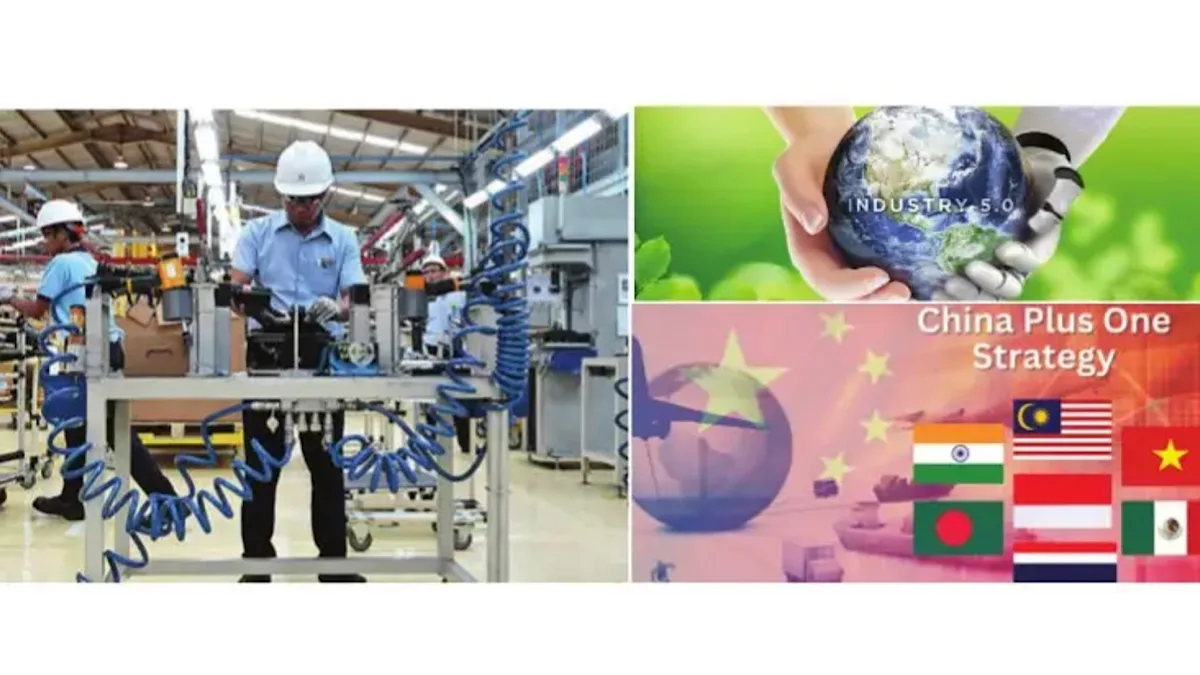
Photo:SNS
The global manufacturing landscape is undergoing a profound transformation. Geopolitical tensions, supply-chain disruptions, rising labour costs in traditional manufacturing centres and the search for resilient production networks have compelled multinational corporations to rethink their strategies. The “China-plus-one” approach has become a defining feature of global business decisions, creating opportunities for emerging economies to attract investment and expand industrial capacity. For India, this moment presents a historic opportunity.
The question is whether the country can translate this favourable global environment into a sustained manufacturing revolution and emerge as the next global factory. The aspiration is neither new nor unrealistic. Manufacturing has played a central role in the economic rise of nearly every major industrial power, from Britain and Germany to Japan, South Korea and China. It creates jobs at scale, boosts exports, strengthens technological capabilities and generates multiplier effects across the economy.
Advertisement
For a country like India, with a young workforce and an ambition to become a developed nation by 2047, manufacturing is not merely an economic option; it is a strategic necessity. India’s recent economic performance provides grounds for optimism. The country has emerged as one of the world’s fastest-growing major economies despite global uncertainties. Major policy initiatives such as Make in India, Production-Linked Incentive (PLI) schemes, the National Logistics Policy and investments in infrastructure have sought to improve the competitiveness of domestic manufacturing.
Advertisement
Roads, ports, railways, airports and digital infrastructure have expanded significantly over the past decade, reducing some of the structural bottlenecks that previously discouraged industrial investment. The results are beginning to show. India has witnessed notable growth in sectors such as electronics, mobile phone manufacturing, pharmaceuticals, defence production and renewable energy equipment. The country’s emergence as a significant exporter of smartphones demonstrates that industrial transformation is possible when policy incentives, market demand and private investment align. The rise of domestic manufacturing champions in several sectors further indicates that India possesses the entrepreneurial capacity necessary to compete globally.
Yet the journey from an emerging manufacturing destination to a global factory remains far from complete. One of the most significant challenges is employment generation. While economic growth has been robust, manufacturing’s share in total employment has not expanded sufficiently. A successful manufacturing strategy must create large numbers of productive jobs, particularly for semi-skilled workers entering the labour force each year. Without employment-intensive industrialisation, manufacturing growth may contribute to output without adequately addressing the country’s labour-market challenges. Labour productivity represents another area requiring attention.
Competing with established manufacturing economies demands not only lower costs but also higher efficiency, quality and reliability. India’s workforce is large, but skill levels vary considerably across sectors and regions. Bridging this gap will require sustained investment in vocational training, technical education and industry-oriented skill development. The success of manufacturing depends as much on human capital as it does on physical infrastructure. The regulatory environment continues to pose challenges. Although significant reforms have been undertaken, businesses often encounter complex compliance requirements, bureaucratic delays and legal uncertainties.
Investors value predictability as much as incentives. Simplifying regulations, improving contract enforcement and ensuring policy stability will be critical to attracting long-term manufacturing investments. Global companies seeking alternatives to existing production hubs are likely to prioritise jurisdictions that offer both efficiency and certainty. The integration of Indian manufacturing into global value chains remains another crucial objective. Modern manufacturing rarely occurs within a single country. Components are produced across multiple locations before being assembled into final products.
India’s manufacturing ambitions will therefore depend on its ability to become an integral part of these interconnected production networks. Trade policy, logistics efficiency and export competitiveness will play decisive roles in determining whether India can secure a larger share of global manufacturing activity. Energy and sustainability considerations are equally important. Future manufacturing growth must align with climate commitments and environmental responsibilities.
As global consumers and investors increasingly prioritise sustainability, green manufacturing can become a source of competitive advantage. India’s expanding renewable energy sector provides an opportunity to position the country as a destination for low-carbon manufacturing. Industrial growth that disregards environmental concerns may prove economically unsustainable in an increasingly climate-conscious world. The geopolitical context strengthens India’s prospects. Many multinational corporations are seeking to diversify production locations to reduce dependence on a single country. India’s large domestic market, democratic institutions and strategic partnerships with major economies enhance its attractiveness as an investment destination.
Moreover, concerns about supply-chain resilience have encouraged businesses to prioritise geographic diversification, creating opportunities that did not exist a decade ago. However, global opportunities alone cannot guarantee success. Several countries, including Vietnam, Indonesia and Mexico, are competing aggressively for manufacturing investments. These economies have demonstrated the ability to attract export-oriented industries through focused policies, efficient logistics and investor-friendly environments. India must therefore avoid complacency. The competition for global capital and production networks is intense, and favourable demographics alone are insufficient to secure industrial leadership.
A successful manufacturing strategy will require coordinated action across multiple fronts. Infrastructure investments must continue, but they should be accompanied by improvements in education, skill development and innovation. Industrial policy should encourage both large-scale investments and the growth of small and medium enterprises that form the backbone of manufacturing ecosystems. Greater emphasis on research and development can help move Indian industry up the value chain and reduce dependence on imported technologies. The larger significance of manufacturing extends beyond economics.
A strong industrial base enhances national resilience, strengthens technological capabilities and supports strategic autonomy. It also provides a pathway for inclusive development by creating opportunities across regions and skill levels. Few sectors possess the transformative potential that manufacturing offers. India stands at a pivotal moment in its economic journey. The global environment is favourable, domestic reforms are underway and investor interest is growing.
Yet becoming the next global factory will require more than policy slogans and isolated successes. It will demand sustained commitment to competitiveness, innovation and employment generation. The opportunity is real, but so is the challenge. Whether India emerges as a manufacturing powerhouse will depend on its ability to convert potential into productivity and ambition into execution.
(The writer is a civil engineer, consultant (invitee) to Rashtriya Raksha University under the Ministry of Home Affairs, and a columnist. Views expressed are personal)
Advertisement