Delhi High Court records ED’s withdrawal of press release against FIITJEE
Earlier, the ED alleged that FIITJEE minted around ₹206 crore from students on the pretext of providing educational services.
Justice K Govindarajan Thilakavadi stated that the Waqf Board is required to legally establish ownership over the land.




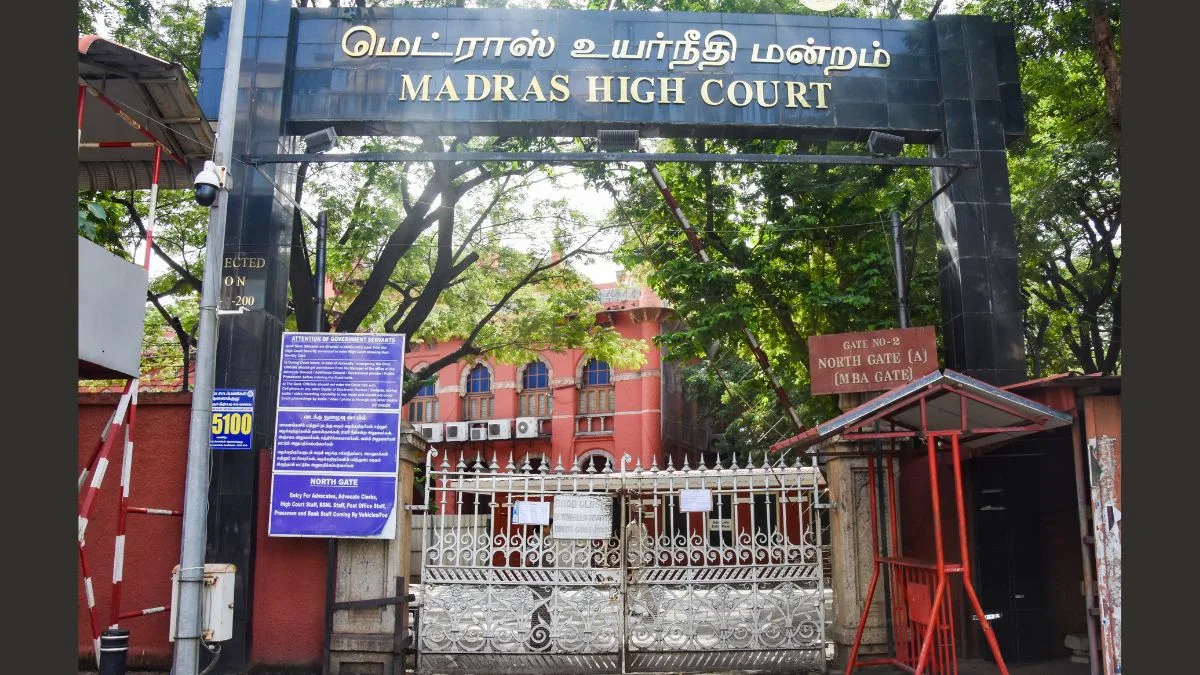
Image: IANS
The Madras High Court said that Dargah’s existance on a land does not automatically bring the property under the control of the Waqf Board.
While hearing the matter, Justice K Govindarajan Thilakavadi stated that the Waqf Board is required to legally establish ownership over the land, Bar and Bench reported.
Advertisement
“Mere existence of a Dargah does not automatically confer jurisdiction upon the Board unless the institution is established or treated as a Waqf in accordance with law,” read the High Court order, dated June 5.
Advertisement
These observations were made as the High Court set aside a resolution of the Tamil Nadu Waqf Board regarding appointment of a Mutawalli for the Sarkar Syed Habibullah Sha Khadari Arif Rabbani Hazarath Dargah at Chennai’s Triplicane. It had even asked for registration of the Dargah under Waqf Act without prior survey.
In the verdict, Justice Thilakavadi highlighted that every grave or Dargah is not automatically Waqf property. Further, the High Court made it clear that there needs to be permanent dedication of property by a Muslim for a pious, religious or charitable purpose recognised by Muslim law, the report added.
The Dargah is located at Triplicane’s Kamaraj Road. It had been claimed that the property was 240 years old, while the appellant, represented by Mutawalli, stated that his family maintained it for more than four decades.
In the High Court, they challenged the Waqf Board’s decision to appoint A Shainsha as Dargah’s Mutawalli, arguing that the land was not a Waqf Board property and belonged to the Public Works Department.
Further, it was contended that Waqf Board did not have any authority to declare the land as its property or even appoint another Mutawalli without following the procedure under the Waqf Act.
Opposing the appeal in the court, the Tamil Nadu Waqf Board claimed that the land as well as its surrounding areas had originally belonged to the Dargah and were later and later possessed by the municipal authorities and the Public Works Department. Also, it was claimed that the registration of the Dargah under Section 36(4) of the Waqf Act was under process.
The Public Works Department, however, noted that the land was classified as government poramboke land, adding that it had been allotted to Bharat Scouts and Guides rent-free. Further, it stated that the family fraudulently registered the Dargah land without its concurrence, according to Bar and Bench report.
“Conducting of the surveys before declaring a property a Waqf property is a sine qua non,” the High Court stated.
“If a Dargah has never been surveyed, registered or notified as Waqf, the Waqf Board ordinarily cannot assume automatic control merely because it is a Muslim Religious Institution,” it added.
Advertisement