Bengal unveils higher education roadmap, relief for state-aided college teachers
The state currently has around 13,000 State Aided College Teachers, of whom nearly 55 per cent belong to the SACT-II category.
The West Bengal government plans to create an additional one lakh Self-Help Groups (SHGs) during the current year to further strengthen rural livelihoods and women’s economic empowerment, state panchayat and rural development minister Dilip Ghosh said on Saturday.




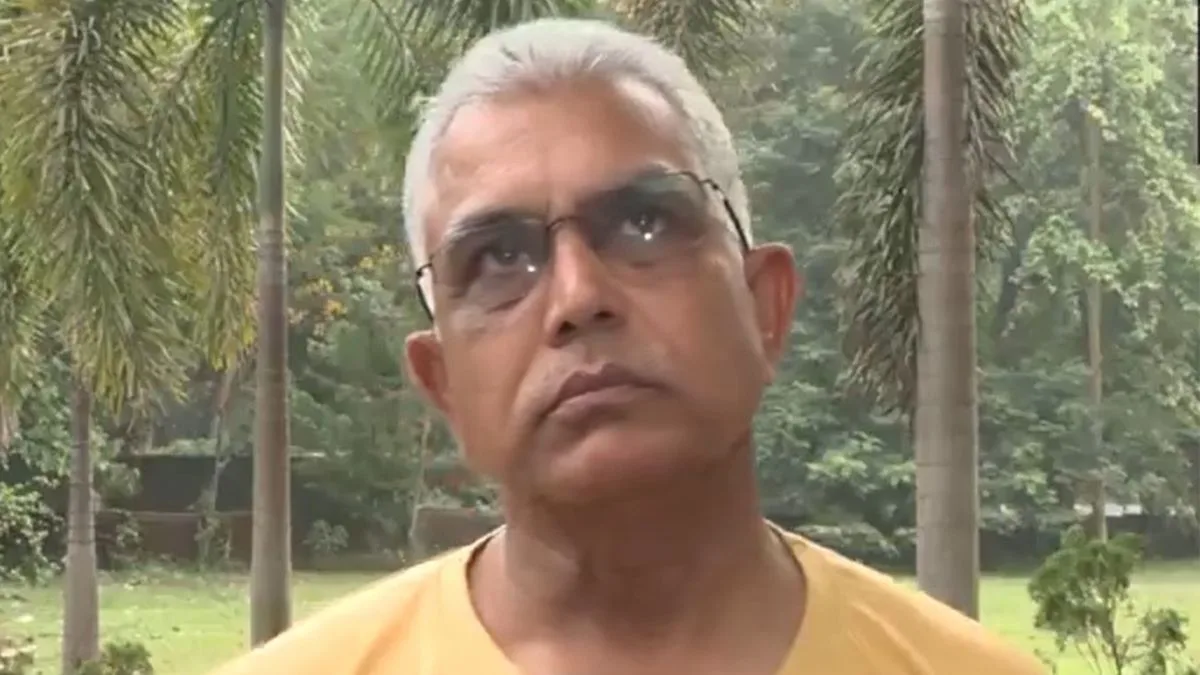
BJP leader Dilip Ghosh (ANI)
The West Bengal government plans to create an additional one lakh Self-Help Groups (SHGs) during the current year to further strengthen rural livelihoods and women’s economic empowerment, state panchayat and rural development minister Dilip Ghosh said on Saturday.
Speaking at a farmers’ conference organised by the, Central government owned, ICAR-Central Research Institute for Jute and Allied Fibres (ICAR-CRIJAF) at Barrackpore, Ghosh said the state currently has around 12.5 lakh SHGs with nearly 1.2 crore members associated with them. “The new SHGs will be eligible for loans ranging from Rs 3 lakh to Rs 5 lakh. These groups will work in close coordination with panchayats to generate employment opportunities and strengthen the rural economy,” he said.
Advertisement
Highlighting the role of scientific research in agriculture, Ghosh expressed concern that despite the prominence of ICAR-CRIJAF, farmers in West Bengal had not benefited adequately from its innovations over the decades due to a lack of coordination between the state and the Centre.
Advertisement
He claimed that improved jute seed varieties developed by the institute have gained considerable acceptance in neighbouring states, while farmers in West Bengal have not been able to access their full benefits. “The institute’s seeds are widely used outside the state, and the resulting jute products often return to Bengal at higher prices,” he said. Emphasising the global demand for jute-based products, Ghosh said greater collaboration between governments and research institutions was necessary to ensure that local farmers benefit from technological advancements and market opportunities.
Dr Gouranga Kar, Director of ICAR-CRIJAF, said the institute has developed around 120 improved varieties and technologies related to jute and allied fibres. These innovations, he said, are being utilised in the production of modern textiles, industrial materials, bio-fertilisers and other value-added products. Barrackpore MLA Koustav Bagchi pointed to the closure of several jute mills in the Barrackpore industrial belt and attributed the decline partly to inadequate coordination between the Centre and the state. He said renewed focus on the sector would be essential for reviving employment and strengthening the jute industry in the region.
Advertisement