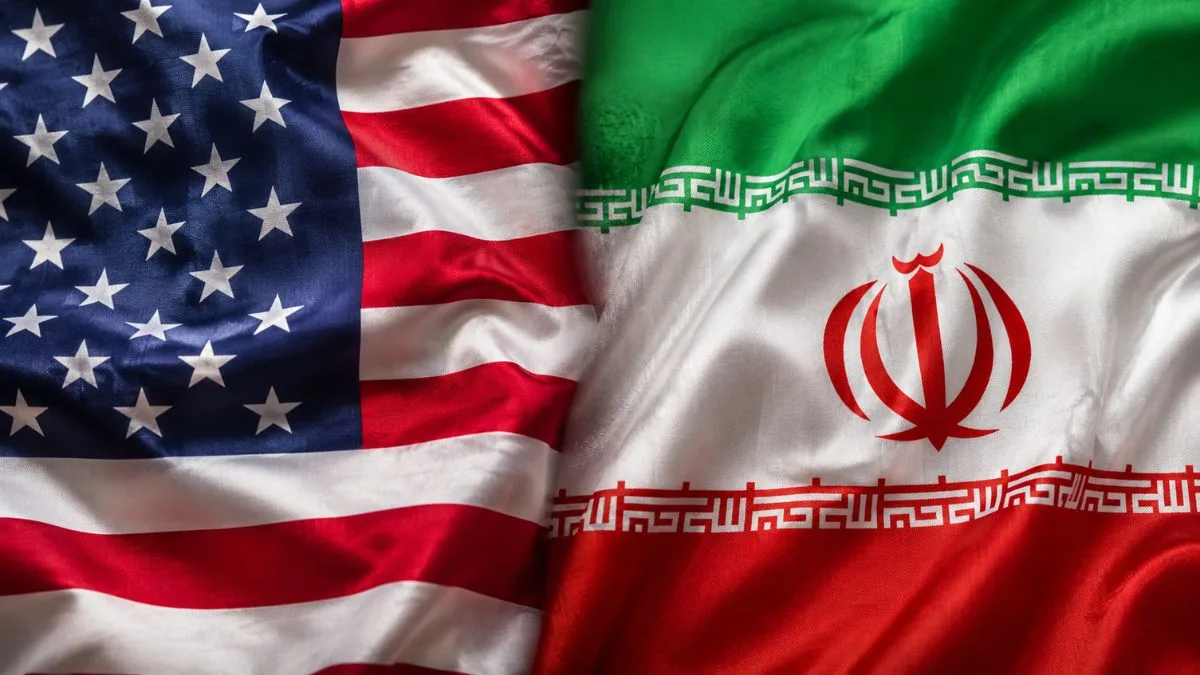
A senior adviser to Iran’s Supreme Leader has claimed that the country has secured what he described as its first military victory since the 1979 Islamic Revolution and said the future of negotiations with the United States now hinges on Washington releasing $24 billion in frozen Iranian assets.
The remarks come at a delicate moment for regional diplomacy. With negotiations between Tehran and Washington at an impasse and a fragile ceasefire holding after recent hostilities, Iranian officials are attempting to redefine the terms of engagement with the Donald Trump administration while warning of the consequences of any renewed military action.
Advertisement
Speaking to CNN, Mohsen Rezaei, a military adviser to Supreme Leader Ayatollah Mojtaba Khamenei, said Iran’s recent experience had altered its negotiating position and placed the responsibility for breaking the deadlock squarely on the United States.
“This is the first time Iran has emerged victorious in wars, while in previous wars Iran has always been defeated,” Rezaei said.
Iran links peace roadmap to frozen funds
According to Rezaei, Tehran expects the release of $24 billion in blocked Iranian funds as part of a broader path towards a peace agreement.
He said Iran wants $12 billion to be released after the signing of an interim agreement, with a further $12 billion expected in a second phase.
“The negotiations are at a deadlock, and Trump must break this deadlock,” Rezaei told CNN.
“The ball is in Trump’s court. If he wants to reach an agreement with Iran, this $24 billion is a test of trust that Iran wants to have with Trump. This is a test that America must pass, and the path will be opened. This is our own money, not America’s money,” he added.
Warning over future military action
While saying the likelihood of another war remained low, Rezaei warned that any future US military action against Iran could trigger a much wider conflict.
He said Tehran would target additional American military bases if hostilities resumed and suggested that future fighting could extend beyond the Persian Gulf.
According to Rezaei, a wider conflict could affect strategic maritime corridors stretching from the Strait of Hormuz to the Indian Ocean, the Bab al-Mandab Strait, the Red Sea and the Mediterranean Sea.
“We will give another dimension to the war by attacking these other American bases that we have been attacking so far,” he said.
Rezaei also claimed that Iran possessed military capabilities beyond its missile programme.
“Then the world will understand Iran’s true capabilities, because our land power is many times greater than our missiles,” he said.
Adviser dismisses Trump-Khamenei meeting
The Iranian official also ruled out the possibility of a meeting between US President Donald Trump and Ayatollah Mojtaba Khamenei in the near future.
His comments came after Trump recently said he would be “honoured” to meet the Iranian leader.
“This will not happen. Right now, we are in the first stage of negotiations, and Trump has brought the negotiations to a standstill. This will not happen,” Rezaei said.
Strait of Hormuz and nuclear deal concerns
Rezaei reiterated Iran’s position on the Strait of Hormuz, arguing that Tehran and Oman should jointly manage the strategically important waterway.
He said Iran should not shoulder the costs of maintaining the route alone and suggested that vessels using the passage could be charged fees for safe transit.
The adviser also expressed doubts about the prospects of a future nuclear agreement with the Trump administration. Referring to Washington’s withdrawal from the 2015 nuclear deal, he said Iran remained sceptical about the United States’ commitment to any fresh arrangement and described Washington’s approach to current negotiations as unclear.