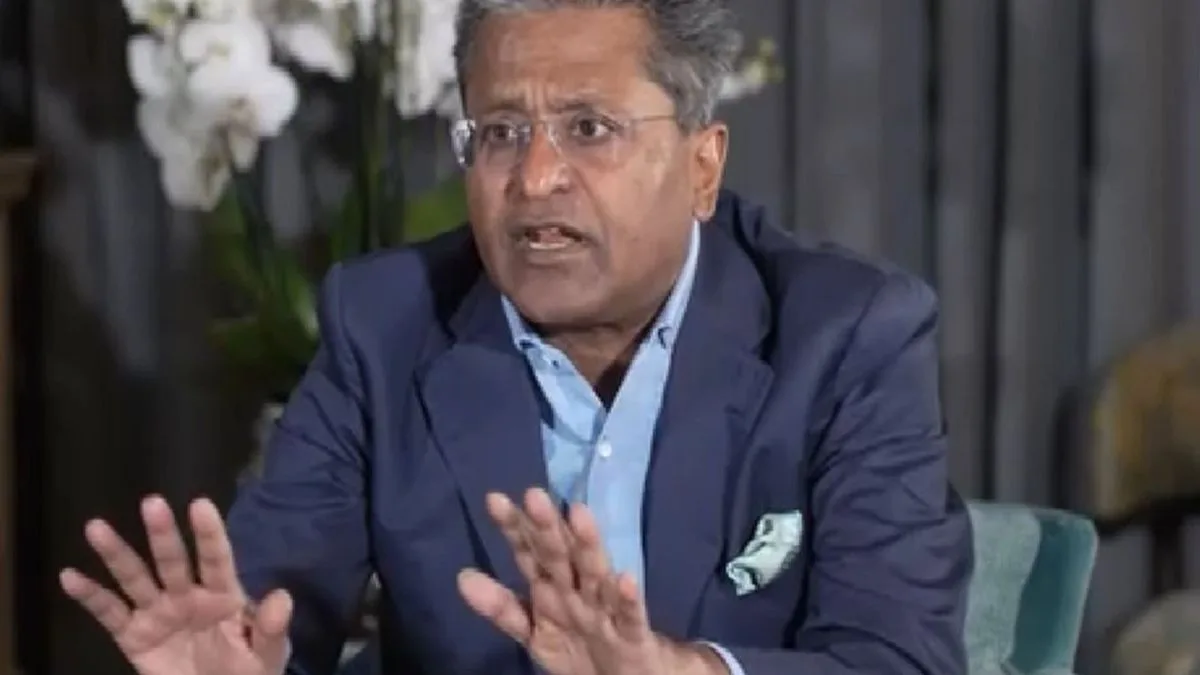
Former IPL chief Lalit Modi has taken exception to Rahul Gandhi’s repeated criticism of him, saying he continues to be targeted politically despite no case having been established against him in 17 years.
In an interview with ANI, Modi argued that nearly 17 years have passed without authorities taking him to court, which he said demonstrates the absence of any legally sustainable case against him. He also accused political figures of repeatedly invoking his name for public and political attention.
Advertisement
The remarks come as Modi renewed his criticism of sections of the Congress leadership and revisited some of the biggest controversies surrounding his tenure as the architect of the Indian Premier League. Alongside defending himself against allegations levelled over the years, he also opened up about the political circumstances that led to the IPL being shifted to South Africa in 2009.
“Arrest you want to do, you have to take me to court. Seventeen years you haven’t taken me to court. How can you arrest me today?” Modi said, adding that if there had been evidence against him, it would have emerged long ago.
He also questioned why Rahul Gandhi frequently refers to him during parliamentary debates, election campaigns and public speeches.
“Every time you look at Parliament or you look at the speeches of Mr Rahul Gandhi, he always attacks me. Every time there’s an election, he attacks me. Every time there’s some issue that comes up, I’m being attacked. Why am I being attacked by the Congress government?” he said.
Lalit Modi says cricket keeps him in public spotlight
Asked about comparisons with industrialists who are also regularly criticised by opposition leaders, Modi claimed his case was different because of his association with cricket.
“They don’t sell newspapers. They don’t sell news. I sell news. Because cricket is so big,” he said, adding that the sport had placed him under a level of public scrutiny unlike many business figures.
Modi further claimed that he was not worried about legal proceedings but about what he described as politically motivated attempts to target him.
“I’m not afraid of the law. What I’m afraid about is that you have some people… they’re political. Whether they sit in the opposition or they sit anywhere else, they have an axe against me,” he said.
Modi recalls move of IPL to South Africa in 2009
The former IPL chief also revisited the circumstances that led to the tournament being shifted to South Africa in 2009, when the IPL schedule coincided with the General Elections in India.
Modi alleged that the then Union Home Minister P Chidambaram opposed holding the tournament in India and that Congress-ruled states were unwilling to provide permission for matches.
According to him, BJP-ruled states had agreed to host games, but the broader security concerns and lack of approvals from other states created uncertainty around the tournament.
“Mr Chidambaram threatened me and didn’t want me to do it. I didn’t want to move it. At that point in time, it was the BJP government states who gave permission for me to hold the matches because the Congress government said they would not give permission in Congress states,” Modi claimed.
He further alleged that IPL organisers repeatedly revised the tournament schedule in an attempt to keep the competition in India.
“We changed the schedule 154 times before I moved to South Africa. And then, finally, the diktat came from Mr Chidambaram. He was the Home Minister then. He was all-powerful,” Modi said.
The IPL was eventually held in South Africa in 2009 after concerns were raised over the availability of security personnel during the General Election period.