‘Zero conviction in 152 paper leaks’: Rahul Gandhi says India’s education system ‘rigged’ under current dispensation
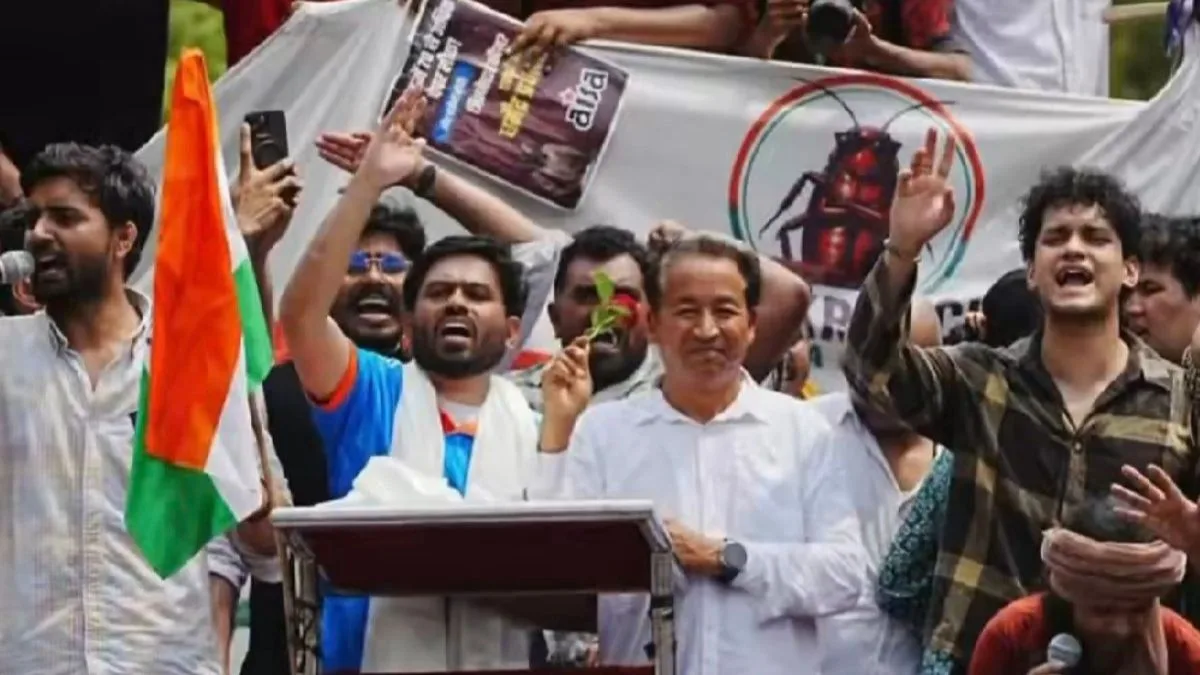
Rahul Gandhi has alleged that the education system has been “rigged” under the current dispensation.
From Kashmir to Kanyakumari, from Imphal to Indore, the scale of the gathering at The Art of Living International Centre reflected the extraordinary breadth of his influence across public life.




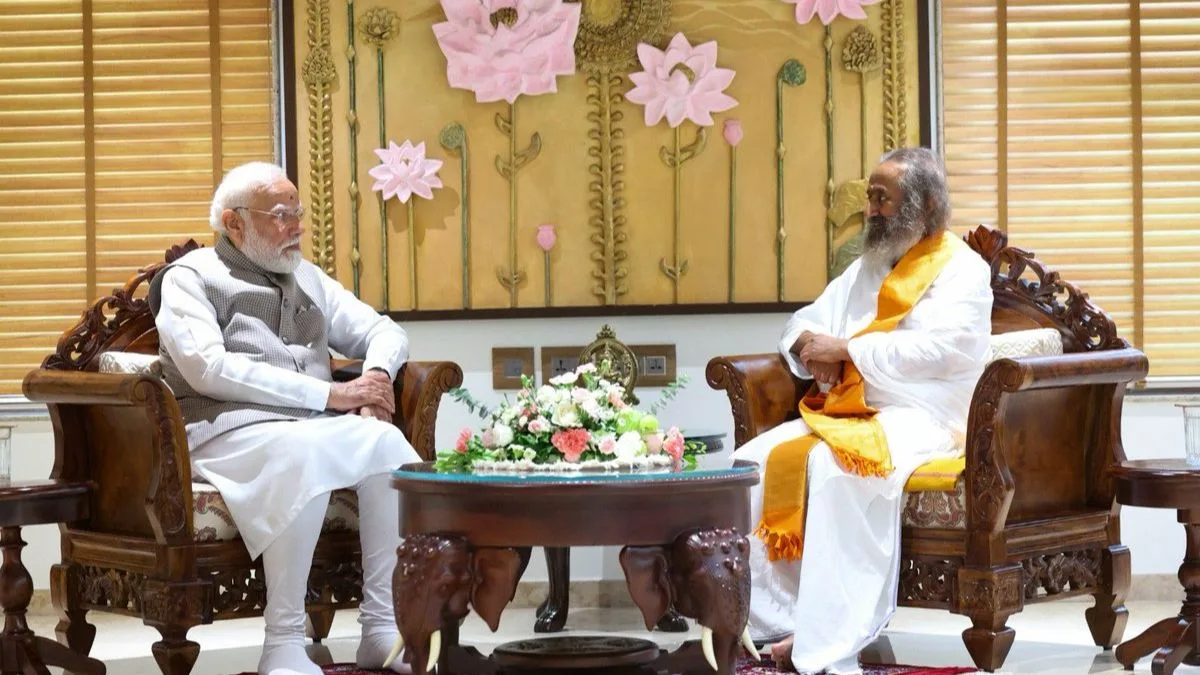
Prime Minister Narendra Modi and Sri Sri Ravi Shankar
“When the resolve is clear and the work is done in the spirit of service, every effort bears fruit,” spoke the Prime Minister of India, Shri Narendra Modi within the pristine environs of The Art of Living International Center in Bengaluru on 10th May. The words captured the journey of one of the largest volunteer-driven movements dedicated to humanitarian service, inner peace, solace and wisdom. And the man behind the vision that has manifested this movement is the global spiritual icon, Gurudev Sri Sri Ravi Shankar, who incidentally turned 70 this month, a lifetime “lived wholly in service of others,” as described by the Governor of Manipur, Shri Ajay Kumar Bhalla.
It is interesting that, not too long ago at one of his most important addresses to the United Nations in public memory, Gurudev had said, “I have this crazy idea to see a world without violence. This may appear Utopian, but we need to dream, and we will get there.” Coming from a spiritual leader, those words comfort the mind and makes one more hopeful.
Advertisement
Advertisement
But what can a world without violence, without hate, where people come together for something more wholesome and unifying, beyond one’s limited identities, look like?
If the views at the at The Art of Living International Center were anything to go by, the dream seemed closer to be fulfilled than ever- a showcase of possibility of peace, a display of oneness beyond caste, creed, and regionality not seen very much in recent times, something that found expression in the words of Hon. Archibishop of Kerala, “We live in a world weighed down by wars…by a deep restlessness in the human heart. Nations are divided, faiths are misunderstood, and millions live in fear and despair.” The words of Hon. Archbishop of Kerala Mor Baselios Joseph were not without hope.
“It is precisely in such times that the world needs voices like yours, voices that speak not of division, but of the oneness of the human family,” he said while honoring Gurudev for his lifelong work, as Gurudev turned 70 this month.
And perhaps that was the deeper significance of what unfolded over the last few weeks at The Art of Living International Center.
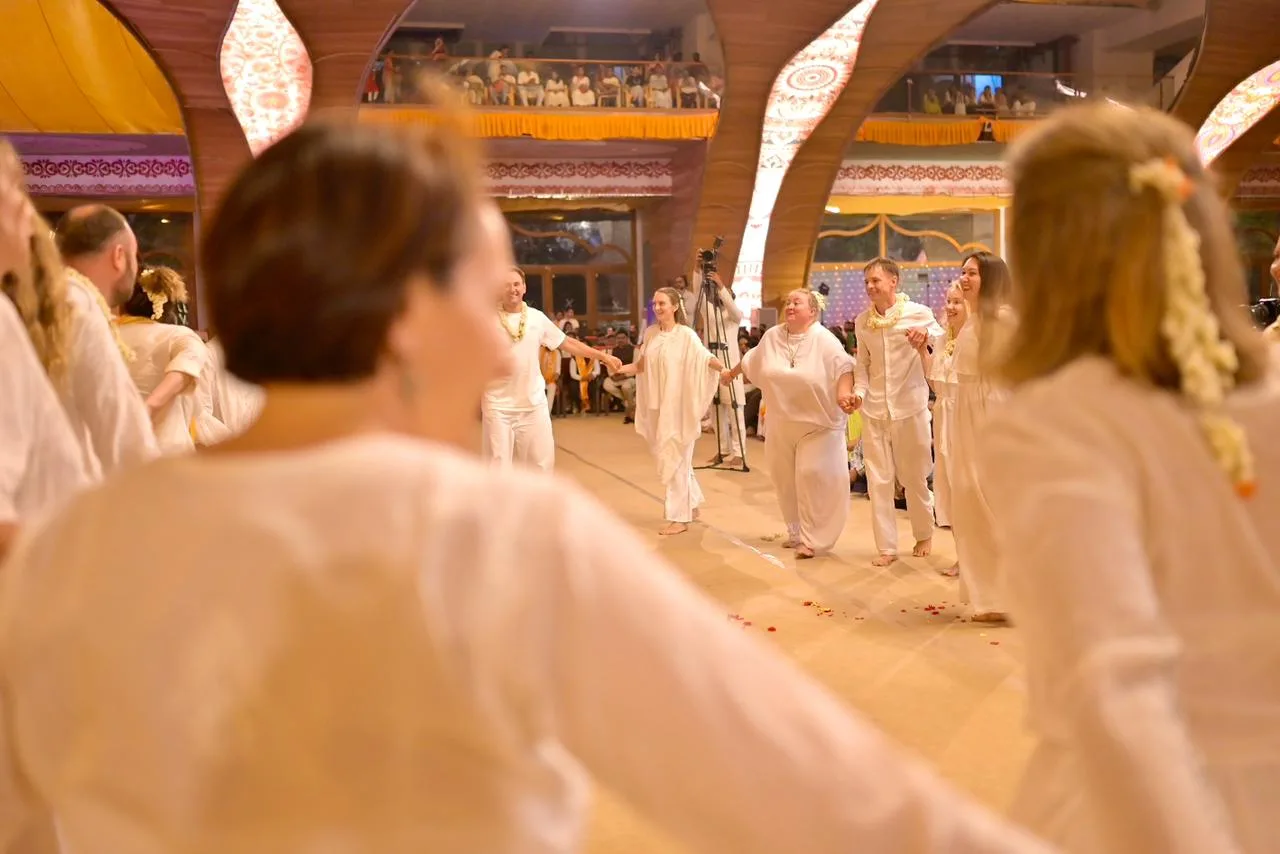
The proposition was that, first of all, peace is possible and that inner peace alone can ensure there is peace in the world, and that human connection itself may be the most urgent need today. Millions of people from 182 countries came together to celebrate 45 years of the movement embodying its very spirit of joi de vivre, cherishing diverse cultures, philosophies, music, art forms and consciousness with global meditations with Gurudev online and in person throughout the month. These moments of collective silence of a million minds becoming one for a few minutes every day was a sign that it is possible to suspend our divisions for a while and experience peace together as something more tangible than we can imagine.
During one particular evening , while the month long celebrations were underway, Gurudev quipped, “Who says I’m 70?” breaking into his characteristic open laugh with a head tilt and sparkling eyes, “Seven thousand sounds far more acceptable.”
He often says he refuses to grow old, and perhaps it is what Hon. Vice President of India Shri C. P. Radhakrishnan decsribed as “His smile, his simplicity, his humility, and his affection” that touches everyone. That, coupled with a wish to see a smile on every face on the planet, that has enabled him to achieve what seems outwardly impossible.
From Kashmir to Kanyakumari, from Imphal to Indore, the scale of the gathering at The Art of Living International Centre reflected the extraordinary breadth of his influence across public life, bringing together 678 distinguished VVIPs, including the Prime Minister of India, five Union Cabinet Ministers, six Chief Ministers, four Ministers of State, nine Governors, twenty-eight of the country’s leading industrialists, celebrated film personalities, members of royal families, and lakhs of Art of Living volunteers and devotees from around the world.
But what does the presence of these statesmen, artists and leaders from across the political spectrum really denote?
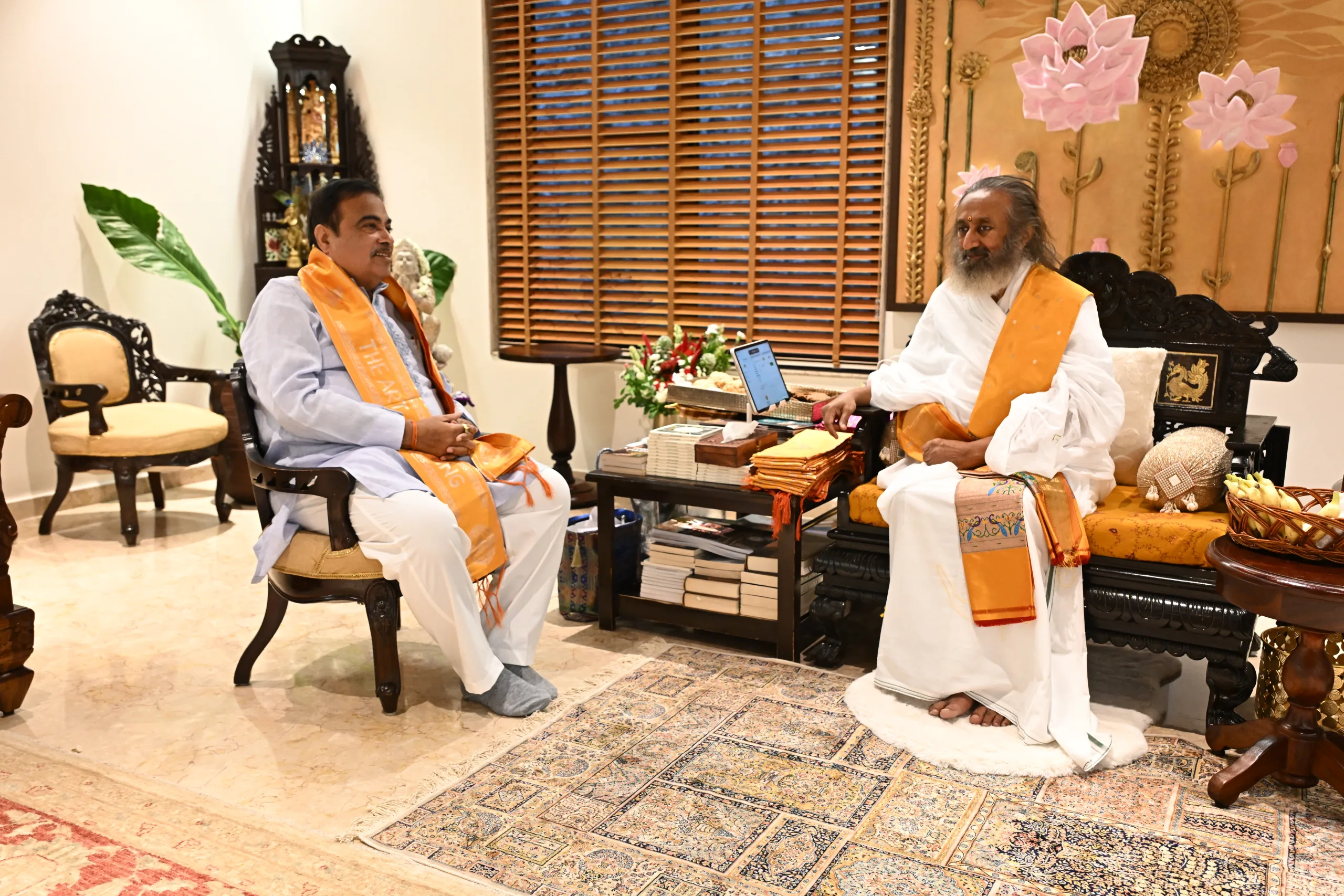
For Shri Satish Sharma, Cabinet Minister in the Government of Jammu & Kashmir,, holding multiple portfolios, the memory was deeply personal. “During our darkest times, you stood by us. You held our hand,” he said, recalling Gurudev’s engagement with the people of Kashmir through some of the region’s most difficult years. It was a sentiment echoed in different ways and a numbet of times across the celebrations, that beyond the public figure known to millions, there was someone people felt had shown up when it mattered.
For Andhra Pradesh Chief Minister Shri N. Chandrababu Naidu, Gurudev’s contribution lay in his ability to build a bridge between ancient wisdom and modern governance. Recalling Art of Living programmes conducted three decades ago for ministers, legislators and senior bureaucrats, he spoke of the tangible impact they had created, describing Gurudev as “a global humanitarian, a messenger of harmony and a bridge between the wisdom of ancient Bharat and the aspirations of the modern world.”
Again and again, speakers returned to the unusual breadth of work that had emerged from a spiritual movement. Manipur Governor Shri Ajay Kumar Bhalla reflected on how The Art of Living had taken wisdom that once lived in homes and traditions and given it a language that resonates across the world. He spoke of free schools for children with little more than “their hunger to learn,” of communities healing after conflict, of forests replanted and rivers restored. At the heart of it all, he said, was seva, not as obligation, but as “love as action.” Looking at Gurudev’s seven decades, he summed it up as “A life lived wholly in service.”
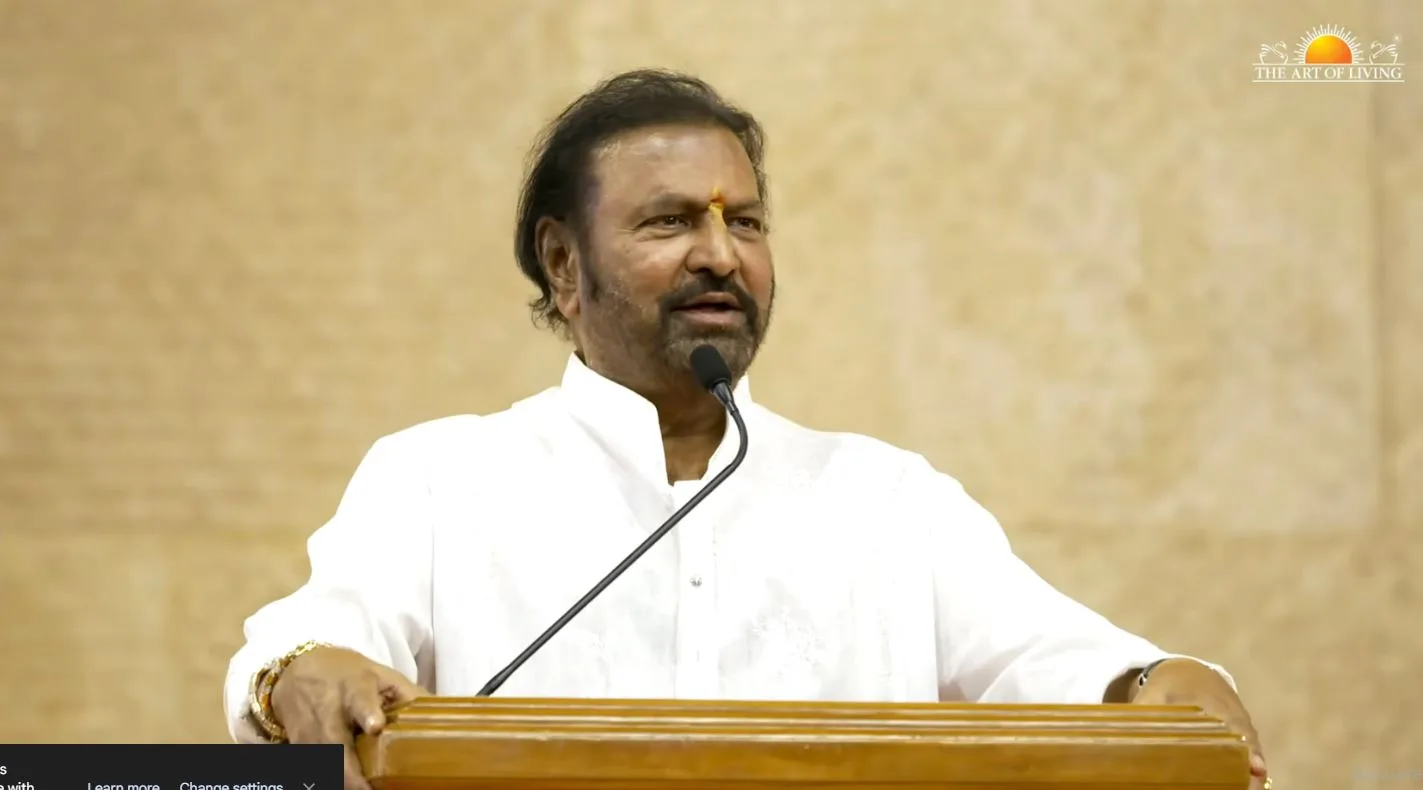
Others marvelled at the way that service translated into individual lives. Karnataka Cabinet Minister Shri Mankal S. Vaidya said, “ Gurudev has transformed the lives of people who had lost everything, helping them rise again. When children have no parents, no family, or no support system, the organization tells them: ‘We are here for you. We will shape your future, educate you, and help you live with dignity.’ He added, “Whoever comes under his guidance, or witnesses his service naturally becomes inspired to do good and help others.”
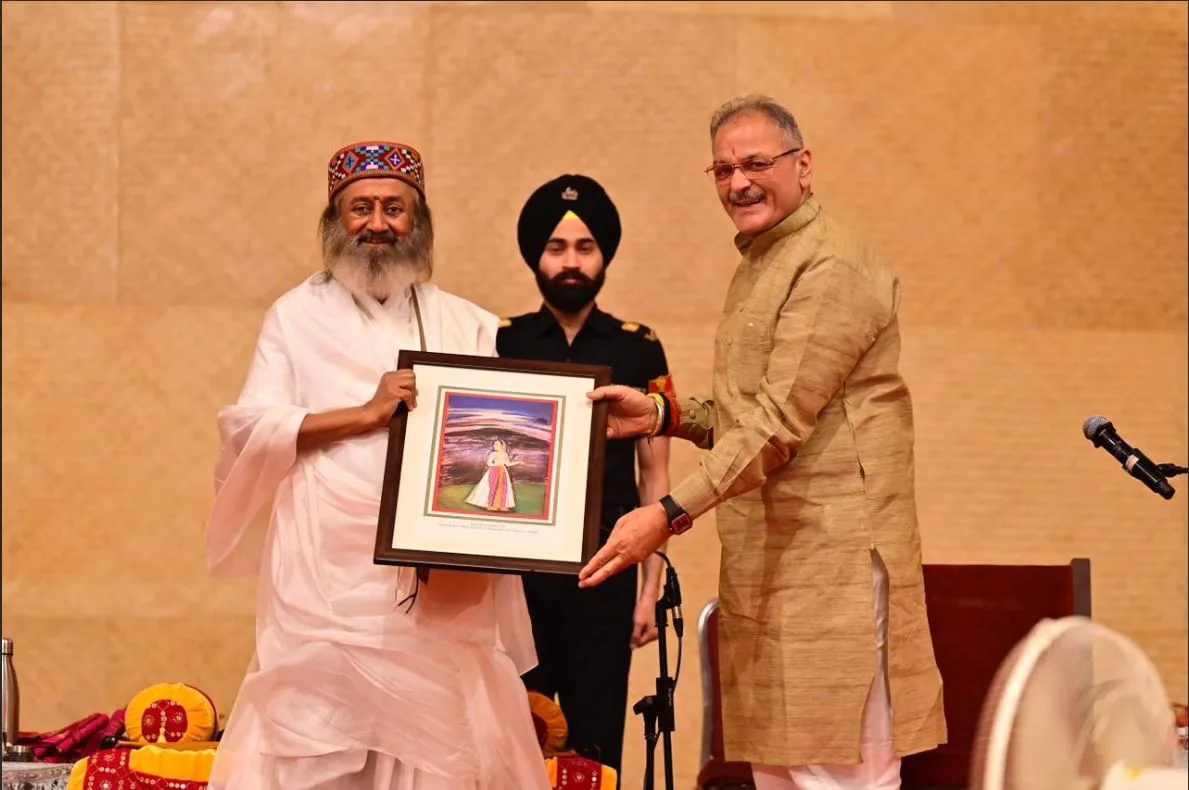
Several dignitaries spoke of Gurudev’s presence that seeps into the highly inspired nature of his work that has rippled across continents to create lakhs of dedicated volunteers and teachers. Governor of Himachal Pradesh Hon. Shri Kavinder Gupta described him as one of those rare individuals whose very presence brings calmness, clarity and positive energy. Goa Chief Minister Shri Pramod Sawant reflected on how Gurudev’s vision had helped shape conversations around happiness and well-being in his state, while also giving direction to young people struggling with stress and violence.
The steady stream of saints and spiritual leaders who arrived at the ashram may have come from different faiths but they all seemed deeply affected by Gurudev’s unconditional love snd sense of belonging. Swami Chidanand Saraswati of Rishikesh’s famous Parmarth Niketan, described Sudarshan Kriya and The Art of Living as “a new sun, a new light” needed by the world today. Having witnessed Gurudev’s work over decades, he spoke of a man capable of transforming conflict into dialogue and hostility into friendship. Sadhvi Bhagawati Saraswati called it nothing less than a “revolution of consciousness,” unfolding quietly across the world, one mind and one heart at a time.
Bishop Dr. Marvin Mathew, Archbishop, Sefi Diocese, Anglican Communal Churches of India, pointed to something profound and necessary of our times, “He never divides people on the basis of faith. Instead he helps people become better human beings, go deeper in their own faith.”
For business icon Ashok Hinduja, Gurudev’s influence could be seen in boardrooms as much as meditation halls. Recalling interactions with the Hinduja Group’s global CEOs twenty-five years ago, he credited Gurudev’s insights on leadership and management for continuing to shape the organisation’s journey even today.
The scale of what had grown from a small initiative in 1981 was not lost on the country’s leaders. While inaugurating the Dhyan Mandir, a splendid meditation hall at the ashram, Prime Minister Shri Narendra Modi compared The Art of Living to a vast banyan tree whose branches now touch countless lives across the world. Maharashtra Chief Minister Devendra Fadnavis called Gurudev “India’s biggest spiritual ambassador to the world.” Haryana Governor Ashim Kumar Ghosh reflected that the lamp lit forty-five years ago now shines across more than 182 countries.
Even those encountering the Ashram for the first time seemed struck by something difficult to quantify. Her Highness Rajmata Saheba Shrimati Raseshwari Rajalakshmi ji, of Jaisalmer, described the experience as “out of the world,” while Thakur Saheb Praveen Singh Daspanji expressed amazement at the discipline, dedication and spirit of volunteerism that animated the sprawling campus.
Taken together, the tributes spoke of a teacher, a humanitarian, a peacebuilder, a cultural ambassador, and the inspiration behind a global movement dedicated to bringing happiness to individuals and bringing harmony and social change in the world around us. Different people observed different facets. Yet across their varied experiences ran a common thread: an acknowledgement that the ideas Gurudev set in motion forty-five years ago continue to find resonance in villages, cities, rural classrooms, boardrooms, government institutions, environmental projects and communities across the world.
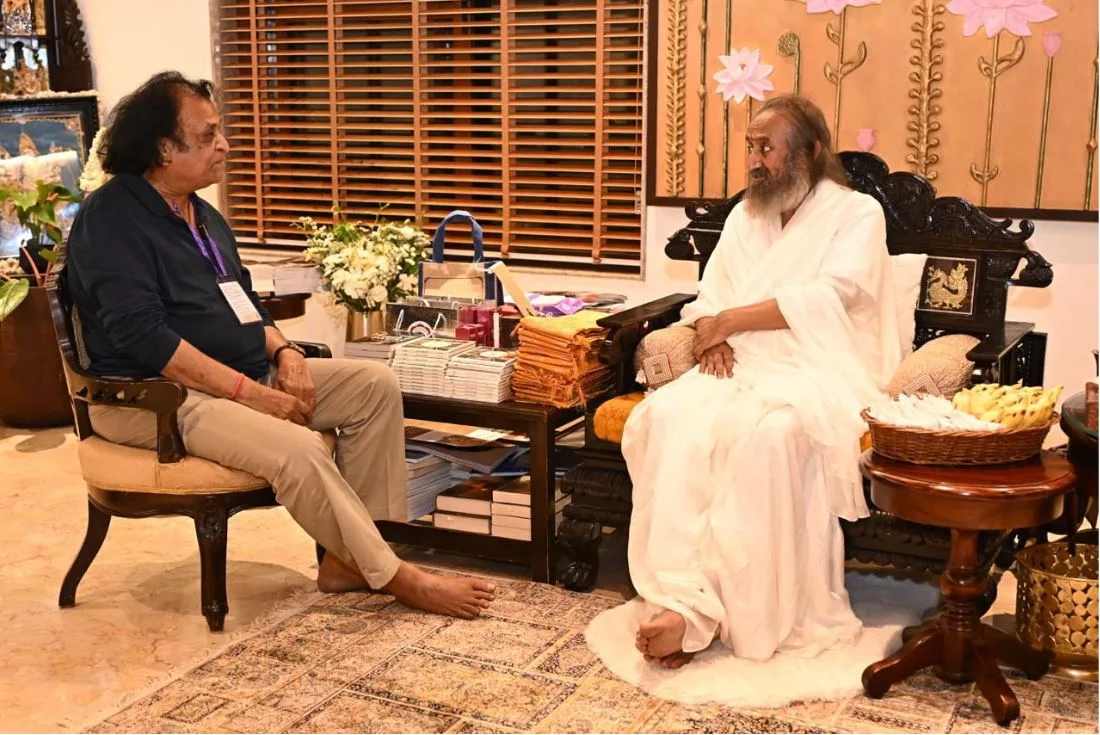
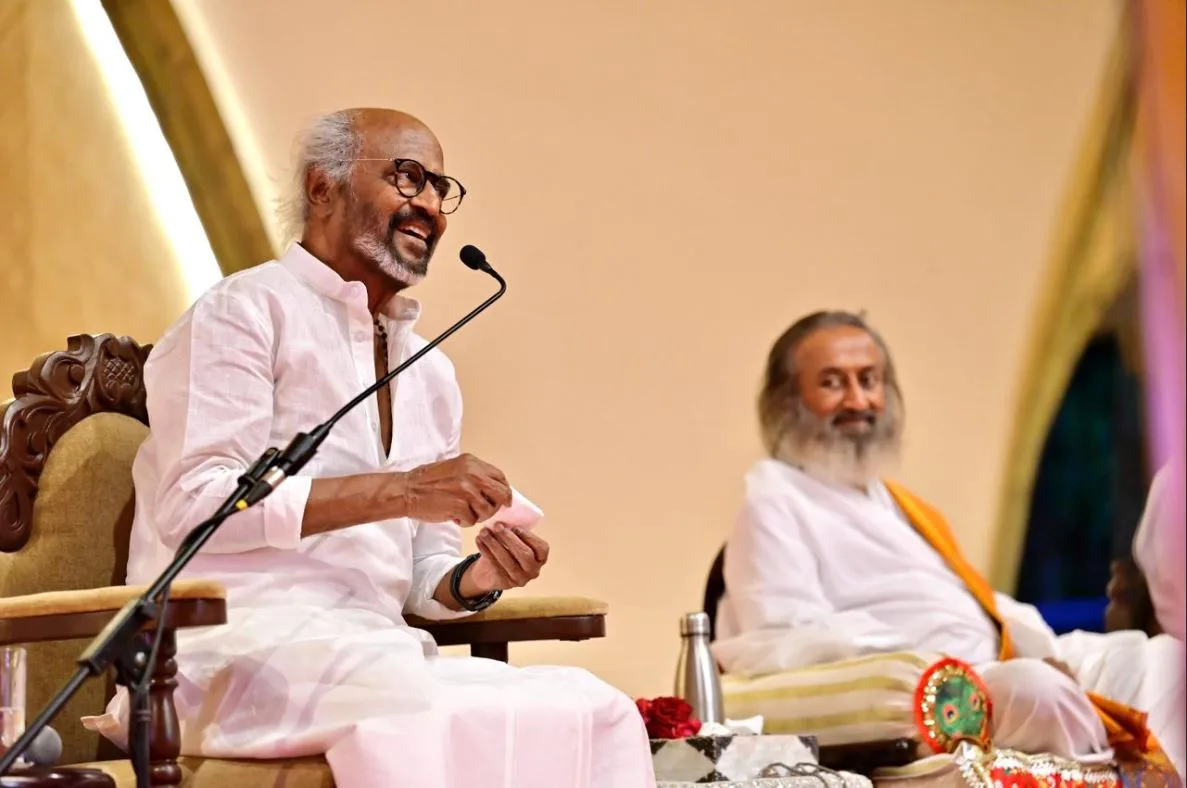
And this, probably is the secret of Gurudev’s spiritual stardom that the legendary actor Rajnikant talked about. A much loved superstar himself, Rajnikanth shared during his recent visit to the Ashram, what he feels is a deeply personal lesson, “When I sat beside Gurudev, not a single person even looked at me, they were all so focussed on him. That is the power of spirituality. Stardom comes and goes. But spiritual stardom is supreme.”
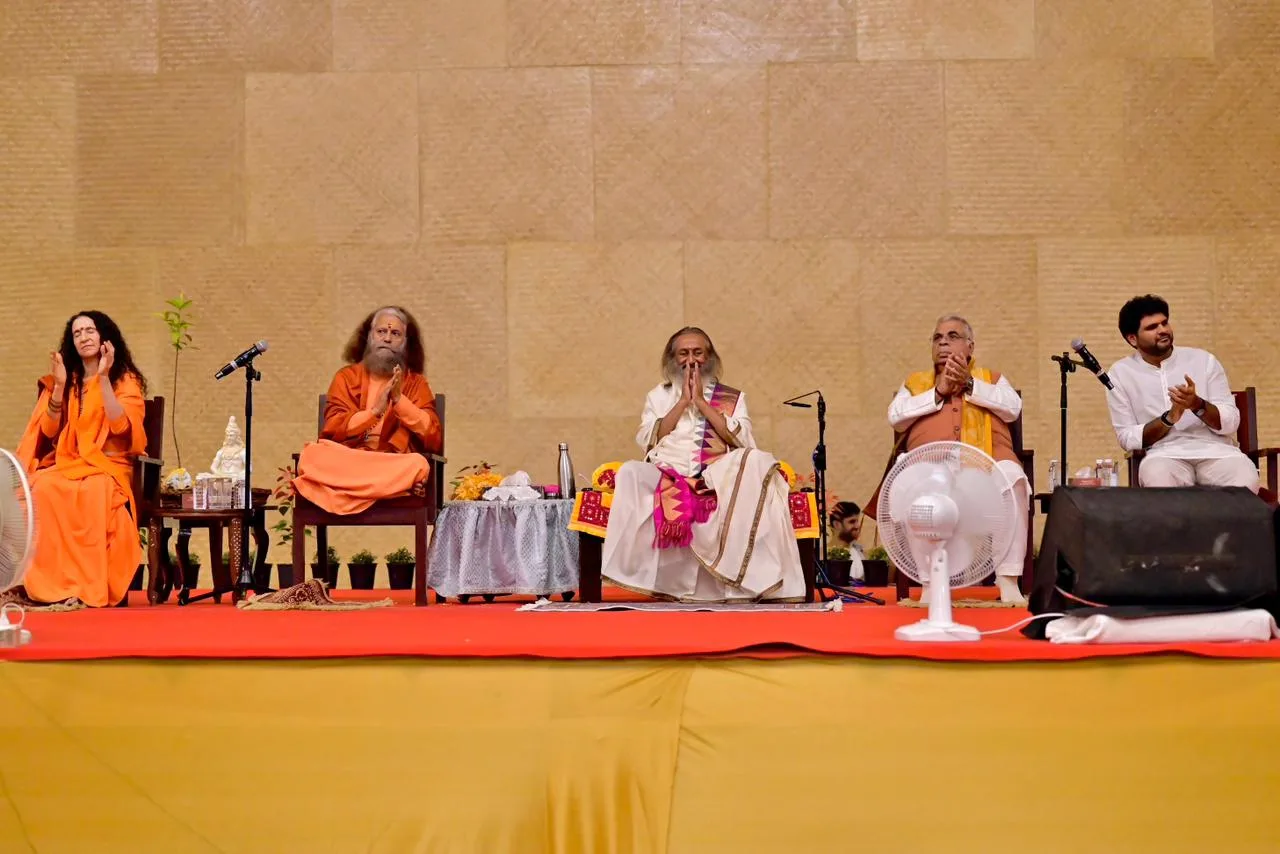
India is a deeply diverse nation, and we take pride in that diversity. Differences of ideology, caste, religion, community, gender, language, and political beliefs have long shaped and separated us. ‘Unity in Diversity’ is an idea we cherish, though in reality it is not always easy to achieve. Yet this familiar narrative transforms within the confines of one ashram, where people from vastly different backgrounds truly come together as one. And this is made possible by a man, who is neither a politician nor a policymaker. Then how does he command the love and respect of millions?
The simple answer is, love. Kana Das, a devotee and a farmer who practices natural farming travelled all the way from West Bengal to take part in the 45th year celebrations, said, “I am a farmer. I am here because I am grateful for what Gurudev has done in my life. With his love, he gave me another chance to live and prosper. I was in deep financial loss because of the money I was spending in chemical fertilizer and buying seeds. Flooding and monsoons had made life more difficult. Then Gurudev’s natural farming trainers came to me, gave me hope, taught me meditation and breathing (Sudarshan kriya). They showed me hope, they showed me how I could cut my input costs by adopting natural farming and home-made inputs. It had made all the difference. When you give hope to a poor farmer, you give hope to many families in similar state. Today I have been able to book my own ticket and come here to meet Gurudev. I am proud of it, and grateful from my heart.”
Whether it was Colombia, Kosovo, Iraq, Ivory Coast or India’s Bihar, Kashmir or Northeast, over 45 years, Gurudev did not let the idea of peace as an experience remain confined to the comfort of urban spaces but took it where it was needed the most- regions ravaged by war and conflict, societies and communities where communication had broken down with little room for a conversation or trust. His programmes in these difficult areas have focused on trauma relief, emotional healing, and community rebuilding that have helped individuals recover from the psychological scars of war and violence.
Of all the peace work, perhaps this level of unwavering care and compassion for a broken world is where Gurudev’s legacy as a voice of peace becomes vital.
Tejasvi Surya, Member of Parliament, Bengaluru summed it up during his visit to the Ashram, saying, “The Art of Living, under Gurudev’s guidance, has gone to places where armies have hesitated to go. And they have gone there with the mantra of peace and have brought reconciliation and hope to places where even the greatest of world leaders had completely taken their hands off.”
In an open air Satsang, Hon. Chief Minister of Manipur Shri Yumnam Khemchand Singh, said, “In our place, Manipur, such an ethnic crisis took place. Every day there were sounds of gunfire. Children died. Elderly people died, homes were burnt. From Gurudev, I asked for one thing. I asked him for peace.” Among the many other efforts, a football academy is being run by The Art of Living for the displaced children of Manipur, so that children can be allowed to be children for a few hours each day, setting aside the pain and trauma.
But then, what is Art of Living? During one of the evening Satsangs, a large gathering where mesmerising devotional music, meditation and spontaneous clapping and dancing would happen all at once, Gurudev captured the core of his movement that “Art of Living means celebrating life,” urging that our entire existence should become a continuous celebration. Looking out at the diverse international crowd, he described the Earth as a “very small place for us” and passionately reaffirmed the vision of “Vasudhaiva Kutumbakam,” or the “one world family.”
Inspired by this vision, over the past four and half decades what has emerged is one of the world’s largest volunteer-driven humanitarian movements, working across the fields of peace building, conflict resolution, disaster relief, and mental well-being. Active in more than 182 countries, the organisation has touched a billion lives through its emphasis on human values, meditation, and service.
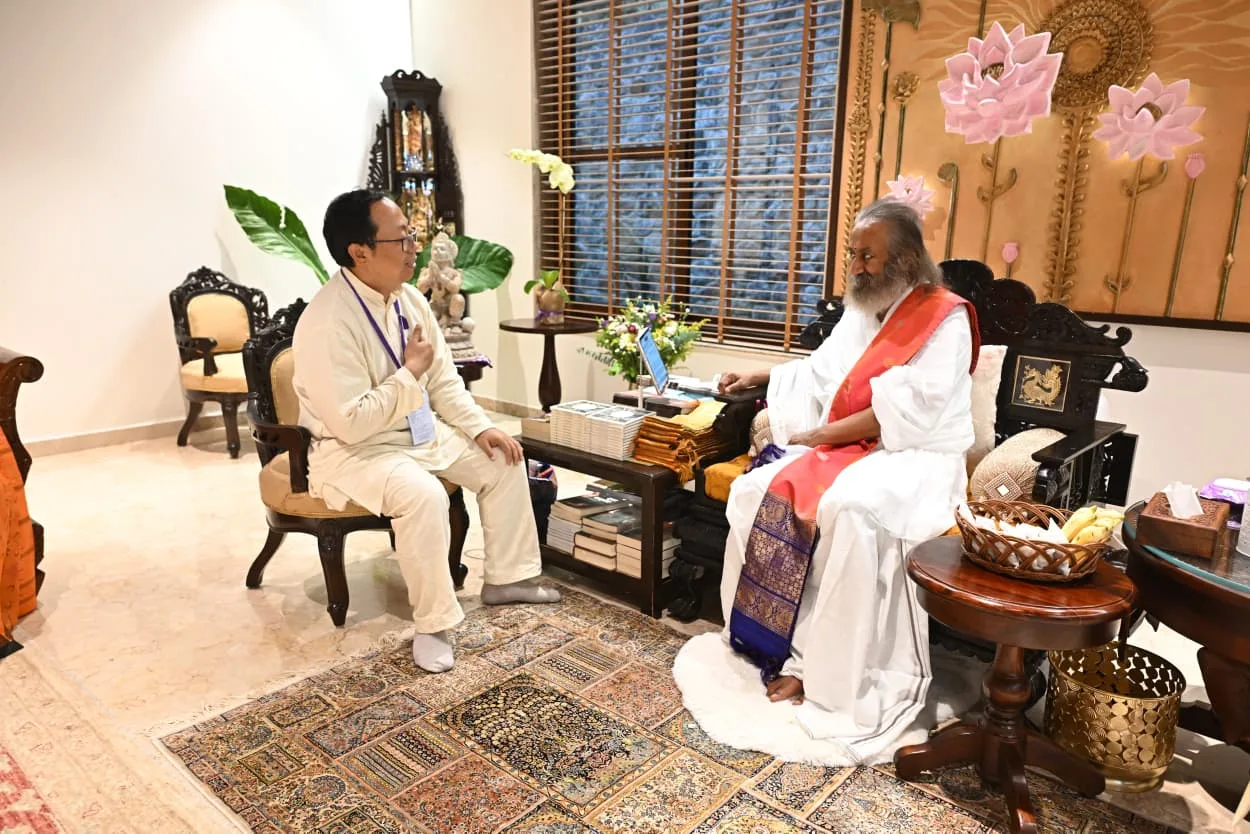
Infact, during his visit to the ashram for the inauguration of Dhyan Mandir, the Prime Minister Shri Narendra Modi also launched nine nationwide service initiatives of the organisation aimed at bringing inclusive development across education, youth and women empowerment, reforestation, environmental conservation, tribal welfare, healthcare, prison reform and digital literacy.
Equally significant has been the organisation’s contribution to the global promotion of yoga, meditation, and mental wellness. Through breathing techniques such as Sudarshan Kriya, meditation programmes, and stress-relief workshops, the Art of Living has introduced millions of people to practices rooted in ancient Indian wisdom traditions. Its programmes are conducted in schools, prisons, corporate institutions, rural communities, and international forums, promoting emotional resilience, inner peace, and holistic well-being.
The same sentiment resonated in the words of Hon. Chief Minister of Maharashtra, Devendra Fadnavis, when he recently joined a distinguished gathering of global leaders and social change-makers at the ashram. “The vision we hold of India as a Viswaguru is not just economic or military power but rooted in spiritual power. And the path towards becoming that spiritual superpower is guided by Gurudev Sri Sri Ravi Shankar.” While talking about the need to carry India’s greatness, its principles, thoughts and spiritual visions to the world, he said, “Today, if anyone is fulfilling that need, it is Gurudev. He has presented our spiritual thought, our universal knowledge and our entire wisdom before the world, and has worked to draw the world’s attention towards us.”
His state, Maharashtra, for example, has witnessed remarkable transformation in river rejuvenation, water conservation, and natural farming through several initiatives undertaken by the Art of Living. Acknowledging Gurudev’s contribution he further added, “In Maharashtra, for the last 10-12 years, I myself have been working with the Art of Living. The way Art of Living has worked in natural farming, our farmers, who had fallen into despair somewhere, were inspired by Gurudev. He made them the architects of their own lives and brought transformation into their lives.”
The gift of Intuition
At a time when conversations around education are increasingly dominated by performance pressure, digital distraction, anxiety and shrinking attention spans, one of the most thought-provoking moments during The Art of Living’s 45-year celebrations came through an event centred not on marks or competition, but on consciousness itself.
In what emerged as one of the largest and most extraordinary showcase of the power of intuition in the country, over 11,000 children and parents who are part of The Art of Living Intuition Process came together for a striking exploration into focus, perception, emotional balance and the untapped possibilities of the human mind. Across the Ashram, children participated in blindfold reading, memory exercises, rapid pattern recognition activities, intuitive games and sensory demonstrations with an ease that left educators, psychologists, scientists and parents visibly intrigued. The most arresting moment came when 50 children cycled blindfolded through the curves and bends of the Ashram roads with complete confidence.
Yet the significance of the gathering lay beyond the spectacle.
The Cultural Showcase
For decades, Gurudev has consistently used his global platform not only to speak about peace and human values, but also to protect and revive India’s artistic and cultural traditions, particularly forms that are slowly fading from public memory. This vision found a place in the 45 yesr celebration too in the form of BHAAV 2026: The Expressions Summit, a five-day cultural gathering held in the Ashram.
Bringing together leading dancers, musicians, theatre practitioners, visual artists and scholars, the summit placed rare and classical Indian traditions at the centre of contemporary cultural conversation. Rooted in texts such as the Bhagavad Gita and the Natyashastra, BHAAV moved beyond performance into deeper explorations of the spiritual and philosophical foundations of art itself.
Particularly striking was the focus on lesser-seen traditions such as Perini Nritya, the ancient warrior dance form rooted in the Kakatiya period, and Agama Bharatam, both brought back into public attention through performances and discussions. Dr. Padma Subrahmanyam examined Natyashastric angika in dialogue with the Bhagavad Gita, while SNA awardee Saswati Sen conducted a workshop on Geet Govind as an embodied knowledge system.
The music sessions blended scholarship with performance. T. N. Seshagopalan explored the musical dimensions of Geetha Govindam, Sumitra Guha led a masterclass on the bhajans of Meera and Surdas, while Chitravina N. Ravikiran presented Naada Brahma through the 12 Jyotirlinga Kritis. In the visual arts segment, Padma Shri K. K. Muhammad reflected on conserving the temples of Chambal and their lived histories, while Hemoprova Chutia interpreted the Bhagavad Gita through Assamese Barnab Astra tirelessly woven in Muga silk and wool.
The theatre segment revisited the foundational principles of the Natyashastra, approaching performance as a synthesis of angika, vachika, aharya and sattvika abhinaya. Veteran theatre personality Ram Gopal Bajaj led a session on theatre as a medium of expression, while National School of Drama, Bengaluru Director Chittaranjan Tripathy explored musicality in acting and the deep relationship between rhythm, emotion and performance traditions.
Closing remarks
Recalling the early days of The Art of Living, Gurudev on one of the days shared how the organisation’s very foundation reflected a coming together of diverse worldviews. Among the first trustees of The Art of Living were former Chief Justice of India Justice P. N. Bhagwati and Justice V. R. Krishna Iyer. While one was deeply spiritual and the other known to be a committed rationalist, both were drawn to Gurudev’s vision and agreed to serve as founding trustees.
Forty-five years after a movement was born out of Gurudev’s vision of creating a stress-free, violence-free society, one wonders why it continues to resonate with such force across continents, cultures and generations. Perhaps the answer lies in a perspective shared by Dinesh Gundu Rao, a seasoned leader and cabinet minister in the Karnataka government at the 45 year commomeration,
“People from all sections of society, across religions and communities, come together here without barriers or divisions. Through decades of tireless work, Gurudev has taken India’s timeless message of spirituality, brotherhood, and human values to the world.”
30 lakh farmer beneficiaries, 1.2 lakh children studying in Art of Living’s free schools, 75 rivers and tributaries being rejuvenated as we speak, over 8 lakh prison inmates who found freedom within. What explains the popularity and far reaching impact of a spiritual leader of the stature of Gurudev?
Dinesh Gundu Rao adds, “His growing global popularity reflects the authenticity, transparency, and sincerity of his work. Gurudev has always led by example. He has not merely spoken about these values, but has lived them.”
Advertisement