Suicide note reveals MP girl committed suicide in Nagpur due to cancellation of NEET exam
The deceased girl, Akansha Chaturvedi, belonged to Magania village in MP's Mauganj district.
Temperatures between 42-46°C have triggered a drinking water crisis across Madhya Pradesh, sparking a political battle between Congress and BJP over Rs 25,000 crore spent under Jal Jeevan Mission.




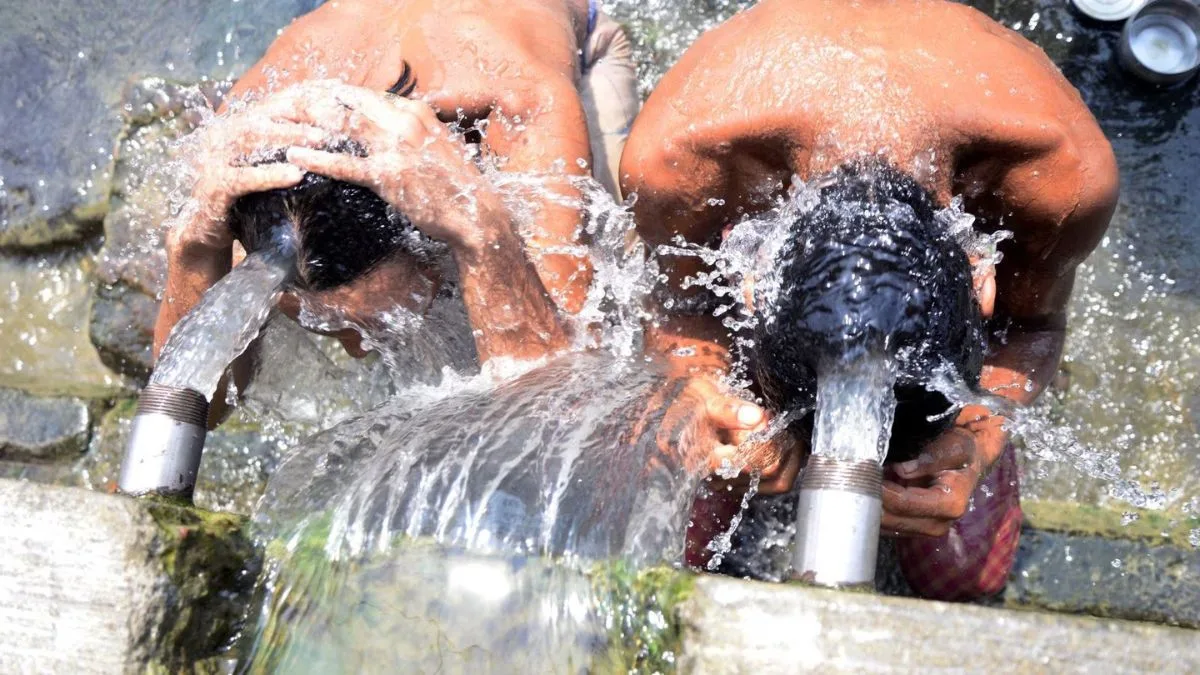
Representative Image
Large parts of Madhya Pradesh are under severe heatwave conditions with temperatures ranging between 42 to 46 degrees Celsius across several districts. Among major cities, Gwalior recorded 44.1 degrees Celsius, Bhopal 43.2 degrees, Jabalpur 43.9 degrees, Ujjain 42 degrees, and Indore 41.2 degrees Celsius.
Before this, at least 16 cities in the state recorded temperatures of 44 degrees Celsius or above on a single day. Khajuraho recorded 46.4 degrees Celsius, while Nowgong in Chhatarpur district recorded 45.6 degrees Celsius. Datia touched 45.2 degrees, while Damoh, Satna, and Tikamgarh reached 45 degrees Celsius.
Advertisement
The weather department issued a red alert for severe heatwave in six districts: Niwari, Tikamgarh, Chhatarpur, Panna, Satna, and Rewa. Gwalior and Jabalpur remain under orange alert.
Advertisement
Groundwater levels have declined sharply across Madhya Pradesh. Water supply has become irregular in many urban and rural areas.
In Bhopal, borewells in several localities have started drying up. Residents complain that Narmada water supply has reduced drastically. In some areas, water comes for barely 12 to 15 minutes daily.
In Umaria district, videos circulating on social media showed children walking several kilometres every day carrying containers to fetch water. Wells and hand pumps have dried up due to the extreme heat.
In Tanda village of Guna district, residents were seen digging pits to collect muddy water for drinking and daily use. Villagers alleged that both humans and animals were forced to depend on the same water source because of the lack of proper supply.
Residents across Indore, the commercial capital of Madhya Pradesh, are receiving water only once every two days amid intense summer heat. The shortage has triggered protests, road blockades, clashes over water tankers in several neighbourhoods.
Residents complained of waiting for hours for tanker supplies, while many women were seen carrying empty containers over long distances in search of water. The crisis has intensified in both eastern and western parts of the city, where several colonies now depend entirely on water tankers after borewells dried up due to falling groundwater levels.
Back in Bhopal, the dependence on private water tankers has grown sharply. A 5,000-litre tanker, which earlier cost around Rs 350, is now priced between Rs 450 and Rs 500.
The water crisis has become a major political issue between the Congress and the Bharatiya Janata Party. The Congress has accused the BJP government and BJP-controlled civic bodies of failing to provide adequate and safe drinking water despite huge expenditure under various schemes.
Leader of Opposition Umang Singhar alleged on Saturday that the state government spent thousands of crores under the Jal Jeevan Mission and other drinking water schemes, but ordinary citizens were still struggling for water.
Singhar said: “Today, the people of Madhya Pradesh are yearning for a basic necessity like water. Tribal women are forced to walk several kilometres to fetch water. Children are drinking contaminated water and the crisis in villages is deepening. Yet, the BJP government appears unconcerned.”
He claimed that nearly Rs 25,000 crore was spent under the Jal Jeevan Mission and another Rs 490 crore under the Rural Tap Water Scheme during 2024-26, but alleged that the benefits had failed to reach the public.
The Congress campaign gained momentum earlier this week after Madhya Pradesh Congress President Jitu Patwari staged protests in Indore over water shortages and alleged contamination in drinking water supply.
Patwari claimed that nearly 98 per cent of 240 water samples collected from 29 wards in Indore had harmful bacteria.
This claim echoes a wider concern in the state. In December 2025, a water contamination crisis in Bhagirathpura, Indore, had killed at least 15 people and hospitalised approximately 270 others after municipal drinking water was found to contain bacteria typically associated with sewage. Laboratory tests confirmed bacterial contamination in 26 water samples from Indore.
The BJP rejected the allegations and accused the Congress of indulging in “cheap politics”. Indore Mayor Pushyamitra Bhargava defended the municipal administration and said Congress workers were trying to create unnecessary controversy.
The state government continues to highlight ongoing pipeline expansion, water conservation, and augmentation projects.
With temperatures remaining extremely high and public distress growing, the water crisis is rapidly emerging as a major political flashpoint ahead of next year’s municipal elections in the state.
The monsoon is likely to enter Madhya Pradesh between June 10 and June 16, according to IMD Bhopal. Until then, millions of residents across the state face the twin burden of extreme heat and shrinking access to drinking water, with no quick resolution in sight from either side of the political aisle.
Advertisement