American historian Audrey Truschke has once again triggered controversy after challenging the Indian government’s interpretation of the famous Harappan “Pashupati Seal”, reigniting a heated debate over India’s ancient civilisational identity and the interpretation of archaeological symbols linked to Hindu traditions.
The latest row erupted after the Ministry of Culture called the over 4,300-year-old seal from the Indus Valley Civilisation a powerful marker of India’s “unbroken civilisational continuity” and referred to the central figure on the artefact as “Shiva-Pashupati”.
Advertisement
Audrey Truschke publicly rejected that interpretation, arguing that the image on the seal should not be associated with Lord Shiva and instead may have connections to older cultural influences from regions outside the Indian subcontinent.
The artefact at the centre of debate
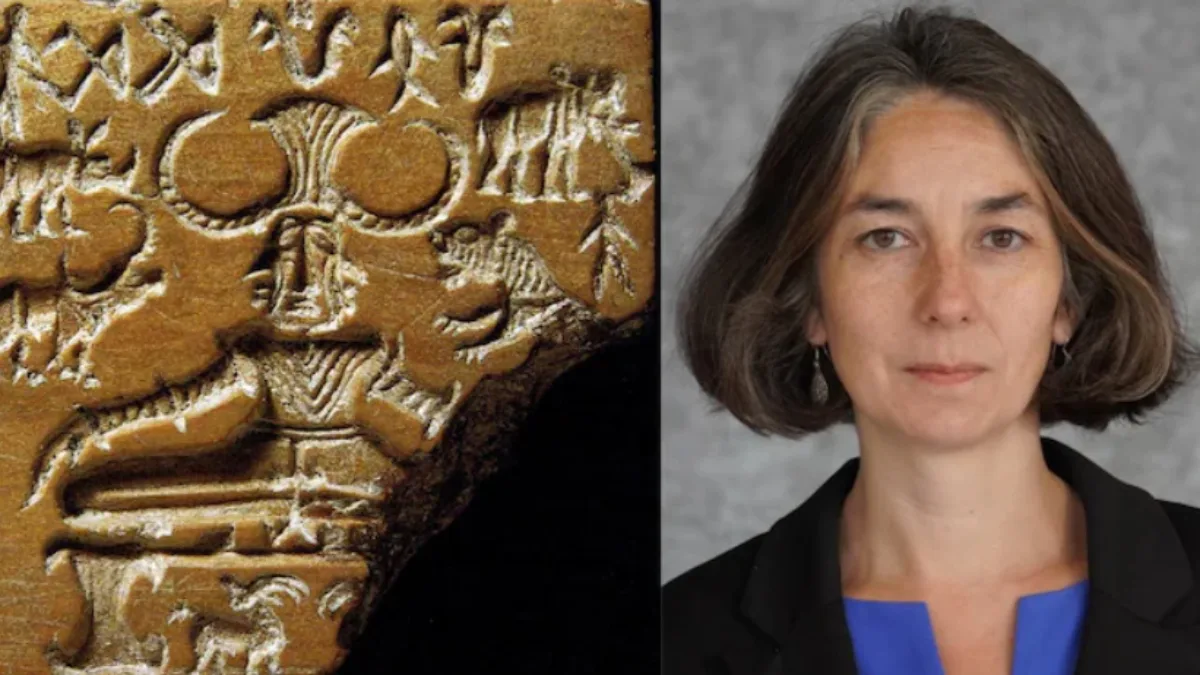
The disputed artefact is a small steatite seal discovered during excavations at Mohenjo-daro. Archaeologists estimate the object dates back roughly to 2300-2000 BCE.
The seal depicts a horned human figure seated cross-legged and surrounded by animals. Decades ago, British archaeologist John Marshall identified the image as a possible “Proto-Shiva” figure or an early form of Pashupati, often interpreted as the “lord of animals”.
That interpretation has remained influential in sections of Indian historical and cultural discourse for decades, though scholars across the world continue to debate the exact identity and symbolism of the figure.
What the Ministry said
The Ministry of Culture highlighted the ancient seal in a social media post discussing India’s long civilisational heritage. The ministry said the artefact reflected early spiritual and yogic traditions that continue to survive in Indian cultural life even today.
The government also pointed to the seated posture of the figure depicted on the seal, calling it evidence of deep-rooted yogic symbolism associated with Shaivite traditions.
The remarks quickly drew reactions online, with Audrey Truschke disputing the historical interpretation offered by the ministry.
Audrey Truschke disputes Shiva connection
Responding to the government’s description, Audrey Truschke argued that the figure represented on the seal was “not Shiva” and suggested that the imagery may have emerged from what she described as “proto-Elamite iconography”.
She claimed the seal more likely represented a broader Eurasian “lord of animals” figure rather than an early depiction connected to Hindu belief systems.
To support her argument, Audrey Truschke also referred to academic discussions examining similarities between motifs found in the Indus Valley Civilisation and neighbouring ancient cultures.
Her remarks immediately drew criticism from several Indian historians, writers and commentators, many of whom accused her of undermining indigenous interpretations of Indian civilisation and selectively overlooking features associated with the subcontinent’s own spiritual traditions.
Debate expands beyond archaeology
The dispute has now moved beyond a purely academic discussion and evolved into a wider political and cultural argument over India’s historical continuity and ownership of civilisational narratives.
Critics of Audrey Truschke accused her of repeatedly challenging traditional Indian interpretations of history while giving greater weight to external cultural theories.
Supporters of the government’s position argued that the seal’s yogic posture, animal symbolism and broader iconography have long been viewed by many scholars and practitioners as connected to early Shaivite traditions.
Defending the long-held association of the seal with Lord Shiva’s Pashupatinath form, Bhakt Charandas Maharaj asserted that Sanatan culture and Indian civilisation date back thousands of years and are supported by extensive historical and archaeological evidence. He said the Pashupati Seal has traditionally been linked to Lord Shiva in Indian belief systems and cultural understanding for generations. Raising doubts over such symbols, he added, was inappropriate and disregarded the sentiments attached to India’s civilisational heritage.