No compromise with zero-tolerance policy towards crime: CM Yogi
Uttar Pradesh Chief Minister Yogi Adityanath said, "Security is the most essential requirement for development and enterprise.
Uttar Pradesh Chief Minister Yogi Adityanath said that just as the people of the country united to confront the global COVID-19 pandemic, a similar sense of collective responsibility and national spirit is now needed amid the evolving situation in West Asia.




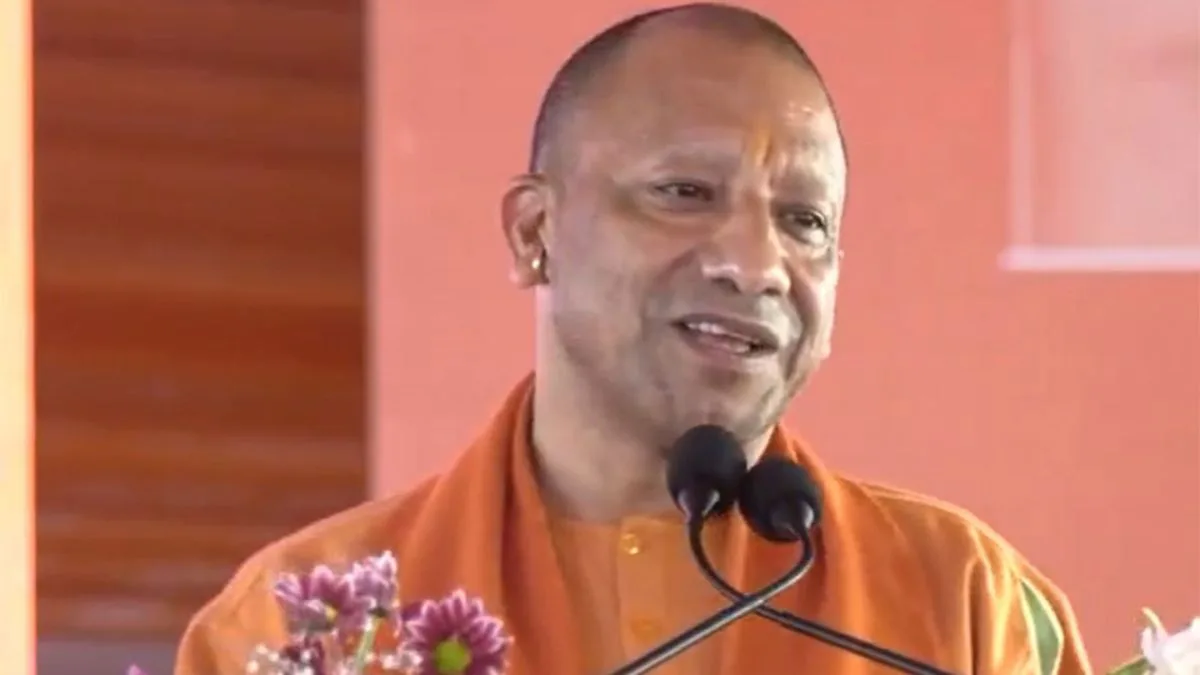
File Photo: ANI
Uttar Pradesh Chief Minister Yogi Adityanath said that just as the people of the country united to confront the global COVID-19 pandemic, a similar sense of collective responsibility and national spirit is now needed amid the evolving situation in West Asia.
He said, “The global crisis could impact fuel, food, and fertiliser supplies. In such circumstances, every citizen should contribute to strengthening the country’s self-reliance mission by adopting alternatives such as public transport and renewable energy.”
Advertisement
The Chief Minister was addressing the ‘9 Defining Years of Transforming UP’ conclave here on Thursday.
Advertisement
Referring to Prime Minister Narendra Modi’s appeal, the Chief Minister called for adopting renewable energy, alternative energy sources, carpooling, metro services, electric vehicles, and shuttle bus systems to conserve fuel.
He also spoke about developing community kitchen models based on biogas plants in rural areas through more than 7,700 cow shelters currently protecting over 1.5 million cattle, thereby reducing dependence on LPG.
The Chief Minister emphasised that national interest must remain paramount during times of crisis.
Every citizen has a responsibility to stand with the nation and contribute positively. Criticising those making negative comments based on incomplete information, he said the Prime Minister’s appeal should be read carefully, understood seriously, and reflected upon thoroughly before reaching conclusions.
“If the nation survives, all of us survive. If the state remains secure, all of us remain secure. If the country prospers, we too move toward prosperity,” he said.
The Chief Minister said, “It is important to provide the younger generation with accurate information about Uttar Pradesh. Between 500 and 1,500 years ago, India accounted for 44-45 per cent of the global economy because of collective participation, coordination, and mutual cooperation in every sphere of life. India possessed some of the world’s finest land and water resources, while diverse traditional farming systems existed across regions. Along with food security, the country has developed an excellent manufacturing and handicrafts ecosystem. Networks of micro, small, and medium enterprises were widespread, and Indian artisans and traders supplied goods to global markets. Due to immense potential in agriculture, manufacturing, and tourism, India emerged as an economic superpower.”
The Chief Minister said, “The economic prosperity visible in many parts of the world today has roots only 400-500 years old, whereas India had achieved prosperity much earlier. However, when India stopped trusting its own resources, knowledge, and innovation, and neglected research and development, the country gradually lagged.”
He noted that pilgrimage tourism once served as the primary form of travel and cultural integration. He added, “The tradition of carrying water from Rameswaram for rituals in Kedarnath and taking Gangotri water to Rameswaram connected northern and southern India. The twelve Jyotirlingas and the Char Dham pilgrimage circuits united the country culturally and spiritually. Life was organised in a manner that ensured no one became a burden on another, which contributed to India becoming a “Vishwaguru.” Despite a thousand years of invasions, oppression, and exploitation, India succeeded in preserving its identity and culture, something rarely seen elsewhere in the world.”
Describing the situation before 2017, the Chief Minister said Uttar Pradesh had been turned into a ‘Prashn Pradesh’. Young people faced an identity crisis, traders were migrating, farmers were dying by suicide, riots frequently occurred during festivals, and mafia rule and hooliganism prevailed.
He added, “Nepotism, corruption, and administrative indifference were at their peak. There was no proper system for electricity, roads, irrigation, or markets, while traditional industries were shutting down. Amid this atmosphere of despair and disorder, the people blessed the double-engine government under Prime Minister Modi’s leadership in 2017. After assuming office, the government spent the first month conducting departmental presentations with cabinet colleagues every evening from 6 p.m. to midnight to prepare action plans. The state treasury was empty, and there was not even enough money to pay salaries, but the government adopted a clear policy: no nepotism, no regionalism, and no dynastic politics.”
He added, “Today, development is no longer limited to Lucknow, Varanasi, or Gorakhpur. Equal development is taking place across all 75 districts and 58,000 gram panchayats. Uniform electricity supply has reached every region. A strict zero-tolerance policy toward crime and criminals is being implemented, along with zero tolerance toward corruption.”
The Chief Minister said Uttar Pradesh now accounts for 60 per cent of the country’s expressway network. The Purvanchal, Bundelkhand, and Ganga Expressways have been completed. India’s largest airport at Jewar (Noida) is ready, with flight operations beginning from June 15. The country’s first rapid rail service is operating between Delhi and Meerut. National waterways are active, while four-lane roads and interstate connectivity networks have expanded significantly.
Agricultural growth has increased from 8 per cent to 18 per cent. Farmers are receiving free irrigation, improved seeds, technology, and assured market access. Ninety-two per cent of sugarcane dues have been paid, while sugar mills have moved from losses to profitability and are now being developed into integrated sugar complexes. Uttar Pradesh is no longer considered a BIMARU state but has become the engine of India’s growth journey.
The Chief Minister said that earlier, no one paid attention to Uttar Pradesh’s MSME sector, and everything was left ‘to God’s mercy’ because the government was inactive. “When governments sleep, inspector raj prevails,” he remarked. Artisans became discouraged, harassed, and either migrated or struggled to survive.
Today, however, 9.6 million MSME units are actively functioning in the state, employing nearly 30 million people. Uttar Pradesh now has a 75,000-acre land bank. According to the Chief Minister, the first requirement for investment is security, the second is land availability, and the third is a clear policy framework. Uttar Pradesh no longer suffers from policy paralysis.
The government has formulated sector-specific policies for 34 sectors. “Now we have policy, intent, and the determination to move forward,” he said, adding that Uttar Pradesh has emerged as India’s most attractive investment destination.
The Chief Minister said that earlier, 6.5 million young people had to migrate to other states for industrial jobs, whereas today employment opportunities are available within Uttar Pradesh itself. Government jobs were once considered a distant dream, but the state has now provided more than 900,000 government jobs to youth.
He added, “Uttar Pradesh is among the states that have classified cheating and paper leaks as cognizable offences, with provisions for life imprisonment and confiscation of the guilty person’s property.”
Referring to the Mahakumbh, he said 660-670 million devotees visited the Triveni Sangam in Prayagraj for a holy dip, while Uttar Pradesh received a total of 1.56 billion tourists throughout the year. This, he said, has created employment opportunities for hotels, restaurants, local shopkeepers, taxi operators, and other service providers.
The Chief Minister said that today, the youth of Uttar Pradesh no longer face an identity crisis. Earlier, people would hesitate upon hearing the name of Uttar Pradesh, but today they look at residents of the state with respect. Women can now return home without fear at 6 p.m., 8 p.m., 10 p.m., or even midnight. Women are working night shifts in offices and industries, while girls are attending schools fearlessly.
He stated that per capita income in the state has tripled from ₹43,000 in 2017 to more than ₹1,20,000 today. The annual state budget, which was around ₹2.5 lakh crore earlier, has now increased to ₹9.12 lakh crore. The Gross State Domestic Product (GSDP) has risen from ₹12 lakh crore to ₹36 lakh crore. During this period, the government did not impose any new taxes, while simultaneously accelerating welfare schemes for the poor.
Advertisement