Why a 200-year-old mosque in Varanasi was demolished in the middle of the night
Authorities carried out a heavily guarded overnight operation in Varanasi as land was cleared for an ambitious transport hub project linked to Kashi railway station.
The Allahabad High Court has clarified that shared spaces cannot be claimed for exclusive religious use, reinforcing that individual rights must coexist with public order and equal access principles.




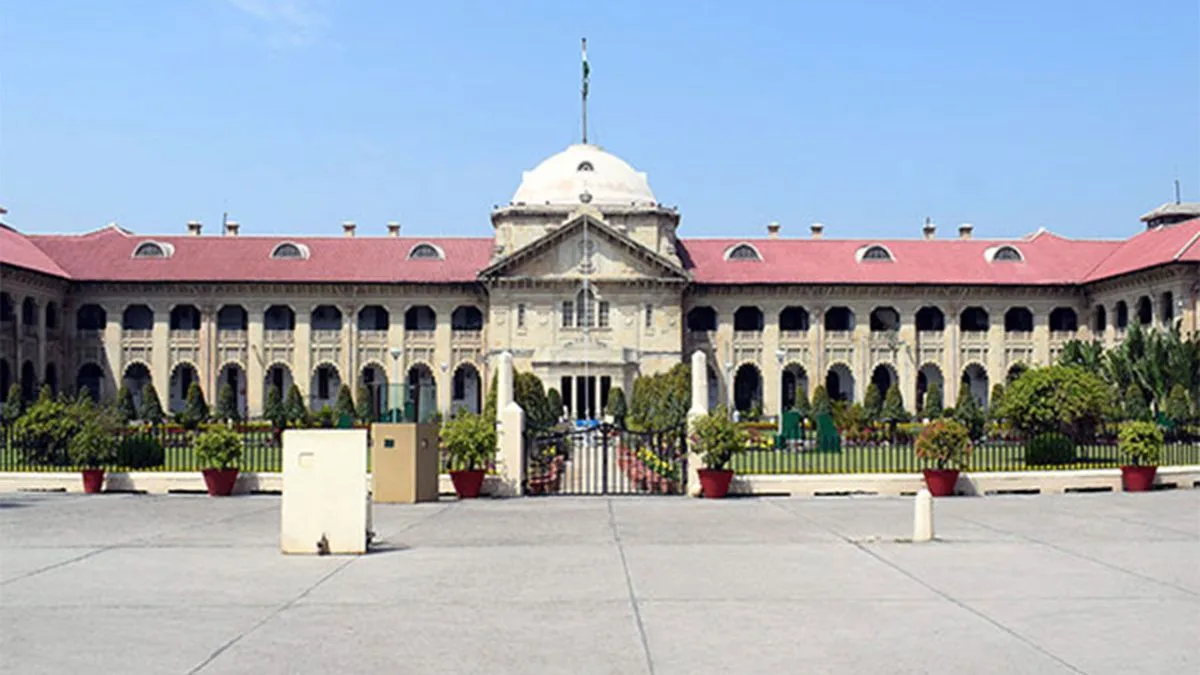
The Allahabad High Court ANI
The Allahabad High Court has made it clear that no individual or group can claim public land just for religious use, including offering Namaz, saying such activities must respect public order and the rights of others.
The observation came as a Division Bench of Justice Saral Srivastava and Justice Garima Prasad dismissed a petition filed by a Sambhal resident seeking relief over the use of land for offering Namaz. The petitioner, Aseen, had sought permission and police protection to hold regular prayers at a site in village Ikona, claiming ownership through a registered gift deed dated June 16, 2023.
Advertisement
The Bench made it clear that no single party can claim unilateral rights over public property for religious activities. “Public land cannot be unilaterally used by any single party for religious purposes,” the court noted, adding that such spaces belong equally to all citizens.
Advertisement
The Uttar Pradesh government opposed the plea, stating that the land in question is recorded as Abadi land meant for public use and that the petitioner had failed to establish ownership. It also argued that Namaz at the site had traditionally been limited to specific occasions such as Eid, and that the attempt to hold regular gatherings involving outsiders could disturb communal harmony.
Referring to earlier rulings, including the Munazir Khan vs State of Uttar Pradesh case, the court reiterated that while genuine religious practices within private premises are protected, this does not grant unrestricted permission for organised or regular collective gatherings.
The court emphasised that when religious activities spill beyond private limits and begin affecting the public domain, the State is well within its rights to regulate them. It observed that the right to practise religion is not absolute and remains subject to public order, morality and health.
“Private property may be used for personal and limited religious activity so long as it remains genuinely private, occasional and non-disruptive,” the Bench said, adding that once such use extends to regular or organised congregational activity involving a wider group, it may attract regulatory control.
“It cannot be interpreted that there is an unrestricted right to convert private premises into unregulated collective spaces for regular gatherings,” the Bench said.
The court also noted that authorities are not required to wait for an actual disturbance before acting. “Where an activity is likely to affect public order, the State is entitled to act in advance,” it observed.
The Bench also noted that the petitioner was not seeking to preserve a long-standing tradition but was attempting to start regular gatherings involving people from within and outside the village.
Historically, Namaz at the site was offered only on specific occasions, such as Eid, the court said, adding that any expansion beyond this limited practice would fall outside protected activity and could be regulated by authorities.
Even in cases where land may be claimed as private property, the court held that the petitioner would not automatically be entitled to relief if the activity impacts others or disrupts public order.
The court pointed out that revenue records classified the land as public, and the petitioner’s claim based on a gift deed could not override official records. It also noted that the plea lacked specific details or material evidence to support allegations of unlawful restriction.
In its order, the court further observed that if public land is illegally transferred and then used to demand organised Namaz gatherings, such transactions would not hold legal validity.
Reiterating its position, the court said religious freedom cannot override the rights of others or disrupt public order. Concluding that no enforceable legal right had been made out, the Bench dismissed the petition.
Advertisement