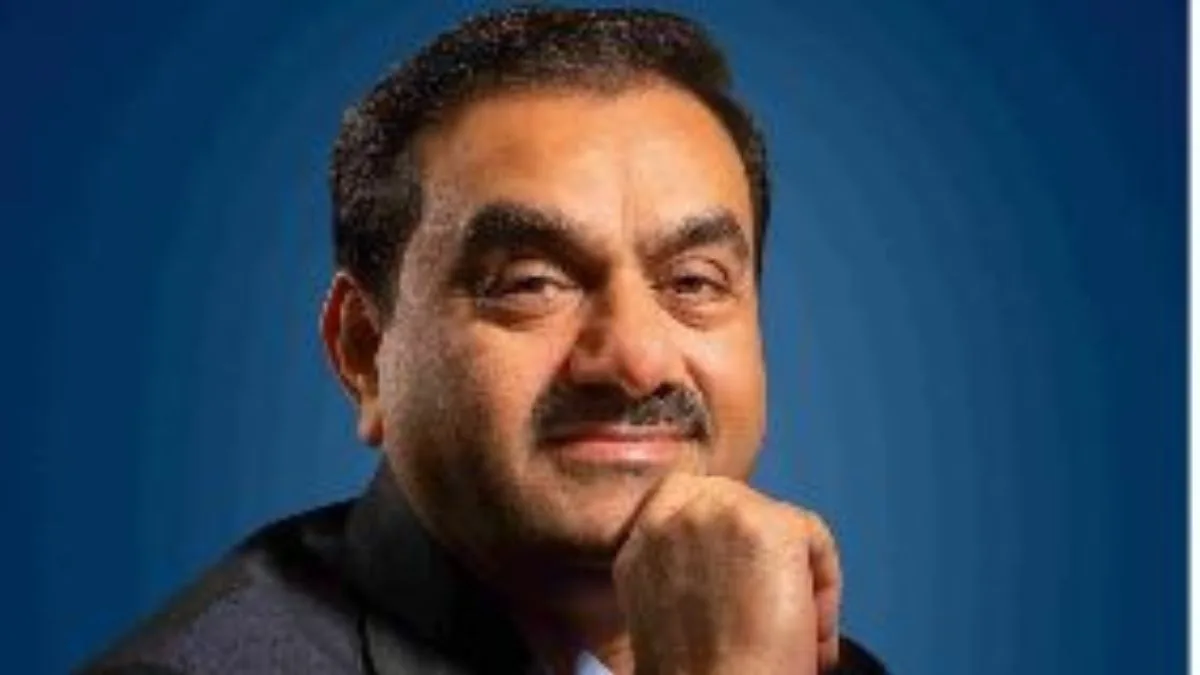
Adani Group Chairman Gautam Adani on Friday, May 1, outlined a growth strategy centered on worker welfare, local employment and entrepreneurship, as the conglomerate accelerates capital expenditure (capex) backed by strong liquidity.
On the International Labour Day, Adani addressed the workforce across the group and said that the organisation that operates over 700 assets across 24 states and engages nearly four lakh employees, partners and contractors, will measure its progress by assets created, livelihoods enabled, and communities strengthened, positioning its workforce at the core of nation-building.
Advertisement
“You are not just employees; you are nation builders. When we complete a project, we are not just delivering work, we are shaping the future of the country,” Adani said.
The Adani Group aims to prioritise local hiring at project sites by offering opportunities first to nearby communities and then to candidates from within the state and finally from outside where required.
Worker welfare remains a central pillar of this strategy.
Notably, the infrastructure major is currently building AC accommodation for as many as 50,000 workers in Mundra and Khavda, along with a centralised cloud kitchen in Gujarat’s Mundra that will serve up to one lakh nutritious meals daily. This is aimed at improving living standards at remote locations.
Adani said that this is “not a privilege” and rather a “necessity.”
“Every worker has the right to live and work with dignity,” Adani added.
This key strategy is anchored in three pillars. It remains supported by strong liquidity and access to capital, enabling accelerated capex deployment and faster project execution.
Notably, a three-layer organisational structure is being implemented for speeding up decision-making, strengthening accountability and improving execution efficiency, with site-level decisions expected to move from days to hours.
Adani stated that as organisations grow larger, decision-making often becomes slower and more layered. He added that the three-layer model is designed to address this by simplifying structures, reducing approval levels and improving speed and ownership at the site level.
The strengthened partnership model will witness the Adani Group work with fewer, larger contractors for improving coordination and execution speed, besides enabling them with access to capital, assured returns and long-term engagement.
While talking about the group’s evolving approach to working with contractors, Adani said, “We endeavour to work with a select group of strong and reliable partners who can take end-to-end responsibility and deliver with greater speed and efficiency. We don’t just want to sign contracts; we want to build long-term partnerships.”
Adani asserted that this approach is already fostering grassroots entrepreneurship, citing the example of Hadhubhai Rabari in Gujarat’s Kutch. Rabari grew from operating a single water tanker into a multi-equipment enterprise supporting major projects and generating local employment.
As per the official release, the third pillar focuses on learning and development. Through the upcoming Adani skills centre, workers will progress from unskilled roles to skilled, supervisory, and leadership positions.
Adani has highlighted the journey of Subbu, who began as a worker and, through continuous learning and skill development, advanced to a corporate role, reflecting the Group’s focus on internal career growth and capability building.
He further linked major projects like Mundra port, the Khavda renewable energy park, Navi Mumbai International Airport and the Ganga Expressway, which was inaugurated earlier this week, to national development. Adani stated that such initiatives are strengthening India’s logistics, energy and infrastructure backbone.
“These projects are not just assets. They are instruments of national progress,” he added.
These measures are aimed at building a more agile, inclusive and execution-focused organisation that remains well aligned with India’s long-term growth ambitions.