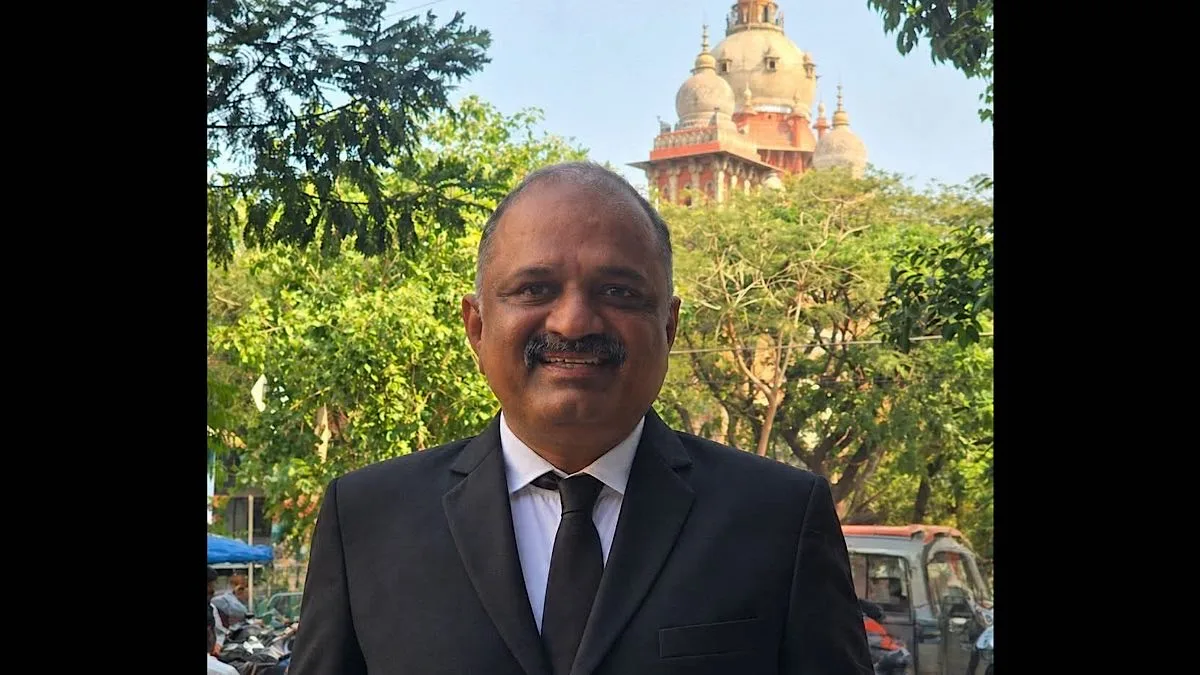
Realising his dream of donning the black robe while in prison, AG Perarivalan, a life convict set free by the Supreme Court in the Rajiv Gandhi assassination case, is now an advocate.
Arrested in June 1991 when he was barely 19 years old, within days of the assassination of the former prime minister, Arivu, as he is called, has enrolled with the Bar Council of Tamil Nadu and Puducherry on Monday and is all set to practice at Madras High Court. He is now 54 and it is a long arduous journey from death row to the bar.
Advertisement
Years of litigation during a long incarceration of over 31 years had developed in him a passion for the legal profession, equipping himself through sheer hard work by reading criminal jurisprudence, drafting mercy pleas and RTI applications to secure information from the Union home Ministry and its agencies. The charge against him was that he had supplied two 9-volt batteries used to detonate the bomb. With his mother Arputham Ammal’s single-minded pursuit of ensuring his freedom, he had never lost hope. It was she who stood by him till he walked out of the prison as a free man.
The Supreme Court ordered his release in March 2022, ivoking its special powers under Article 142 of the Constitution. In its verdict, the court had rapped Governor RN Ravi for inordinately delaying the pardon recommended by the state cabinet, making it clear that the office of Governor is a shorthand expression for the state government. And, it was his release that paved the way for the 6 other convicts in the case to be freed by the apex court.
In prison, what agitated him more was many languishing without legal assistance. Once out of prison, Arivu pursued his dream and completed the LLB degree from Dr BR Ambedkar Law College, Bengaluru, affiliated to the Karnataka Law University in 2025. Then, he cleared the All India Bar Examination the same year.
For Arivu, becoming a famed criminal lawyer is not the ambition, but to be a voice for the thousands of prisoners, especially poor life convicts, waiting endlessly behind the bars for want of legal assistance. “I want to contribute towards building a criminal justice system that does not discriminate against convicts, and post-conviction exoneration like those in Australia, US and Japan,” he says.