Demographically a mini-India, Kharagpur Sadar Assembly constituency has rarely gone with the flow, with its outcome more often than not bucking the trend seen in other parts of West Bengal.
Considered what psephologists may call a marginal seat, the results in this West Midnapore district constituency has often been settled by small difference of votes between the winners and losers.
Advertisement
For decades, Kharagpur Sadar remained a stronghold of the Congress, or more particularly of the venerated “chacha” of Bengal politics – Gyan Singh Sohanpal, who won ten times between 1969 and 2011, till losing to BJP’s Dilip Ghosh in his swan song election in 2016. The saffron outfit held on to the seat in 2021, when it nominated Bengali film and TV serial actor Hiran Chatterjee.
While the majority of Sohanpal’s wins came when the Left Front swept the polls in the state, in 2016 and 2021 Trinamool Congress retained power in Bengal with a thumping majority. As the constituency heads to polls on April 23 in the first phase of the state Assembly election, the political battle here is less about momentum and more about micro-calculations — of caste, community, turnout, and now, even the absence of voters.
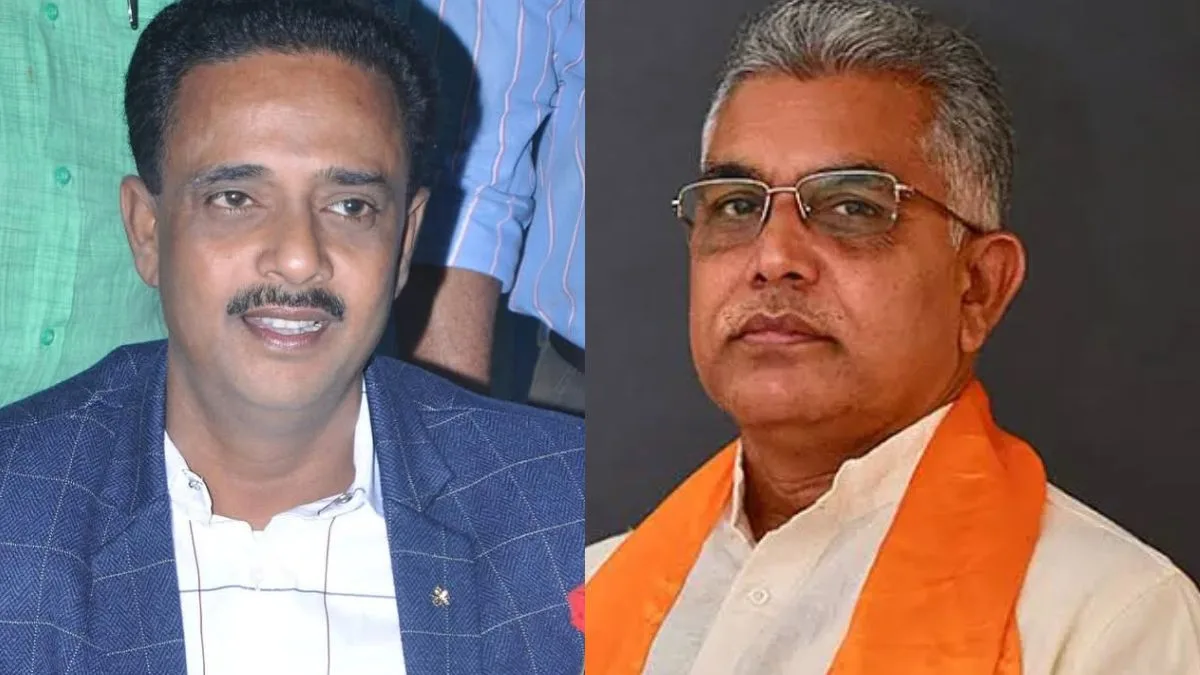
At the heart of this contest is a high-stakes rematch between Dilip Ghosh of the BJP and Pradip Sarkar of the Trinamool Congress — two leaders whose electoral histories in Kharagpur Sadar are deeply intertwined.
But beyond the personalities, this election is being shaped by three decisive variables: the impact of the Special Intensive Revision (SIR) of electoral rolls, the constituency’s complex demographic structure, and a persistent disconnect between industrial potential and lived reality.
The single most disruptive factor this time is the deletion of nearly 44,000 names from the electoral roll following the Election Commission of India’s SIR exercise. In a constituency where just 3,771 votes decided the 2021 result, this is not a marginal adjustment — it is a structural shift. Political observers say neither the BJP nor the Trinamool Congress can confidently map where these deletions have hit the hardest.
“If even 10–15% of those removed voters were concentrated in specific pockets, it could overturn booth-level dynamics,” said a local political analyst in Kharagpur. “This election will depend less on swing and more on who manages turnout better among the remaining voters.”
The contest, however, is not strictly bipolar. Communist Party of India (Marxist) candidate Madhusudan Roy and Congress nominee Papiya Chakraborty add more layers to the race, potentially splitting votes in what is expected to be another tight finish.
The explanation for Kharagpur repeatedly going against the statewide trend lies partly in its demographic composition. As a railway and industrial town anchored by Kharagpur Junction and IIT Kharagpur, the constituency has a large non-Bengali, migrant-origin population — Telugu, Hindi, Marathi and Odia-speaking communities — whose voting preferences often differ from rural Bengal.
“In railway colonies, people talk about jobs, transfers, pensions — not local politics,” said S. Narayanan, a retired railway employee. “Many here feel national issues matter more, so the BJP gets an advantage. But in old Kharagpur and nearby areas, TMC’s local network is stronger.”
This duality creates what political strategists describe as a “split constituency” — one where national narratives and local governance compete simultaneously, often neutralising each other. For the BJP, Ghosh’s return is both tactical and symbolic. Having first broken the Congress stronghold in 2016, he remains one of the few leaders with a personal vote base cutting across communities. His campaign has leaned heavily on themes of law and order, migration, and identity politics, while also arguing that alignment with the Centre could accelerate stalled infrastructure projects.
“Lack of development is a major issue. Roads are in shambles. Poor drainage system and inadequate drinking water are other problems. Industrial pollution is high over vast areas of the constituency,” Ghosh told UNI.
Kharagpur is one constituency from which we have consistently got leads in the past few elections. Even in the 2024 Lok Sabha polls, we lost from Midnapore, but Kharagpur Sadar gave a lead to our candidate,” he said.
The TMC has adopted a hyper-local strategy centred on Sarkar’s accessibility and organisational reach. Having narrowly lost in 2021, Sarkar’s campaign is focused on booth-level consolidation and welfare delivery narratives. “He lives here, we can reach him,” said Shampa Das, a resident of Malancha. “Even after elections, he stays connected.”
Few constituencies embody contradiction like Kharagpur Sadar. It hosts one of India’s premier engineering institutes and critical railway infrastructure, yet struggles with basic civic issues.
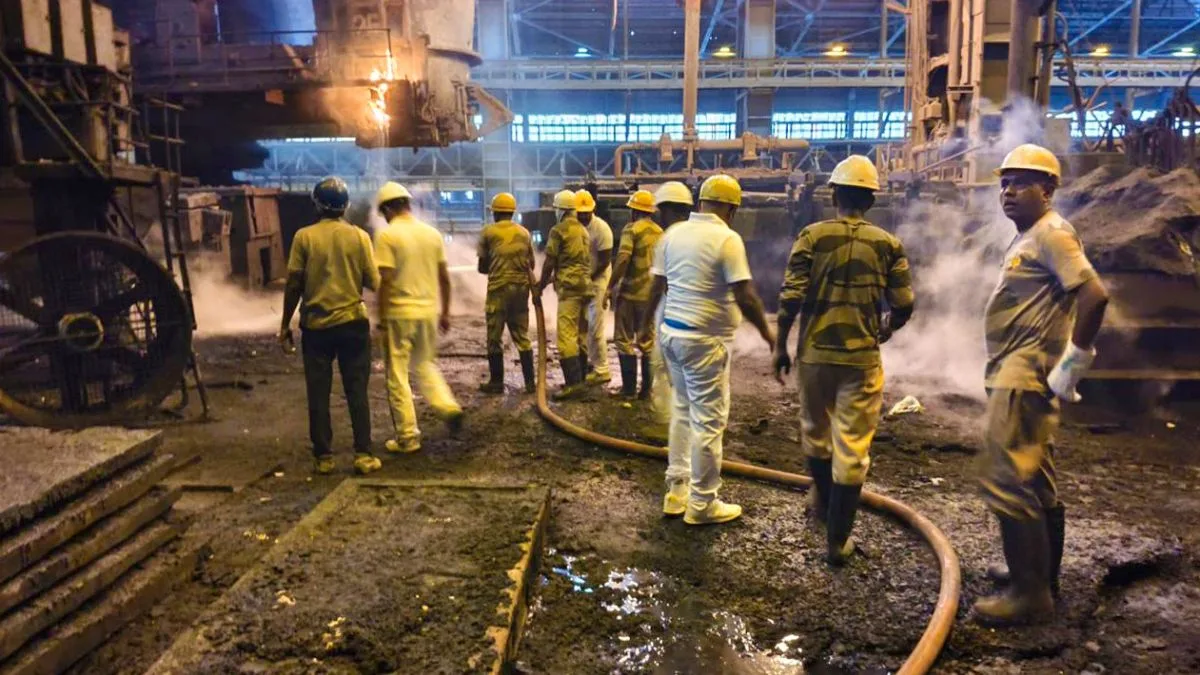
Residents repeatedly point to stalled projects, poor drainage, water scarcity, and pollution from nearby sponge iron factories. “Let the factories stay, but stop the dust and smoke,” said Salim Khan, a shopkeeper near NH-16.
There is also a growing perception that political fragmentation between state and Centre has slowed development. “If the same party is in power, work may move faster,” said a first-time voter outside Kharagpur College.
The past trends suggest that the 2026 outcome will likely be determined not by a sweeping mandate but by marginal gains — booth management, turnout, and the ability to retain core voters while making small inroads into the opponent’s base.
For now, the mood on the ground is neither decisively pro-incumbent nor strongly anti-incumbent. It is cautious, transactional, and shaped by lived experience more than campaign rhetoric. “Every time the winner changes, but our lives don’t,” said an elderly voter near Gole Bazar, a premier shopping hub.