As the polling day—April 23—approaches in Tamil Nadu and West Bengal, the question is whether recent slugfest in the Lok Sabha around the Constitution (131st Amendment) Bill—aimed at enabling delimitation based on the 2011 Census and fast-tracking the Women’s Reservation Bill, 2023—can affect the election outcome in these two states.
Whether or not it does, analysts believe the results in these states will be closely watched for their political impact—particularly to judge if the issue becomes more than just a talking point to attack opposition parties. Framing the failed Bill as evidence of the entire opposition being “anti-women” can be a strong political talking point, whether voters can distinguish between an already-passed Women’s Reservation Act and the failed amendment bill is to be seen—especially in states where regional issues such as welfare schemes, leadership, caste equations, and local governance tend to outweigh parliamentary debates.
Advertisement
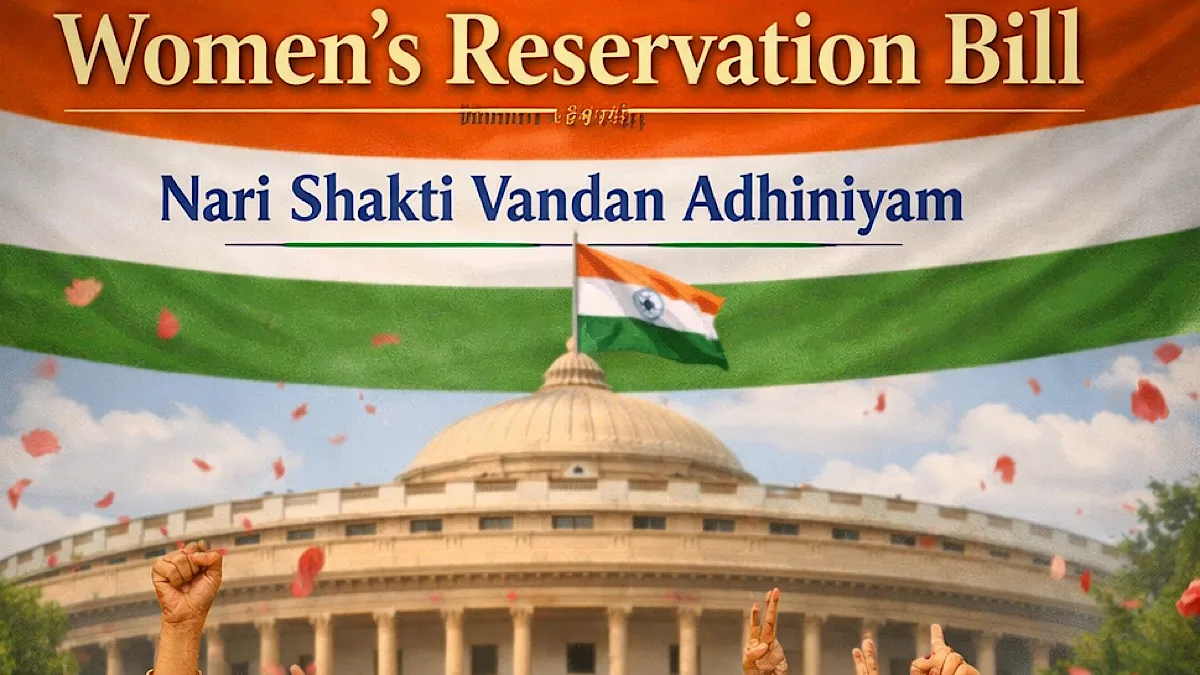
But first things first—even though it is being projected as such by the ruling party, the BJP—it is not the Women’s Reservation Bill that was rejected by opposition parties in the Lok Sabha, but the Constitution (131st Amendment) Bill, 2026, which aimed to implement 33% women’s reservation in the Lok Sabha and state assemblies through delimitation based on the 2011 Census.
The fact is that the Parliament had almost unanimously passed the Women’s Reservation Bill—officially known as the Nari Shakti Vandan Adhiniyam—in 2023. In those terms, the Women’s Reservation law continues to stand tall and remains intact. In fact, the Union Law Ministry on April 16—the day the special session of Parliament began—had also formally notified the enactment of the Act.
Whether common voters understand this distinction amid what politicians are telling them is the question.
A day after the defeat of the Constitution Amendment Bill, Prime Minister Narendra Modi went on national television to publicly slam the opposition in the midst of state elections. He accused them of betraying women and missing an opportunity to support women’s rights. He targeted the Congress and the Samajwadi Party, as well as key players in Tamil Nadu and West Bengal—the DMK and the TMC. “Congress, DMK, TMC and Samajwadi Party’s selfish politics has led to Indian women bearing the brunt of it,” he said.
Naming both TMC and DMK, he “sought forgiveness” from “India’s mothers and daughters,” saying, “a woman may forget everything but never an insult to herself.” During the debate also, both the Prime Minister and Home Minister Amit Shah repeatedly said that the women of the country would not forgive those who opposed the bill—“desh ki mahilayen maaf nahi karengi.”
Will this resonate in Tamil Nadu and West Bengal?
Observers note that in such states voting patterns are largely driven by regional dynamics, leadership, and welfare politics rather than any single national legislative issue. “In both states, elections are usually shaped more by strong regional factors. Parties such as the DMK and the TMC have entrenched voter bases and narratives rooted in state politics,” they say.
Notably, following the defeat of the Constitution (131st Amendment) Bill—which was required to operationalise women’s reservation by the 2029 elections based on the 2011 Census—the government withdrew two related bills—the Union Territories Laws (Amendment) Bill, 2026, and the Delimitation Bill, 2026.