When a Pope speaks of “tyrants” in a world saturated with conflict, he is not merely condemning violence; he is redrawing the moral map on which global power operates. Pope Leo XIV has chosen his words carefully, but their implications are anything but vague. In an era defined by strongman politics, militarised nationalism, and the strategic use of faith, his intervention signals a widening fault line between moral authority and political power. The immediate backdrop is hard to ignore.
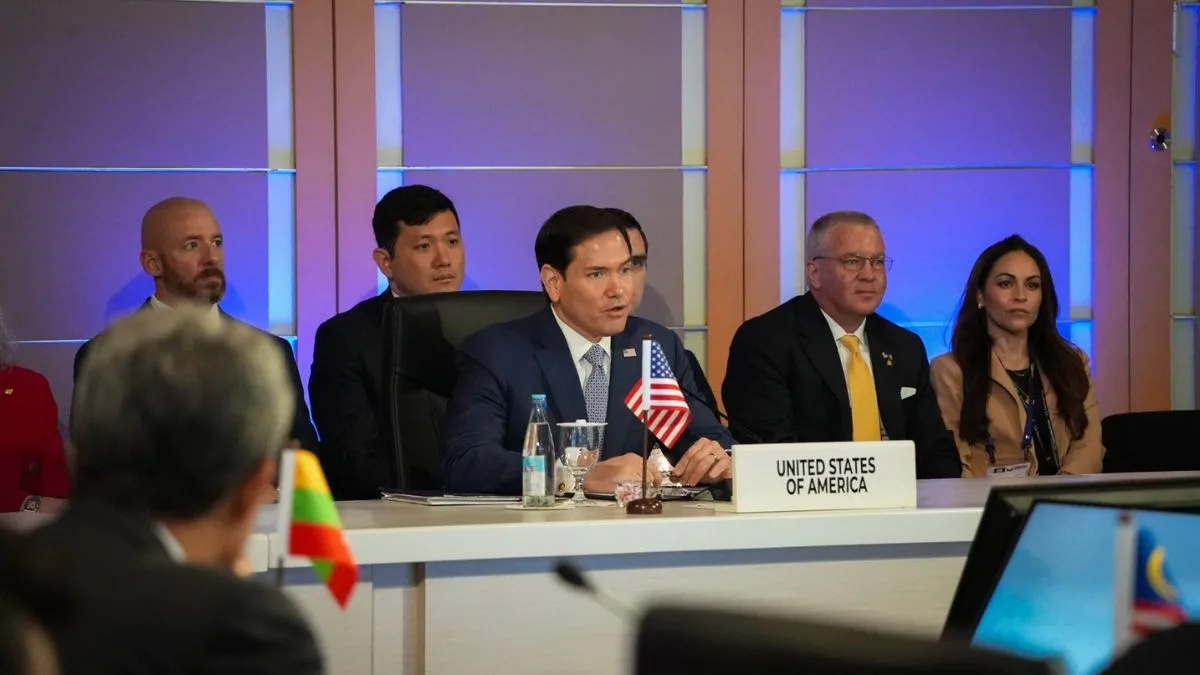
A public clash with US President Donald Trump, coupled with escalating tensions involving the United States, Israel, and Iran, has turned what might have been a routine pastoral message into a geopolitical statement. Yet to reduce the Pope’s remarks to a reaction against one leader would be to miss the deeper argument. He is not naming individuals; he is indicting a system. That system is sustained by a simple but corrosive logic: that security justifies excess, that war can be calibrated without moral cost, and that religion can be invoked to sanctify both. From Washington to Moscow, from regional conflicts in Africa to flashpoints in West Asia, the pattern repeats itself. Leaders frame violence as necessity, while the human and social costs are deferred, displaced, or denied.
Advertisement
By choosing Cameroon ~ a region scarred by insurgency and resource exploitation ~ as his platform, the Pope underscores a less discussed reality: that global conflicts are rarely contained within their stated theatres. They ripple outward, entrenching instability in already fragile societies. When he speaks of billions spent on destruction instead of healing, he is pointing to a political economy of war that thrives on imbalance. Resources flow toward weapons, not welfare; toward dominance, not dignity. What makes this moment significant is not the novelty of the message, but its tone. Popes have long advocated peace, but they have often done so in language that leaves room for diplomatic ambiguity. Here, the rhetoric is sharper, less accommodating.
The suggestion is that neutrality itself has become untenable ~ that to avoid naming the moral failure embedded in modern warfare is to enable it. This places political leaders in an uncomfortable position. They can dismiss such criticism as idealistic or uninformed, but they cannot easily ignore it. The Catholic Church, particularly in the Global South, commands a moral constituency that intersects with the very regions most affected by conflict. In Africa alone, where Catholic populations are rapidly growing, such statements carry both symbolic and practical weight.
The deeper implication is this: the old balance between moral critique and political pragmatism is shifting. As conflicts become more technologically advanced and politically entrenched, the space for ethical dissent is narrowing ~ but also becoming more urgent. By stepping into this space so forcefully, Pope Leo is not just criticising war; he is challenging the assumptions that make it acceptable. In doing so, he risks confrontation, not only with specific leaders but with an entire worldview. That may be precisely the point.