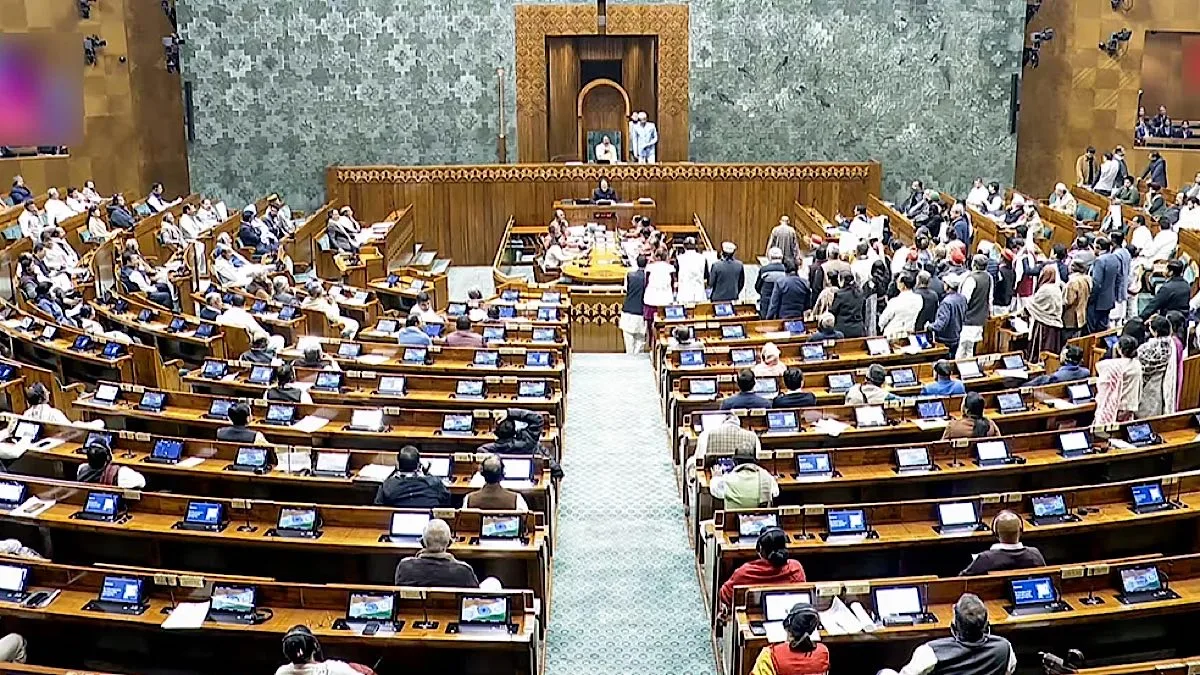
The extended Budget Session of Parliament drew to a close on Saturday, with both Houses adjourned sine die, capping a politically fraught period that exposed deep fissures over electoral reforms and the future shape of India’s representative democracy. What began as a routine fiscal exercise evolved into a high-stakes legislative battle after the government reconvened Parliament for a special three-day sitting from April 16 to 18, seeking to push through sweeping changes linked to women’s reservation and constituency delimitation.
At the centre of the storm was the Constitution (131st Amendment) Bill, 2026—an ambitious proposal that combined the long-pending demand for reserving one-third of seats for women in legislatures with a contentious plan to redraw parliamentary constituencies based on the 2011 Census. The bill also formed part of a broader effort to expand the Lok Sabha to 850 seats, a move the government argued would better reflect India’s population realities.
Advertisement
The numbers, however, told a different story. Despite securing 298 votes in favour, the bill fell short of the constitutionally mandated two-thirds majority, with 230 members opposing it—well below the 352 votes required for passage. The setback forced the government to retreat, withdrawing the Delimitation Bill, 2026, and the Union Territories Laws (Amendment) Bill, 2026, effectively halting the legislative push that had dominated the special sittings.
The debate around the bill was as sharp as it was polarised. Opposition parties mounted a coordinated resistance, arguing that the proposed delimitation exercise would disproportionately benefit northern states while reducing the parliamentary weight of southern and smaller states that have successfully stabilised population growth. Several leaders described the move as an attempt to “reshape the electoral map for political gain,” with some terming it “anti-federal” and “anti-democratic.”
The government rejected these accusations, insisting that the reforms were rooted in constitutional necessity and democratic fairness. Home Minister Amit Shah, leading the charge in the Lok Sabha, argued that delimitation based on updated population data was long overdue and that linking it with women’s reservation would ensure a more inclusive and representative political system. He accused the Opposition of “blocking historic reform for narrow political interests,” maintaining that the proposed changes were designed to empower women and correct representational imbalances.
The special sittings were marked by slogan-shouting and visible acrimony between the Treasury and Opposition benches. The intensity of the exchanges reflected not just disagreement over policy, but a deeper contest over political narratives—between the government’s emphasis on structural reform and the Opposition’s warning against centralisation and demographic penalisation.
While the session ultimately failed to deliver on its most contentious legislative agenda, it was not without tangible outcomes. The Union Budget for 2026–27 was passed earlier in the session, ensuring continuity in government spending and policy direction. Yet, the collapse of the electoral reform package overshadowed these achievements, leaving behind unresolved questions that are likely to resurface in future parliamentary sessions.
The adjournment sine die thus closes a session that proved as consequential for what it could not achieve as for what it did. With women’s reservation still unrealised and delimitation deferred once again, political battle lines appear firmly drawn. The coming months are expected to see renewed mobilisation by both sides, as the government recalibrates its strategy and the Opposition seeks to consolidate its position on issues that strike at the core of India’s democratic framework.