Hydrogen rail signals clean energy leap
Prime Minister Modi flagged off India’s first indigenous hydrogen powered train on the Jind–Sonipat section, marking a historic leap in clean mobility and Atmanirbhar Bharat vision.
After the long-awaited inauguration of 213 kilometers Dehradun-Delhi Expressway by the Prime Minister Narendra Modi, the Wildlife Institute of India (WII) is set to take up an important task of the extrapolating wildlife movements in the 12 kilometres of the highway that also makes Asia’s largest Wildlife Corridor in in Uttar Pradesh and Uttarakhand.




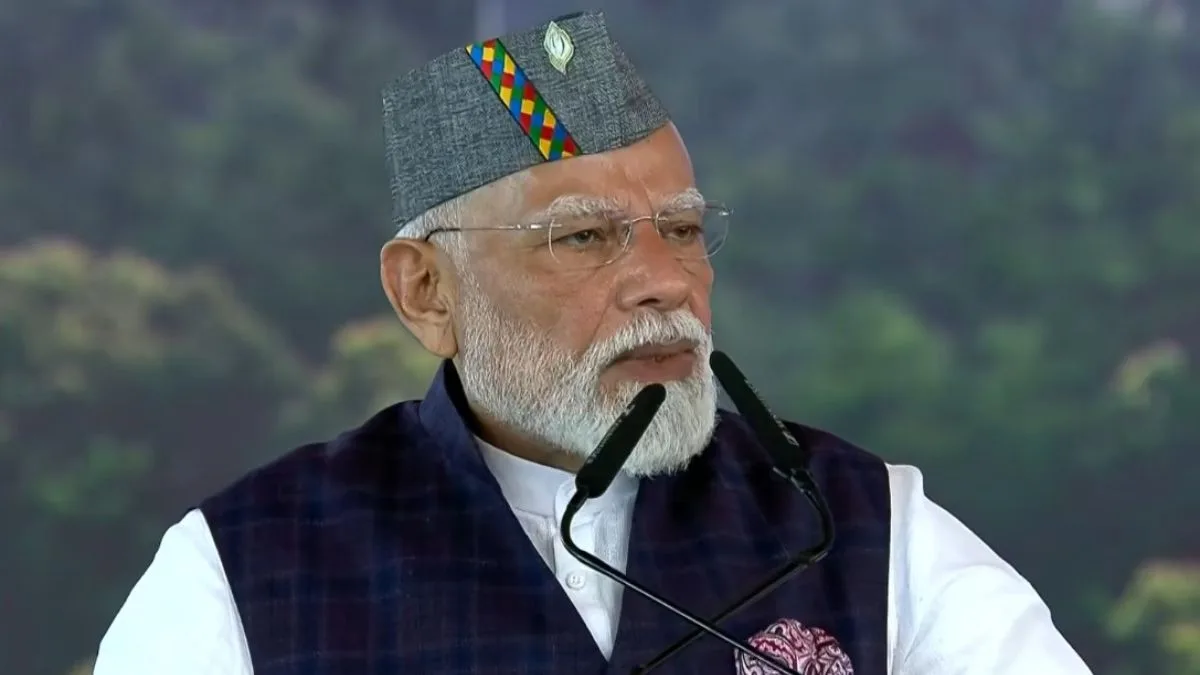
Prime Minister Narendra Modi | Photo source: X/@narendramodi
After the long-awaited inauguration of 213 kilometers Dehradun-Delhi Expressway by the Prime Minister Narendra Modi, the Wildlife Institute of India (WII) is set to take up an important task of the extrapolating wildlife movements in the 12 kilometres of the highway that also makes Asia’s largest Wildlife Corridor in in Uttar Pradesh and Uttarakhand.
According to the WII officials and wildlife experts, the project will be a year-long study on the 12-km underpass of Dehradun-Delhi Expressway which was the main highway prior to inauguration of the expressway corridor. As per WII experts, massive installation of cameras will be done to capture movements of wild animals under the 12-km wildlife corridor.
Advertisement
It’s significant to note that this stretch of wildlife corridor covers forests of Rajaji Tiger Reserve(RTR), Dehradun forest division and Uttar Pradesh forest area. Construction of Delhi-Dehradun Economic Corridor above national highway has allowed unchecked movements of wildlife along underpasses.
Advertisement
Uttarakhand Forest Minister Subodh Uniyal stated that the underpass under the expressway has come as a big relief for the wildlife in the dense forest areas. “WII has already captured several wild animals on the underpass below the expressway. Photographs of a large number of wildlife animals, captured by more than 200 WII cameras, are available with the state forest department. The variety of camera captured photographs is bound to rise manifolds once the camera installations are increased as per the plan of WII,” said Uniyal.
Currently, 245 camera traps have been installed along the wildlife corridor underpass to gather data regarding movements of the wildlife.
WII’s year-long study on the underpass aims at collection of comprehensive data on wildlife movement patterns. This includes on camera citing of wildlife species varying according to the seasons.
According to Uniyal, the study is already in the process with the installation of 245 camera traps which is likely to increase threefold in the coming days.
It’s notable that a 40-day preliminary study done by WII prior to inauguration of Delhi-Dehradun Expressway confirmed the movement of various animals, including leopards and elephants. The photographs provided insights as to their timing patterns of the animals.
According to the minister, the new year-long study will also lead to deep insights into their behavioral patterns as well. The camera traps
will also monitor wildlife activity as to the extent the expressway underpass will serve the local ecosystem.
Senior WII scientist Bilal Habib stated that a year-long study of wildlife movements has already begun along the underpass. He said although 245 camera traps are functional at present, the plan is afoot to equip every pillar with camera traps that can be more than 500. According to Habib.
“Study aims to determine how wildlife movement patterns change across different seasons and identify their peak activity times. So far movements of 18 different wildlife species have been recorded. It is expected that more species will be documented over the course of the year-long study.”
Advertisement