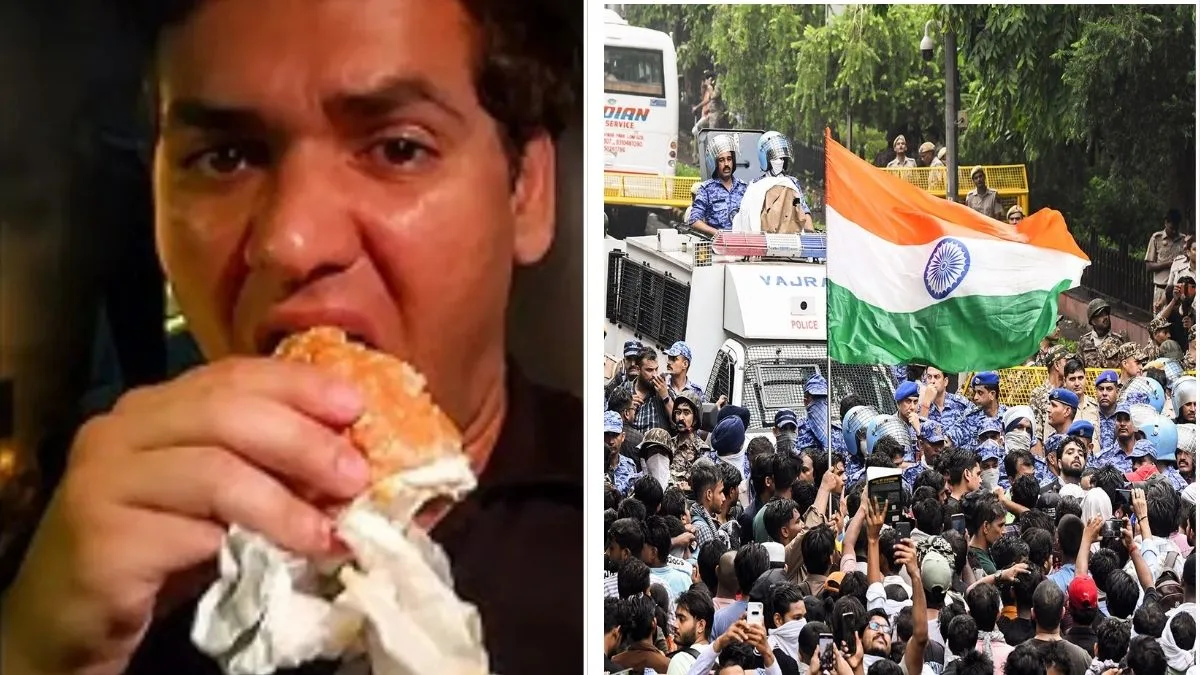
Mamata’s call for anti-BJP unity at Martyr’s Day rally junked by Congress, Left
Bengal BJP president Samik Bhattacharya said Mamata Banerjee should first focus on uniting her own party before attempting to forge an opposition alliance.
Congress MP Shashi Tharoor raises concerns over the political and administrative implications of linking women’s reservation to delimitation, warning it could reshape representation dynamics across states.




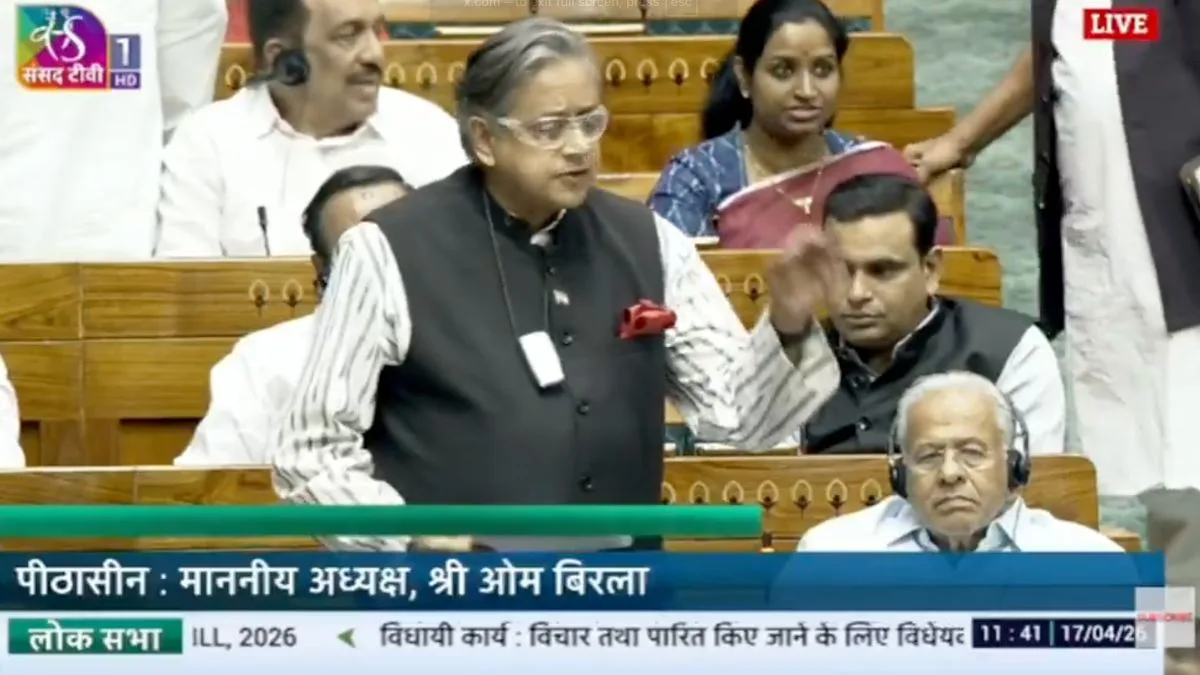
Congress MP Shashi Tharoor speaks in the Lok Sabha, criticising the proposal to link women’s reservation with delimitation during a parliamentary debate.
Congress MP Shashi Tharoor on Friday sharply opposed linking women’s reservation to the proposed delimitation exercise, cautioning in the Lok Sabha that a rushed process could disrupt the federal balance and delay long-pending representation for women.
The remarks came as Parliament continued discussions on the Constitution (One Hundred and Thirty-First Amendment) Bill, 2026, which seeks to provide 33 per cent reservation to women in Parliament and state assemblies. The debate has also centred on the Delimitation Bill, which proposes redrawing constituencies and expanding the Lok Sabha.
Advertisement
Speaking during the debate, Tharoor urged the government to delink the two issues and move ahead with women’s reservation without delay. He argued that combining a widely supported reform with a complex administrative exercise risks derailing both.
Advertisement
“… The Prime Minister says the Government has bought Nari Shakti a gift of justice. But he has wrapped it in barbed wire, tethering the implementation of women’s reservation to the expansion of Parliament, to numbers from the 2011 Census and an exercise of delimitation. Why must we entangle a moral imperative with a demographic minefield? Women’s reservation is ready for harvest… To link it to delimitation is to hold the aspirations of Indian women hostage to one of the most contentious and complex administrative exercises in our nation’s history.”
The Congress leader reiterated his party’s support for reservation for women in legislatures, stressing that there is broad political consensus on the issue. He maintained that the measure could be implemented based on the existing strength of Parliament, without waiting for constituency reorganisation.
“To link women’s reservation to delimitation is holding aspirations of Indian women hostage. Delimitation is fraught with complications that will tear the fabric of federalism. There should be an extensive discussion on the delimitation process. It cannot be conducted in haste. Pass the women’s reservation bill today, we will support it. As for delimitation, let us defer it. Give women their reservation… please consider the larger interest of the country.”
Tharoor flagged concerns that delimitation, if carried out without adequate deliberation, could reshape political power across states in ways that may deepen regional divides.
He pointed to disparities between states that have successfully controlled population growth and those that have not, warning that the exercise may reward the latter with greater representation.
“We must be candid about what the implications of the delimitation are… Delimitation requires deliberation. There are three major faultlines: the balance between small and big states. Then, the balance between states like Tamil Naduand Kerala, which have implemented the national goals of population goals. And states in the north which have not. In delimitation, states which have failed to control population will be rewarded with greater political weight,”
He also raised concerns over economic imbalances and representation, cautioning that states contributing more to the national economy could see their influence diluted.
In a pointed remark, Tharoor drew parallels with past policy decisions taken in haste and warned against similar urgency in carrying out delimitation.
“The 50 per cent formula proposed by Amit Shah is a precarious political statement; it is not promised by the legislature. We risk creating the tyranny of the majority delimitation done with the haste of demonetization, delimitation will turn out to be political demonisation, dont do it,”
Separately, he described the issue as fundamental to democratic functioning.
“This is a matter of the very soul of our democracy.”
Tharoor emphasised that delimitation is not merely a technical exercise but one that involves a significant shift in political representation, and therefore requires wider consultation and careful scrutiny before implementation.
Advertisement