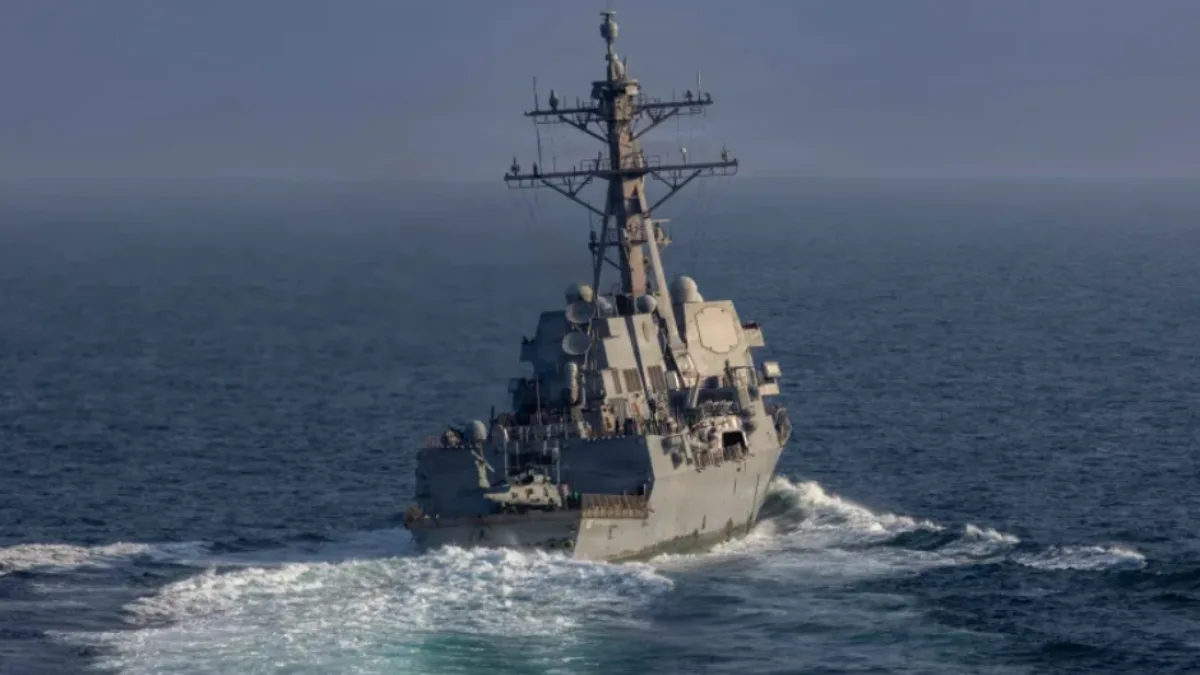
In a dramatic escalation in West Asia, the United States Central Command (CENTCOM) today announced the ‘successful implementation’ of a sweeping naval blockade on Iran, asserting control over critical maritime routes, including the strategically vital Strait of Hormuz. The move effectively cuts off Iran’s sea-based trade, a lifeline for its economy, and marks one of the most significant military actions in the region in recent years.
CENTCOM commander Admiral Brad Cooper said US forces were able to halt nearly all maritime trade to and from Iran within just 36 hours of launching the operation.
Advertisement
According to the command, about 90 per cent of Iran’s economy depends on seaborne trade. The blockade has, therefore, delivered an immediate and severe economic impact by stopping cargo movement through Iranian ports.
Warships and aircraft deployed at scale
The operation involves a massive military presence, with more than 10,000 US personnel, including sailors, marines and airmen, deployed across the region. Over a dozen warships and multiple aircraft are actively supporting the blockade.
CENTCOM said US Navy guided-missile destroyers are leading enforcement efforts, intercepting vessels and ensuring strict compliance across all maritime approaches to Iranian ports.
“A typical destroyer has a crew of more than 300 sailors that are highly trained in conducting offensive and defensive maritime operations,” CENTCOM added, highlighting the scale and preparedness of the deployed naval assets.
Strict enforcement across all vessels
US forces are enforcing the blockade across all Iranian ports along the Persian Gulf and the Gulf of Oman. Officials said the action is being carried out “impartially,” targeting vessels of all nationalities attempting to enter or exit Iranian waters.
In the first 24 hours alone, no ships reportedly breached the blockade. At least six merchant vessels complied with US directives and turned back toward Iranian ports in the Gulf of Oman.
Strait of Hormuz remains open for others
Despite the crackdown on Iran’s maritime access, CENTCOM said it continues to support freedom of navigation through the Strait of Hormuz for ships travelling to and from non-Iranian ports.
The narrow waterway remains one of the world’s most critical energy corridors, historically carrying nearly one-fifth of global oil supplies. Any disruption or perceived risk in the region has immediate consequences for global energy markets.
The blockade signals a sharp escalation in tensions between the United States and Iran, raising concerns about wider regional instability. With a major share of global oil shipments passing through nearby waters, the situation is already fuelling volatility in international markets.