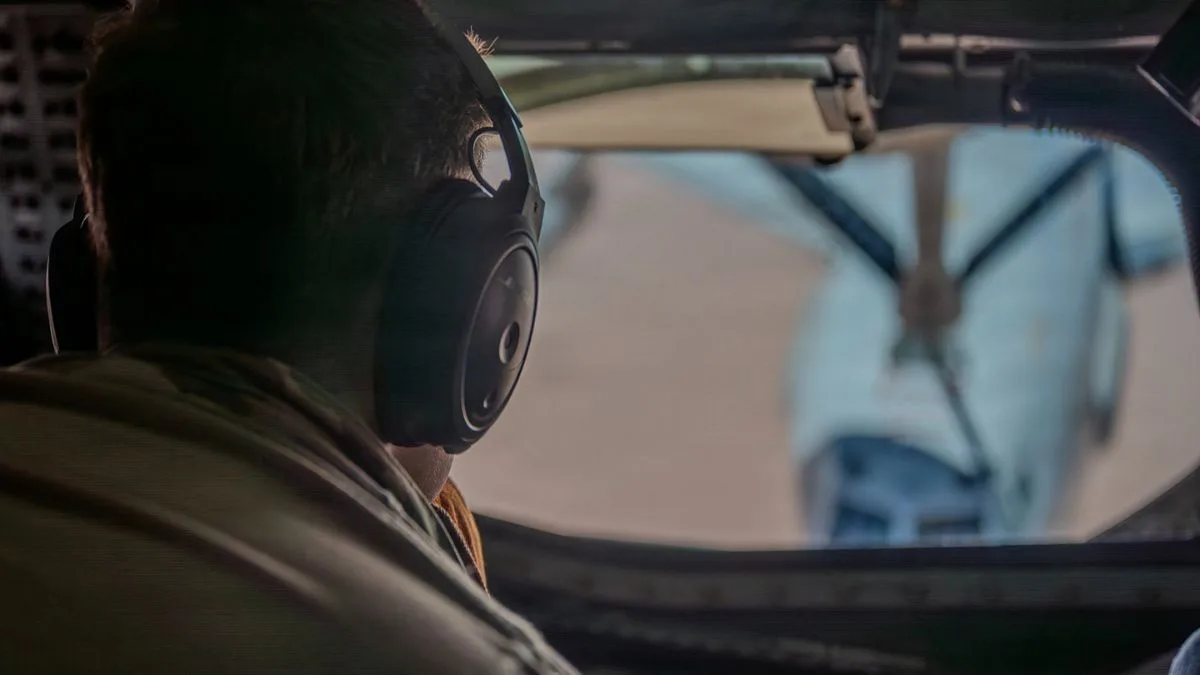
The Central Intelligence Agency used deception and advanced intelligence to locate and rescue a US airman stranded deep inside Iran, in an operation officials say left Iranian forces “confused” and embarrassed.
The mission unfolded at a time of rising tensions between the US and Iran, with Washington relying heavily on intelligence capabilities alongside military pressure. Officials indicated that such operations are increasingly central to how modern conflicts are managed.
Advertisement
CIA Director John Ratcliffe said the agency had to act quickly to trace the missing airman while also misleading Iranian teams trying to capture him. “We needed to locate the downed aviator as quickly as possible, while at the same time keeping our enemies misdirected,” he said at a White House briefing.
He described the search as extremely challenging, saying it was comparable to “hunting for a single grain of sand in the middle of a desert.” The agency used a mix of human intelligence and advanced technology to track the officer.
“We deployed both human assets and exquisite technologies that no other intelligence service in the world possesses,” Ratcliffe added.
The airman had gone missing after his F-15 jet crashed in mountainous terrain inside Iran. He stayed hidden for nearly two days while Iranian forces were actively looking for him, evading capture in hostile terrain. The CIA confirmed his location on Saturday morning, identifying him concealed within mountainous terrain.
Ratcliffe said the breakthrough came when intelligence assets confirmed the airman was alive. “We achieved our primary objective by finding and providing confirmation that one of America’s best and bravest was alive,” he said.
US President Donald Trump also indicated that intelligence teams were tracking movement from a distance. “We’re seeing something moving up in the mountain… 40 miles away,” he said, adding that after continued observation, “they said, we have him.”
Deception campaign helped mislead Iranian forces
According to Ratcliffe, the agency ran a parallel operation aimed at diverting Iranian attention. “CIA executed a deception campaign to confuse the Iranians who were desperately hunting for our airman,” he said.
The CIA’s confirmation allowed the military to launch a larger follow-up rescue phase, involving a significant force package and real-time coordination between intelligence and military units.
US Defence Secretary Pete Hegseth said the rescue required close coordination between intelligence units, military strikes, and special operations forces. “These are not routine operations… conducted in the heart of enemy territory,” he said.
The rescue mission lasted more than two days. One airman was recovered earlier, while the second, who was injured, managed to avoid capture before being located and safely extracted.
Ratcliffe said many operational details remain classified. “Covert means exactly that, I’m not going to be able to tell you everything,” he said.
Ratcliffe said the success of the operation underlined the importance of intelligence in warfare. “Flawless military operations… are hostage to flawless intelligence,” he noted.
US officials added that Iranian forces were unable to stop the mission. “Our intelligence reflects that the Iranians were embarrassed and, ultimately, humiliated by the success of this audacious rescue mission,” Ratcliffe said.
The operation was carried out without any American casualties and relied on a combination of surveillance, deception, and rapid execution.
Officials said the episode reflects how modern conflicts are no longer driven by firepower alone, with intelligence, surveillance, and electronic warfare playing a decisive role.
The operation also comes amid broader US military activity in Iran, with officials noting that thousands of sorties have been conducted in recent weeks.