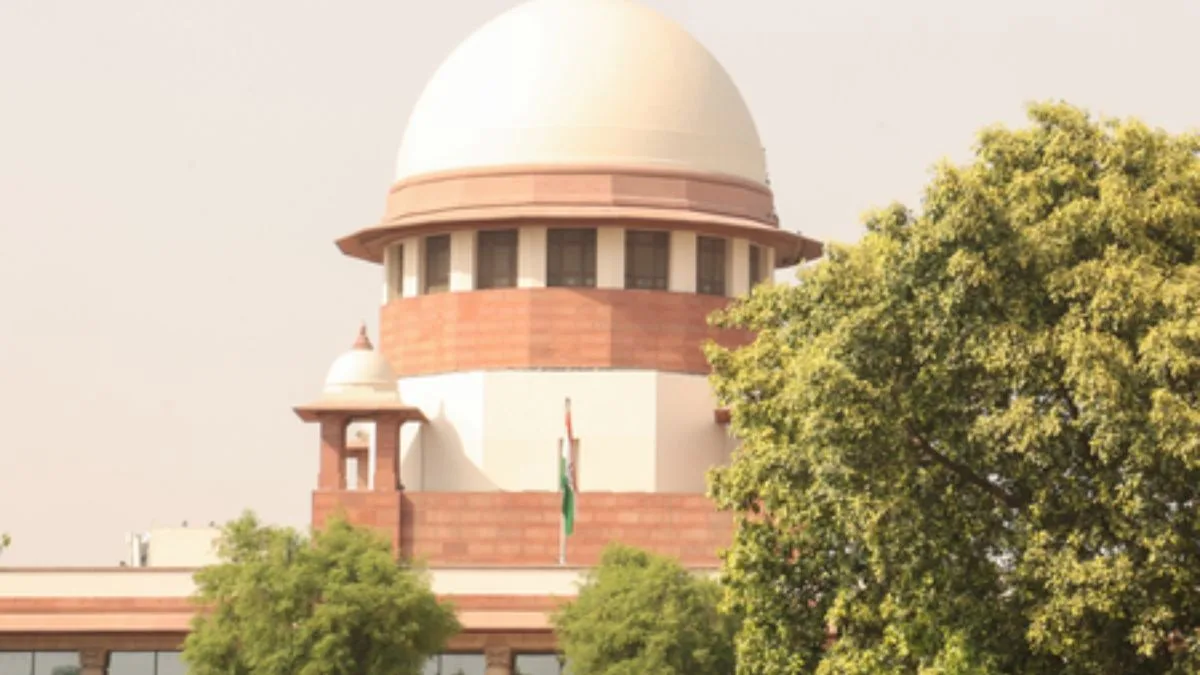
The Supreme Court of India on Wednesday imposed costs of ₹25,000 on the Central government while dismissing its appeal against a Punjab and Haryana High Court order that had granted relief to a CISF constable, observing that such avoidable litigation adds to the mounting pendency of cases.
A Bench comprising Justice B.V. Nagarathna and Justice Ujjal Bhuyan questioned the need for the Central government to pursue the matter even after the High Court had granted relief, stating that there was no reason to interfere with the order under challenge.
Advertisement
The Bench remarked that instead of refraining from approaching the Supreme Court against the High Court order, the government chose to proceed against the CISF constable, whose dismissal from service had been set aside.
Terming it unnecessary litigation contributing to backlog and pendency, the Bench said it failed to understand why the government had approached the top court against the High Court order. Justice Nagarathna observed that while the judiciary repeatedly raises concerns over pendency, the government itself remains the largest litigant.
During the hearing, Justice Nagarathna referred to her recent address at a Supreme Court Bar Association event, stressing the issue of excessive government litigation contributing to the judicial backlog. She had noted that while the government expresses concern over case pendency, it simultaneously contributes to it through litigation—often unnecessary.
The case before the court pertained to disciplinary action against a CISF constable who had been dismissed over allegations including unauthorised absence and involvement in a personal dispute. The High Court found that his absence coincided with sanctioned medical leave and that the other allegations did not amount to misconduct, leading to the quashing of the punishment.