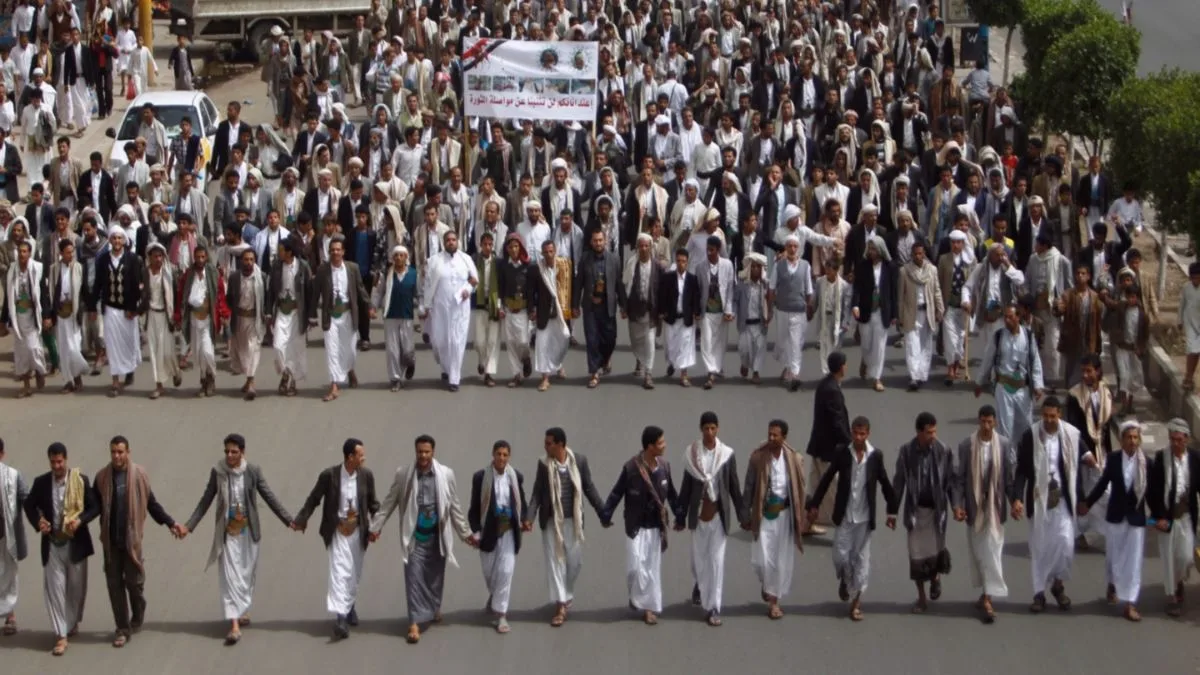
Yemen’s Ansarullah movement, widely known as the Houthis, is preparing to step into the ongoing conflict alongside Iran, according to a report by Tasnim News Agency. The development comes as tensions continue to rise following US and Israeli strikes on Iran.
The possible entry of the Houthis could widen the conflict beyond Iran’s borders, bringing a key maritime route, the Bab al-Mandeb Strait, back into sharp geopolitical focus. The narrow passage connects the Red Sea to global shipping lanes and has been a pressure point in earlier confrontations.
Advertisement
An informed source told Tasnim that the group has remained on high alert since the conflict began on February 28. “As they have stated since the first day,” the source said, Ansarullah “is on full alert and ready to enter the battlefield.”
Bab al-Mandeb Strait emerges as potential pressure point
According to the report, the Houthis may use control over the Bab al-Mandeb Strait as leverage against the US and Israel. The source claimed such a move would help “discipline” their adversaries, adding that both Iran and Ansarullah have the capacity to create a serious threat in the waterway.
The group has previously demonstrated its ability to disrupt maritime routes. Tasnim noted that Ansarullah has in the past enforced restrictions in the Red Sea, suggesting that closing the strait is within its operational reach.
When tensions surged on October 7, 2023, and Israel intensified its operations in Gaza, the Houthis responded by trying to stop ships they said were connected to Israel. The impact was immediate; many vessels stopped using the Red Sea route and were forced to sail the longer way around southern Africa, adding time, fuel costs and delays to their journeys.
The report also said the group has carried out drone strikes on Israeli locations and repeatedly targeted US naval forces operating near Yemen’s coast.
Separately, Iran has reiterated that it will not shift its current stance. Foreign Minister Abbas Araghchi, speaking to state broadcaster Press TV, said Tehran would continue its policy of “resistance” in response to what he described as “unprovoked American-Israeli aggression”.
“At present, our policy is to continue resistance, and no negotiations have taken place,” Araghchi said in a televised interview on Wednesday, adding that there are no ongoing talks and questioning the credibility of external guarantees.