Odisha waives entertainment tax on ‘Zwigato’
The Odisha government on Wednesday announced exemption from entertainment tax for Bollywood film "Zwigato", which was shot in Bhubaneswar.
In an industry often driven by immediacy and spectacle, some films choose a quieter afterlife—growing in meaning long after their first viewing.




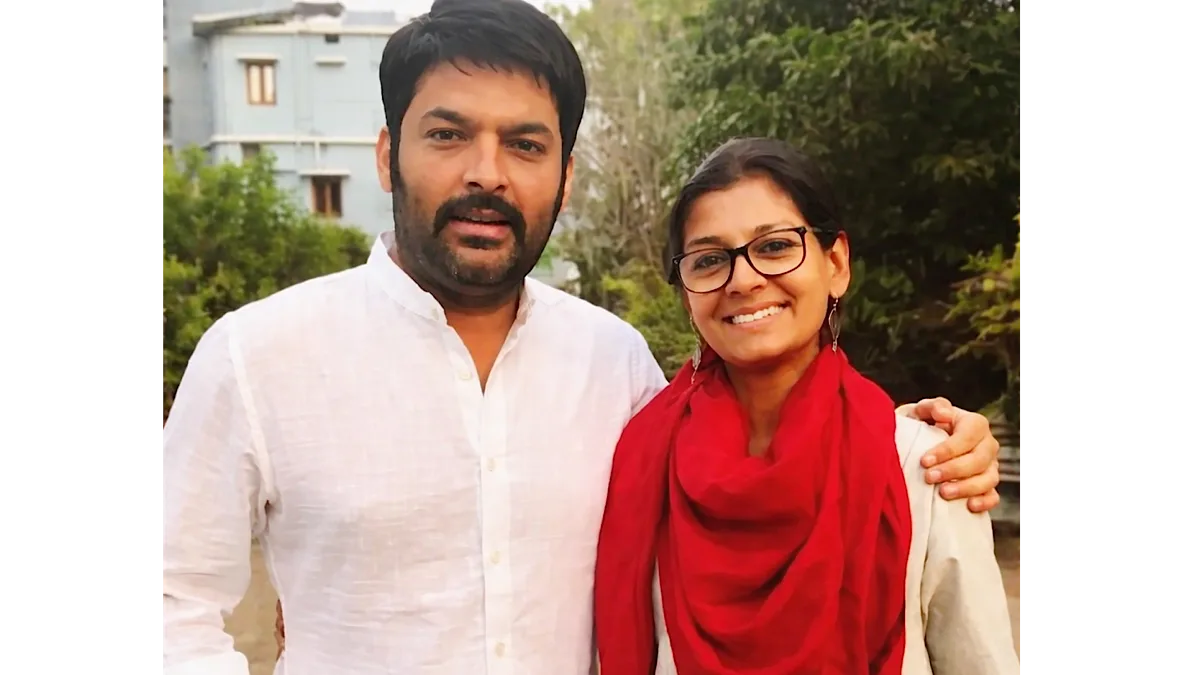
Photo:SNS
In an industry often driven by immediacy and spectacle, some films choose a quieter afterlife—growing in meaning long after their first viewing. Nandita Das’s Zwigato is one such work. Three years on, its unhurried, deeply observant gaze at the fragile architecture of gig work , dignity, and survival in contemporary urban India feels even more resonant. In this conversation, she reflects on the origins of Zwigato, the instinctive choices that shaped it, and the evolving relationship between storyteller and subject.
What emerges is the portrait of a filmmaker who allows time, thought, and lived experience to guide her work—unhurried, attentive, and quietly assured. Your last directorial Zwigato completes three years, your thoughts?
Advertisement
I am happy that people are still watching it and talking about it. The other night, there was a screening of it at UPenn where I am right now for a fellowship. The audience was mostly of faculty. Their thoughtful questions after the film were a good reminder of why I made it. The relevance of the film has only increased with time. I hope those who haven’t watched it will do so now. On Prime video. Where and how did this saga of a delivery boy happen in your head? During the pandemic, we consumers, for our own convenience, became more and more dependent on the gig workers and less and less aware of their struggle. The film is about many small things that are hidden in plain sight. Very few films are made these days about urban workers. Apart from being about the life of a gig worker, Zwigato is also about our normalized biases of class, caste, and gender. They have all subtly found their way into the film, making the invisible, visible. It began as a discussion about growing unemployment and the complexity of gig work with my publisher friend Samir Patil. We then began writing a short film about a day in the life of a delivery rider.
Advertisement
How did you find a producer for this out-of-the-box project about a in-the-box delivery boy?
The enterprising Same er Nair of Applause Entertainment, who agreed to produce it, nudged me to expand it for a feature film. Initially I felt the subject would not immerse me enough, but as I began to delve deeper into it, I was drawn to the human aspects of this collision of new technology and the life of the workers, who are just a cog-in-the-wheel. I also began exploring what impact all this has on the family, especially the wife. With the rise of the gig economy, the struggle between man and machine that Chaplin depicted in Modern Times has now shifted to one between man and algorithms. So Zwigato is a story about the relentlessness of life, but not without its silver linings. The film explores the life of an ex-factory floor manager who loses his job during the pandemic. He then works as a food delivery rider, grappling with the app on his phone and the world of ratings and incentives. Simultaneously, his wife, a homemaker, begins to explore different work opportunities. But for her, the fear of this new life is coupled with the joy of a newfound independence.
This was your third directorial in fourteen years. Why such long spaces between your directorial assignments?
Acting, writing, directing and producing… all have happened rather organically. I just worked with my instinct, dipping into my life experiences and observations that have over the years, become an impulse. The compulsion to engage and find creative ways to share my concerns is what drives me. But I am not trained in any of them and so I take time to write and rewrite, put a project together and also I have done many other things in between the films during the last seventeen years, including becoming a mother! But finally now, I am a less hesitant director. The gaps will be less now! Though I will continue to do other things, be it social advocacy work or acting. I have multiple interests and concerns, and I feel no pressure to prove myself.
What made you select Kapil Sharma as the lead in Zwigato?
It is a very unusual choice. Did Kapil live up to your expectations? The pandemic’s dramatic impact on actor availability and shooting schedule over the past year had made casting for the film a nightmare. Then one day, Kapil Sharma poppe d up on my screen while I was surfing on the internet. I hadn’t seen his show, as I don’t have a TV for the last six years, but from the snippets I did see that his honesty, simplicity, and candour seemed perfect for the character. And so, I reached out to him on an impulse, not fully knowing if he would be right for the part or if he would even be open to doing a film that is not a comedy. He promptly responded and when we met , I was convinced that he would perfectly represent the common man.
Though he no longer was one in real life! Did Kapil turn out to be the right fit?
He has a natural charm and he got into the skin of the character quite effortlessly. He is easy and friendly with his co-actors, disarming everyone around him. He had always told me that he would completely submit to my process and he truly did. But he has a very sharp mind and always questioned if something didn’t make sense to him or if he had an interesting suggestion. He was effortless and real in the film and I am so glad I went with my instinct.
Advertisement