GI Tag breathes new life into Purulia’s traditional lac industry
The GI status in the Natural Goods category was secured following an application by the Balarampur Shellac Cluster Shilpa Samabay Samity Limited.
The affected infrastructure, estimated to have cost $26 billion to build, forms a critical part of Qatar’s global energy supply network. The disruption alone could translate into roughly $20 billion in lost annual revenue.




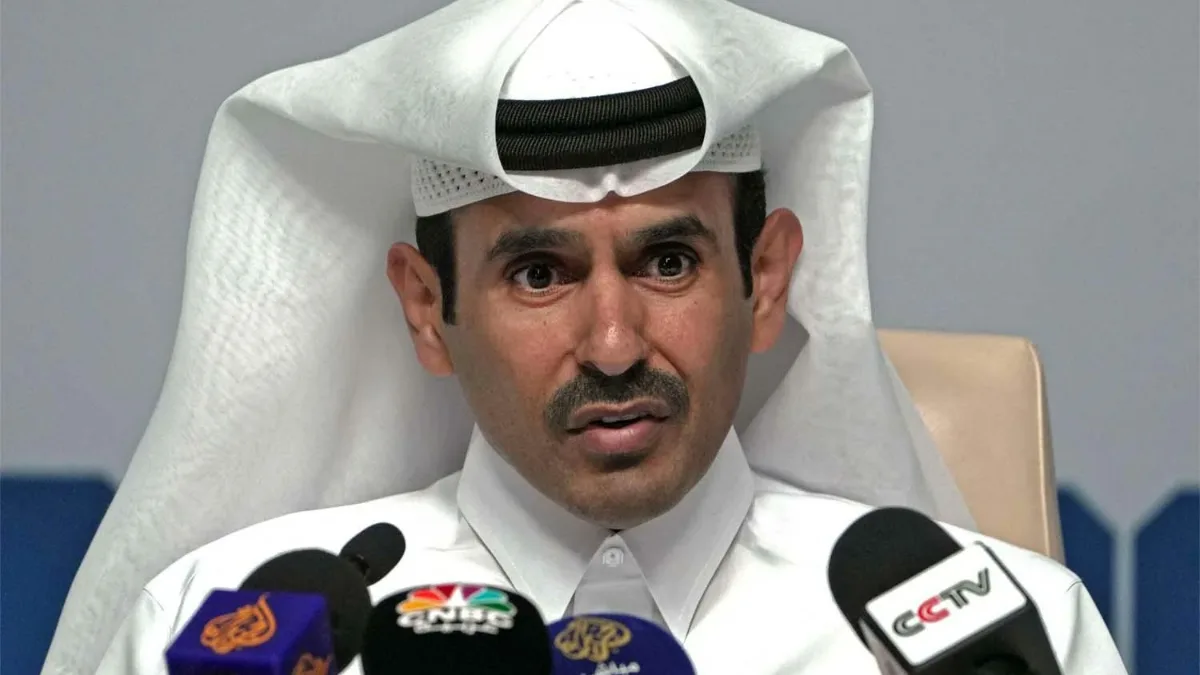
Iranian attacks have damaged Qatar’s LNG infrastructure worth an estimated $26 billion, putting around $20 billion in annual revenue at risk. The attacks have disrupted nearly 17% of Qatar’s liquefied natural gas (LNG) export capacity. The scale of the crisis has drawn global attention not only to the disruption but also to Saad Sherida Al-Kaabi, the CEO of QatarEnergy, who has emerged as the central figure leading the response.
As CEO of QatarEnergy and Qatar’s Minister of State for Energy Affairs, Al-Kaabi has become the central voice explaining the fallout from one of the most serious attacks on Gulf energy infrastructure in recent years.
Advertisement
According to Al-Kaabi, two of Qatar’s 14 LNG trains and one of its two gas-to-liquids facilities were damaged in the strikes. The impact has sidelined approximately 12.8 million tonnes per year of LNG production, with recovery expected to take between three and five years.
Advertisement
The affected infrastructure, estimated to have cost $26 billion to build, forms a critical part of Qatar’s global energy supply network. The disruption alone could translate into roughly $20 billion in lost annual revenue, underscoring the scale of the crisis.
Al-Kaabi expressed shock at the attacks, saying “I never in my wildest dreams would have thought that Qatar would be attacked in this way,” he said, referring to the strikes during the holy month of Ramadan.
His direct communication and visibility have placed him at the heart of the story, transforming what could have been a technical energy disruption into a leadership-driven narrative.
The damage extends beyond LNG exports. Qatar’s condensate shipments are projected to drop by 24%, while liquefied petroleum gas output could fall by 13%. Helium production may decline by 14%, and both naphtha and sulphur output are expected to decrease by around 6%.
The disruption comes amid escalating tensions in the region, following Israeli strikes on Iranian energy facilities, which were met with retaliatory attacks. The widening conflict has heightened concerns over the stability of global energy supply chains, particularly for key markets in Europe and Asia.
Al-Kaabi indicated that QatarEnergy may be forced to declare force majeure on long-term LNG contracts for up to five years. Countries including Italy, Belgium, South Korea, and China could face supply disruptions as a result.
“These are long-term contracts that we may have to suspend depending on the duration of the disruption,” he said, signalling potential long-term implications for global energy security.
The crisis has also impacted international partners. US energy giant ExxonMobil holds significant stakes in the damaged LNG facilities, including 34% in one train and 30% in another. The disruption is therefore likely to have wider corporate and geopolitical implications.
Advertisement