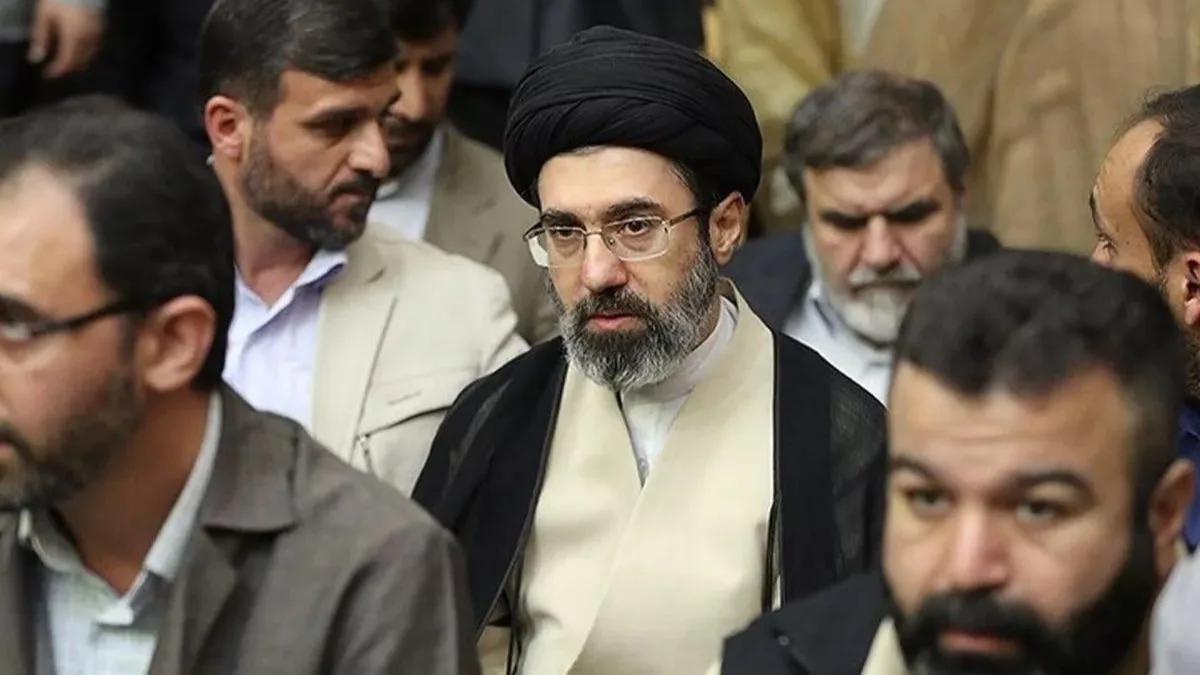
Fresh intelligence gathered by the United States indicates that Iran’s former Supreme Leader Ayatollah Ali Khamenei was uneasy about the idea of his son Mojtaba Khamenei taking over the country’s top position, according to sources cited by CBS News, the BBC’s US media partner.
The revelation comes just days after Mojtaba Khamenei, 56, was chosen as Iran’s new supreme leader by the country’s Assembly of Experts, placing him at the centre of a rapidly escalating regional confrontation following US-Israeli strikes on Iran.
Advertisement
According to multiple sources quoted by CBS News, the late leader had privately expressed doubts about his son’s suitability for the role. The sources said Ali Khamenei believed Mojtaba lacked the necessary qualifications and intellectual strength to lead the Islamic Republic. They also suggested that the former leader was aware of concerns surrounding his son’s personal life.
The intelligence assessment has reportedly been shared with US President Donald Trump and a small group of senior officials around him.
$10 million on the table: US seeks information on Iran’s new supreme leader Mojtaba Khamenei
Mojtaba Khamenei vows revenge and warns of wider conflict
Despite the doubts attributed to his father, Mojtaba Khamenei has struck a defiant tone since assuming power.
In a message released through his official Telegram account and reported by Xinhua, Iran’s new leader repeated Tehran’s demand that its “enemy” pay compensation for damage and casualties caused during the conflict.
“We will obtain compensation from the enemy, and if he refuses, we will take as much of his property as we determine, and if that is not possible, we will destroy the same amount of his property,” the message read.
Earlier, in his first address after taking office, Mojtaba Khamenei promised that Iran would avenge those killed in the recent strikes and declared that Tehran would continue its resistance. The statement also stressed that the closure of the Strait of Hormuz would remain a strategic option and warned that Iran could open additional fronts if required.
The message, according to local media reports, was read out by a female presenter on Iranian state television. It also emphasised that Iran seeks cordial relations with neighbouring countries and would only target locations from which attacks are launched against it.
Reports of injury and hiding amid ongoing strikes
As tensions rise, questions have also emerged about Mojtaba Khamenei’s condition and whereabouts.
Iran International reported that the message attributed to the new supreme leader did not reveal where he was, nor did it provide details about his health or physical condition.
Meanwhile, US Defence Secretary Pete Hegseth said during a Pentagon briefing that Mojtaba Khamenei had been wounded and forced into hiding as the country’s leadership grapples with sustained American strikes.
Hegseth said the Iranian command structure was facing growing strain as the military campaign continued.
Conflict that reshaped Iran’s leadership
The current crisis began on February 28 when Israel and the United States launched coordinated attacks on Tehran and several other Iranian cities.
The attacks killed Iran’s then supreme leader Ali Khamenei, along with several top military commanders and civilians. Tehran hit back soon after, firing waves of missiles and drones at Israel and at US military bases and assets across the Middle East.
A few days later, on March 8, Iran’s powerful Assembly of Experts named Mojtaba Khamenei as the country’s new supreme leader, a decision that has opened a tense and uncertain new phase for the Islamic Republic.