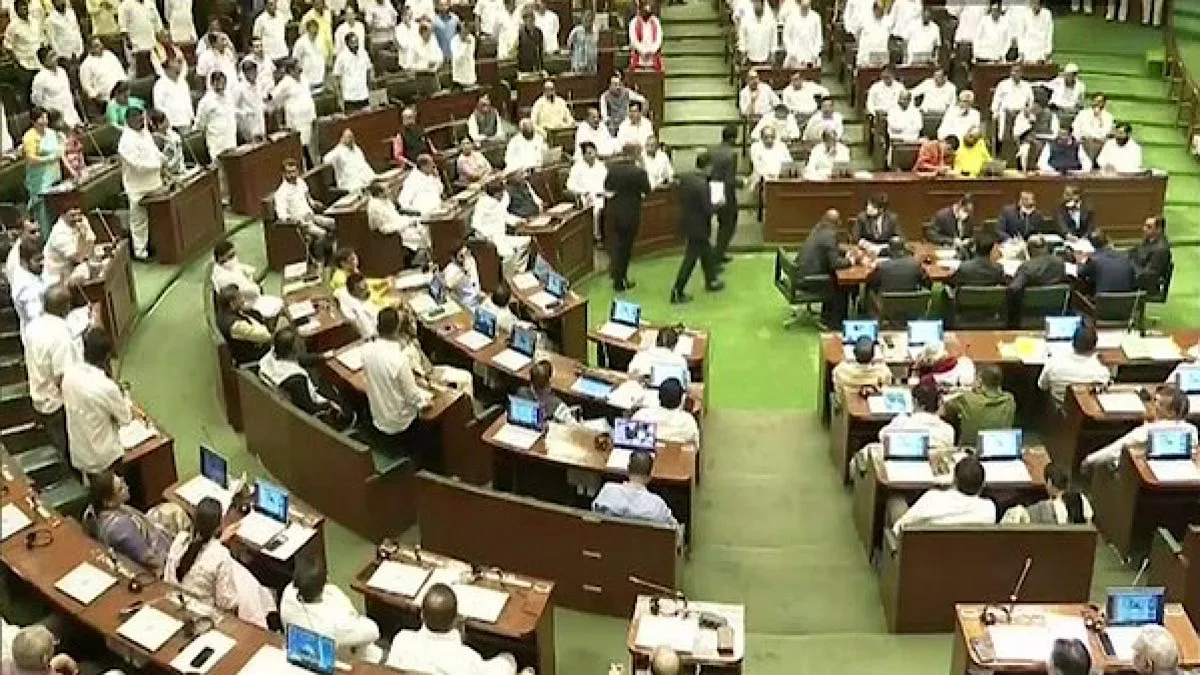
The Devendra Fadnavis government on Friday introduced the ‘Maharashtra Dharma Swatantrya Adhiniyam 2026’, or the Maharashtra Freedom of Religion Bill, 2026, in the Maharashtra Legislative Assembly.
“The objective of the Bill is to protect the right to freedom of religion. It also aims to prohibit unlawful religious conversions carried out through coercion, fraud, inducement or marriage,” Minister of State for Home Pankaj Bhoyar, who introduced the bill in the assembly, said here on Friday.
Advertisement
Unlawful religious conversion has been defined by the Bill as religious conversions induced using force, fraud, misrepresentation, coercion, undue influence, or inducement.
According to the Bill, no person or institution can convert or attempt to convert another person to non-Hindu religions by offering gifts, cash, employment, free education, promise of marriage, better lifestyle, or divine healing, which have been defined as allurement. It will be illegal to use allurement, coercion, deceit or misrepresentation, force or threat, fraudulent means and undue influence. The bill has defined coercion as an act of compelling a person or a group to convert against their will, while mass conversion is the conversion of two or more persons simultaneously.
The Bill allows relatives or close family members of persons in the process of converting to non-Hindu religions to file complaints alleging unlawful conversion, which can trigger police investigations. Offences under the law will be non-bailable, allowing the police to register cases and begin investigations into alleged forced conversions. The Bill makes it mandatory for the officer in charge of the police station to register a complaint made by any person.
Section 14 of the Bill includes legal provisions to ban and penalise organisations found guilty of inducing religious conversions to non-Hindu religions.
Legal provisions included in the Bill, based on similar laws enacted in other states, include requirements for individuals who intend to convert to non-Hindu religions to seek prior permission from a designated government authority, provide an advance notice of 60 days before religious conversion and register any conversion after it takes place. Failure to register religious conversions or comply with procedures could potentially render any religious conversion invalid, according to provisions of the Maharashtra Freedom of Religion Act, 2026.
According to the Bill, those found involved in unlawful conversions on the pretext of marriage will be punished with imprisonment of seven years and shall also be liable to be fined Rs 1 lakh.
Trying to induce religious conversion of a minor, a person of unsound mind, a woman or a person belonging to the Scheduled Caste and the Scheduled Tribe will be punishable with imprisonment of seven years and a fine of Rs 5 lakh.
According to the Bill, those inducing mass conversions will attract a jail term of seven years and a fine of Rs 5 lakh, while repeat individual offenders will get jail sentences of 10 years and a fine of Rs 5 lakh.
Those found guilty of forced conversions will get up to 7 years in prison and will be fined Rs 3 lakh, according to the Bill.
The Fadnavis-led Mahayuti government has maintained that such an anti-conversion law is necessary to protect the vulnerable majority Hindus from predatory conversion rackets masterminded by minorities. The Maharashtra Freedom of Religion Bill, 2026 is based on similar anti-conversion laws in other states like Uttar Pradesh, Madhya Pradesh and Gujarat.
Maharashtra Fisheries & Ports Development Minister Nitesh Rane of the BJP, who has been a strong advocate of such an anti-conversion law against forced conversions, stated that while the Constitution of India guarantees the freedom to practice any religion, it has never granted anybody any right to convert Hindus to minority religions through “misrepresentation, force or allurement”.
However, a coalition of more than 35 civil society organisations, including women’s rights groups, civil liberties organisations, student collectives and minority community bodies, has publicly opposed the proposed anti-conversion Bill, warning that it threatens women’s autonomy, privacy and constitutionally protected freedoms.
Some of the organisations that have protested against the Maharashtra Freedom of Religion Act 2026 are Mumbai for Peace, Association for Protection of Civil Rights, Forum Against Oppression of Women, Bombay Catholic Sabha, Indian Muslims for Secular Democracy, Muslim Satyashodhak Mandal and the Dalit Human Rights Defenders Network, among others.
Civil society representatives have stated that while the legislation is framed as a measure to curb coercive conversions, it is rooted in politically charged allegations of “love jihad” and risks enabling intrusive state oversight over personal choices relating to marriage as well as faith.