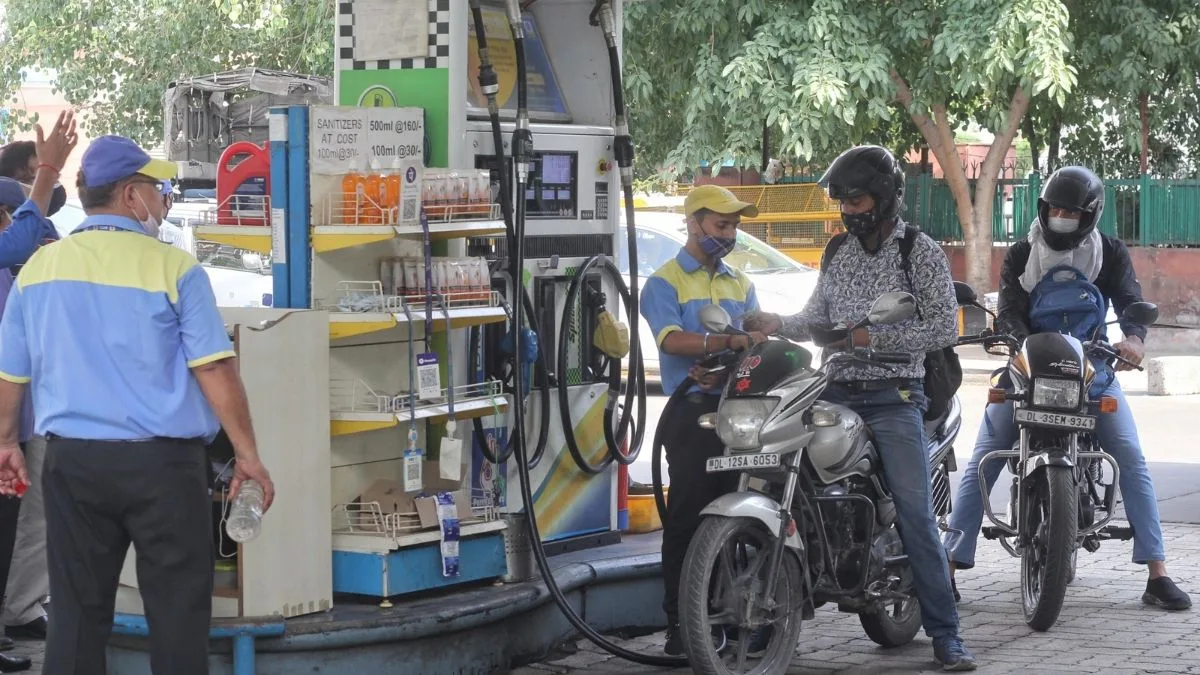
The Central Government on Thursday assured that India’s fuel supplies remain secure and that contingency measures are in place to ensure uninterrupted energy availability, even as authorities continue to closely monitor the evolving situation in West Asia. The update came after an inter-ministerial briefing held at the National Media Centre, where senior officials from the Ministry of Petroleum and Natural Gas, the Ministry of External Affairs, the Ministry of Ports, Shipping and Waterways, and the Ministry of Information and Broadcasting outlined preparedness measures related to energy supplies, maritime safety, and the welfare of Indian nationals in the region.
Officials said the government is maintaining continuous coordination among ministries and agencies to safeguard energy security and prevent hoarding.
Advertisement
LPG supply boosted amid disruptions
India imports about 60 per cent of its LPG consumption, and around 90 per cent of these imports pass through the Strait of Hormuz, which has been impacted by the current situation in West Asia.
The government directed refineries and petrochemical complexes to maximise LPG production by diverting propane, butane, propylene and butenes streams to the LPG pool, resulting in about a 25 per cent increase in domestic LPG production.
The entire domestic output is being prioritised for household consumers, while non-domestic LPG is being allocated to essential sectors such as hospitals and educational institutions.
A committee of executive directors from IOCL, HPCL and BPCL is reviewing allocations to commercial users like restaurants and hotels to ensure fair distribution.
Crude oil supplies remain stable
Officials from the Ministry of Petroleum and Natural Gas said India’s crude oil supply remains stable despite tensions in the region. India consumes around 55 lakh barrels of crude oil per day, and the country has secured supplies exceeding the volumes that would normally arrive through the Strait of Hormuz during this period.
Notably, India now imports crude oil from around 40 countries, reducing dependence on the critical West Asian shipping route. Currently, about 70 per cent of India’s crude imports arrive through routes outside the Strait of Hormuz, compared with roughly 55 per cent earlier.
Two additional crude oil cargoes are also en route to India and are expected to arrive in the coming days, further strengthening supply availability. Officials added that refineries across the country are operating at very high-capacity utilisation, with some facilities running above 100 per cent capacity to ensure adequate fuel production.
Gas supplies being managed amid disruptions
India’s total natural gas consumption stands at about 189 million metric standard cubic metres per day (MMSCMD), of which 97.5 MMSCMD is produced domestically. However, around 47.4 MMSCMD of supply has been affected due to force majeure conditions.
To offset the disruption, gas companies are procuring LNG from alternative suppliers and routes, with two LNG cargoes already on their way to India. The government has also issued a Natural Gas Control Order on March 9 under the Essential Commodities Act to manage supply distribution and prioritise key sectors.
Under the revised allocation:
• Domestic PNG supply and CNG for vehicles will receive 100% supply with no cuts.
• Tea industries, manufacturing units and other industrial consumers connected to the gas grid will receive about 80% of their previous six-month average supply.
• Fertiliser plants will receive around 70% supply.
• Refineries and petrochemical units will see about a 35% reduction so that priority sectors can be protected.
Measures to prevent hoarding and misinformation
The Ministry of Information and Broadcasting said the Union Home Secretary has held a meeting with Chief Secretaries and Directors General of Police of all states and union territories. States have been advised to take strict action against hoarding of essential commodities and ensure an uninterrupted availability of supplies.
Authorities have also been asked to nominate state-level spokespersons to provide regular updates and disseminate verified information through official government social media channels and district administrations. Officials said district collectors, police commissioners and municipal authorities will also actively engage with the public to provide credible information.
The government said it will continue to closely monitor the evolving situation in West Asia and take necessary measures to safeguard India’s energy security, protect its citizens abroad, and maintain the smooth functioning of maritime trade and essential supply chains.