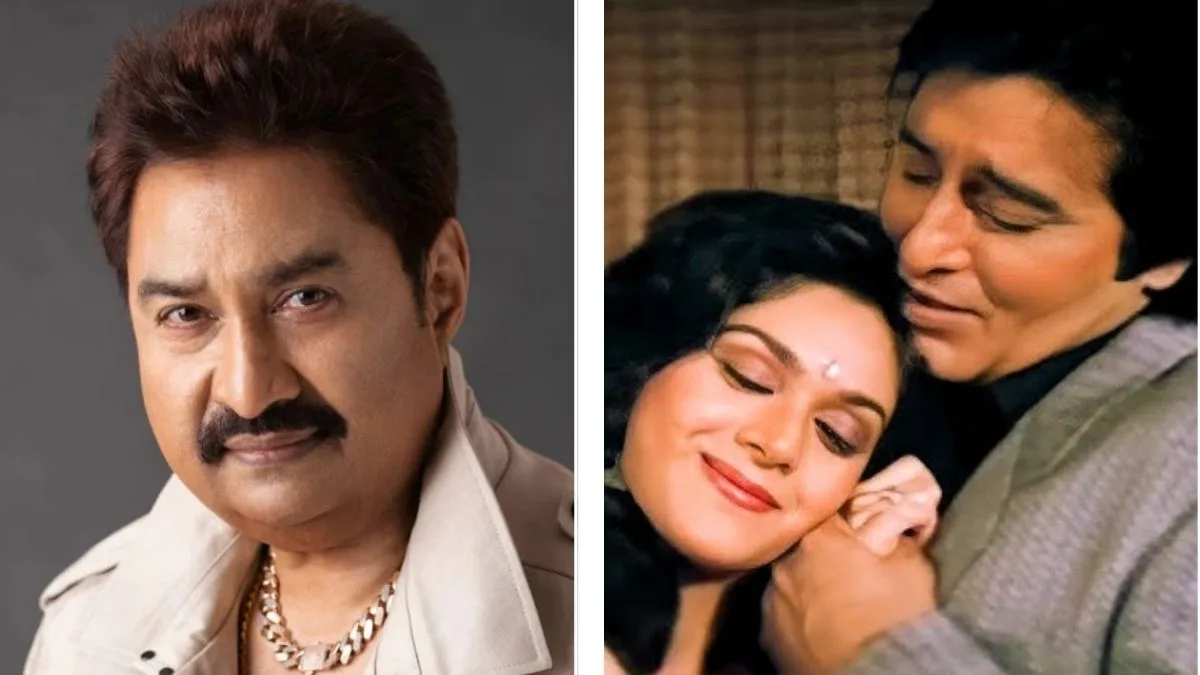
More than three decades after its release, ‘Jab Koi Baat Bigad Jaye’ continues to tug at heartstrings. And its voice, veteran playback singer Kumar Sanu, says the love for the song still surprises him even today.
The singer recently shared an emotional moment on Instagram. In a short video, Sanu stitched together two timelines: a clip of him singing the song back in the 1990s and another of him performing the same melody in 2026.
Advertisement
And according to Sanu, the affection people still have for the track deeply moves him.
Kumar Sanu reflects on the song’s timeless appeal
Along with the video, Sanu wrote a heartfelt caption about the song’s journey through generations.
“Decades have passed, but the love for this melody remains timeless,” he wrote.
The singer added that it makes him happy to see younger listeners discovering the song and connecting with it in their own way.
“It warms my heart to see every generation find a piece of themselves in this song,” he said.
Sanu also highlighted the emotional core of the track; companionship during difficult times.
Even today, he believes the song’s message remains relevant.
“Even after all these years, the message remains the same: ‘Jab koi baat bigad jaye, jab koi mushkil pad jaye… tum dena saath mera.’ Thank you for walking this musical journey with me,” he added.
The song that became a romantic classic
This track comes from the 1990 film ‘Jurm’. The romantic number was sung by Kumar Sanu and Sadhana Sargam.
On screen, the song featured actors Vinod Khanna and Meenakshi Sheshadri.
The film itself was directed by Mahesh Bhatt and produced by his brother Mukesh Bhatt. Apart from Khanna and Sheshadri, the movie also starred Sangeeta Bijlani.
Interestingly, the story of ‘Jurm’ was inspired by the 1987 Hollywood film ‘Someone to Watch Over Me’.
A melody with global roots
While the song became a huge romantic favourite in India, its inspiration goes even further back.
‘Jab Koi Baat Bigad Jaye’ was influenced by the English folk song ‘500 Miles’. The track became widely popular across the United States and Europe during the folk revival of the 1960s.
The original song tells the story of a traveler who is far away from home, broke, and too embarrassed to return.