All eyes on NDA’s ‘Mangal Milan’ meeting on Tuesday
The National Democratic Alliance (NDA) Parliamentary Party meeting, now called 'Mangal Milan', will be held on Tuesday at Parliament House.
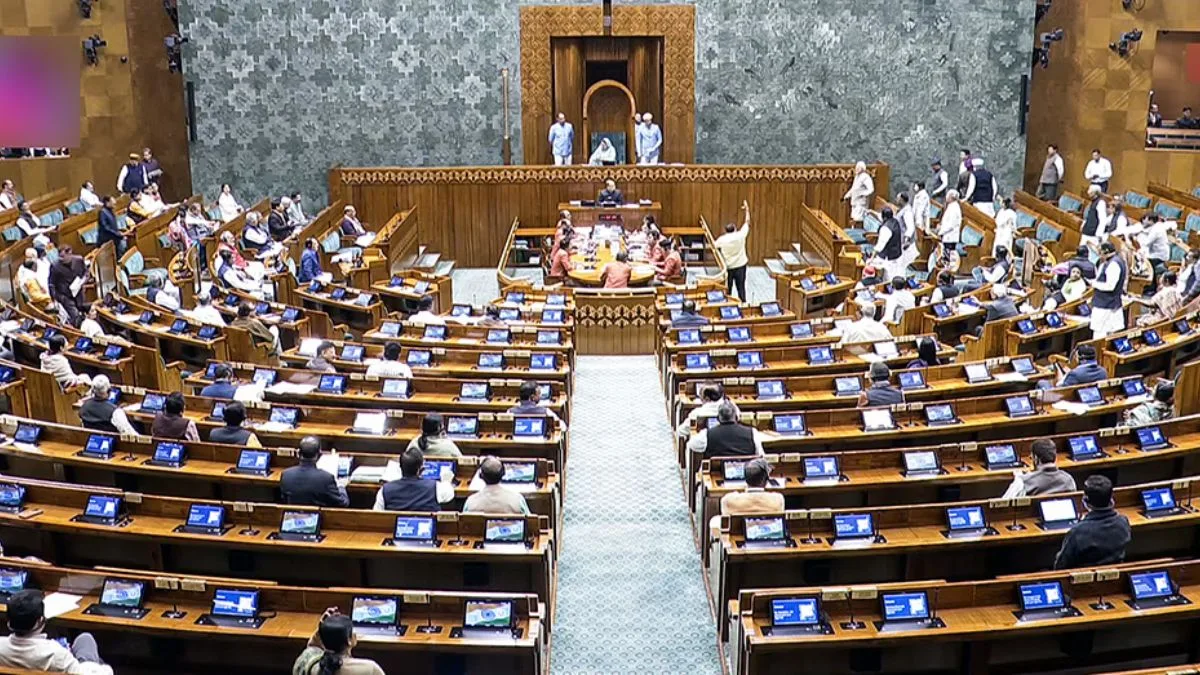
When Parliament reconvenes on Monday for the second phase of the Budget Session, the atmosphere inside both Houses is expected to be anything but routine.




File Photo: ANI
When Parliament reconvenes on Monday for the second phase of the Budget Session, the atmosphere inside both Houses is expected to be anything but routine. What should ideally be a period focused on legislative business and scrutiny of government policy is instead shaping up to be a high-voltage political contest, with the opposition preparing to challenge the government on procedural fairness, economic distress and India’s foreign policy choices.
At the heart of the looming confrontation is a rare and politically charged move: a no-confidence motion against Lok Sabha Speaker Om Birla. More than 118 opposition MPs have backed the motion seeking his removal, alleging that the Chair has ceased to function as a neutral arbiter and instead tilted in favour of the treasury benches.
Advertisement
Opposition leaders argue that recent parliamentary proceedings have eroded long-standing conventions of impartiality. They point to the suspension of eight MPs, restrictions placed on the Leader of Opposition, and what they describe as the disproportionate targeting of opposition voices during heated debates. “This is not about personalities but about protecting the dignity and impartiality of the Chair,” a senior Congress leader said. “Parliament cannot function if the opposition is systematically silenced.”
Advertisement
The government has brushed aside the allegations as politically motivated theatrics designed to derail legislative work. Leaders of the ruling party insist that the Speaker has followed parliamentary rules and that disruptions by the opposition forced disciplinary action. “The Chair has acted strictly in accordance with procedure. The opposition is creating controversy where none exists,” a treasury bench MP said.
Yet the significance of the motion is not merely procedural. In India’s parliamentary system, the Speaker’s authority rests heavily on the perception of neutrality. Challenges to that authority, particularly through a formal motion backed by a large number of MPs, inevitably deepen the political temperature in the House and make consensus-driven functioning harder to sustain.
Both sides appear to be preparing for precisely such a showdown. The ruling Bharatiya Janata Party and the opposition Indian National Congress have issued three-line whips directing their Lok Sabha MPs to be present in the House from March 9 to 11, signalling that critical debates and possible voting situations could arise early in the session.
Beyond the procedural clash, the opposition is also readying a sustained attack on the government over economic issues that resonate strongly with the public. The recent Rs 60 increase in LPG cylinder prices is likely to become a central talking point, with opposition MPs linking it to broader concerns over inflation, rising living costs and unemployment.
“People are struggling with the cost of essentials while the government claims the economy is booming,” an opposition MP said. “The reality in households across the country tells a different story, and Parliament must reflect that.”
The government, for its part, is expected to counter by highlighting macroeconomic indicators and welfare schemes, arguing that India remains one of the fastest-growing major economies despite global turbulence.
Another flashpoint likely to dominate discussions is the interim trade arrangement between India and the United States. Opposition parties have accused the government of compromising the interests of Indian farmers and small businesses by opening domestic markets to American agricultural products. According to them, such arrangements could intensify competition for India’s already vulnerable agrarian sector and micro, small and medium enterprises.
Government leaders have defended the agreement as a pragmatic step towards expanding bilateral trade and strengthening strategic ties. “Trade engagement with major economies is essential for India’s growth trajectory,” a government source said, insisting that safeguards for domestic sectors remain intact.
But the opposition’s critique extends beyond economics into the realm of foreign policy. Several parties have sharpened their rhetoric by suggesting that the government’s diplomatic and trade decisions risk “selling out” national interests. The treasury benches have rejected the claim outright, accusing the opposition of distorting complex policy decisions for political mileage.
Foreign policy itself could become a major subject of debate as the session unfolds. Opposition leaders have signalled that they intend to question the government on India’s position regarding the escalating tensions involving the United States, Israel and Iran, as well as the country’s continued purchase of Russian oil despite shifting geopolitical pressures.
“These are issues of national importance that require transparency and debate in Parliament,” a senior opposition leader said, arguing that the government must clearly articulate India’s strategic position in an increasingly polarised global environment.
Domestic governance issues are also expected to find their way into the parliamentary spotlight. Opposition parties are preparing to raise concerns over the implementation of the Mahatma Gandhi National Rural Employment Guarantee Act, the Special Intensive Revision (SIR) of electoral rolls, and region-specific matters concerning Jammu and Kashmir and Ladakh.
Behind the scenes, opposition coordination appears to be intensifying. Floor leaders of parties in the INDIA bloc are scheduled to meet in the office of the Leader of Opposition in the Rajya Sabha on Monday to align their strategy for the remainder of the session. The meeting is expected to focus on sharpening messaging and ensuring coordinated interventions across both Houses.
Within the Congress, the parliamentary strategy group also met at 10 Janpath on Sunday to fine-tune its approach ahead of the session, signalling that the party intends to play a central role in shaping the opposition’s parliamentary tactics.
Adding another layer of political drama is the prospect of a substantive motion targeting Leader of the Opposition Rahul Gandhi over remarks he made earlier in Parliament. If taken up, the issue could trigger yet another round of heated exchanges between the treasury benches and opposition leaders.
All of this means that the second phase of the Budget Session may unfold less like a routine legislative exercise and more like a test of political endurance. Parliament, in theory, is the arena where governments are held accountable, and national policy is debated in full public view. But in recent years, sessions have increasingly been defined by disruption, adjournments and sharply polarised politics.
Whether the coming weeks will produce substantive debate or simply another cycle of confrontation remains uncertain. What is clear, however, is that as MPs return to the House, the stage is set for a charged political drama in which procedure, policy and power will collide under the high dome of Parliament.
Advertisement