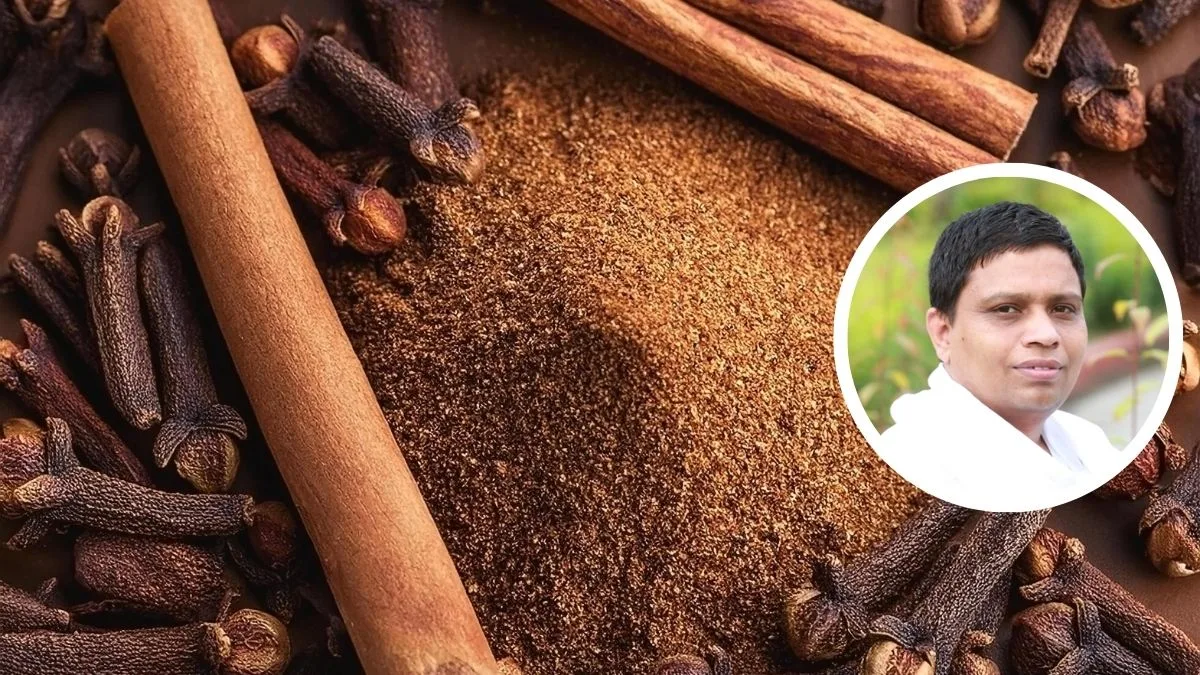
Sometimes the simplest remedies come from the kitchen shelf. And this week, Ayurveda expert Acharya Balkrishna reminded his followers of exactly that.
In a recent Facebook video, Balkrishna shared a very simple home drink that, according to him, can help people dealing with a fast heartbeat, chest discomfort, cough, cold, or flu. The remedy? Just cinnamon and cloves boiled like tea.
Advertisement
The short video quickly caught attention online because the ingredients are so common that almost every Indian kitchen already has them.
The recipe Balkrishna suggested
In the video, Balkrishna explained the preparation in the easiest way possible.
According to him, people should take 1 gram of dalchini (cinnamon), 2-3 cloves.
These ingredients should be boiled in water just like making chai. Once ready, the drink can be consumed like regular tea.
Balkrishna said that drinking this preparation can help when someone feels their heartbeat increasing or experiences discomfort in the chest area. He added that it may also provide relief from flu, cough, cold and seasonal respiratory issues.
His suggestion follows the Ayurvedic tradition where simple herbs and spices are used to support the body’s natural balance.
Why cinnamon is considered powerful
Cinnamon, known scientifically as Cinnamomum, has been in use in food and medicine for centuries.
Historically the spice was extremely valuable. Records show that it was even used in Ancient Egypt. There it was treated as rare and royal ingredient.
There are two main types of cinnamon commonly used today: Ceylon cinnamon often called “true cinnamon” and Cassia cinnamon, the more commonly available variety in markets.
The spice is made from inner bark of cinnamon trees which dries into the familiar rolled sticks.
Its strong smell and taste come from natural compound called cinnamaldehyde. Scientists believe this is responsible for many of its health benefits.
Packed with antioxidants
Researchers say cinnamon contains powerful polyphenol antioxidants.
These compounds help body fight oxidative stress, which is damage caused by unstable molecules known as free radicals.
Studies suggest that cinnamon supplements can increase antioxidant levels in body and may also help reduce inflammation markers.
Because of its strong antioxidant properties, cinnamon is even sometimes used as natural food preservative.
Possible heart and blood sugar benefits
Cinnamon has also been linked to improvements in several factors connected to heart health.
Some research reviews suggest that consuming around 1 to 6 grams of cinnamon per day may help lower Triglycerides. They also help fight total cholesterol, LDL (bad) cholesterol, blood sugar levels.
There is also evidence that cinnamon may help improve insulin sensitivity. That helps the body control blood sugar more effectively.
However scientists note that more human studies are needed to fully confirm these benefits.
Antimicrobial and anti-inflammatory properties
Another reason cinnamon is widely studied is its anti-inflammatory and antimicrobial effects.
Compounds in cinnamon may help fight certain bacteria and fungi. Some studies also suggest it could help reduce infections that affect respiratory tract.
These properties are one reason spices like cinnamon and cloves have long been used in traditional remedies for cough, cold, flu symptoms.