Amid escalating tensions following the recent joint US-Israel strikes on Iran, debates over sovereignty, regional security, and the evolving global order have gained renewed urgency. The developments have intensified discussions about multipolarity, the effectiveness of international institutions, and the role of major powers in shaping global stability.
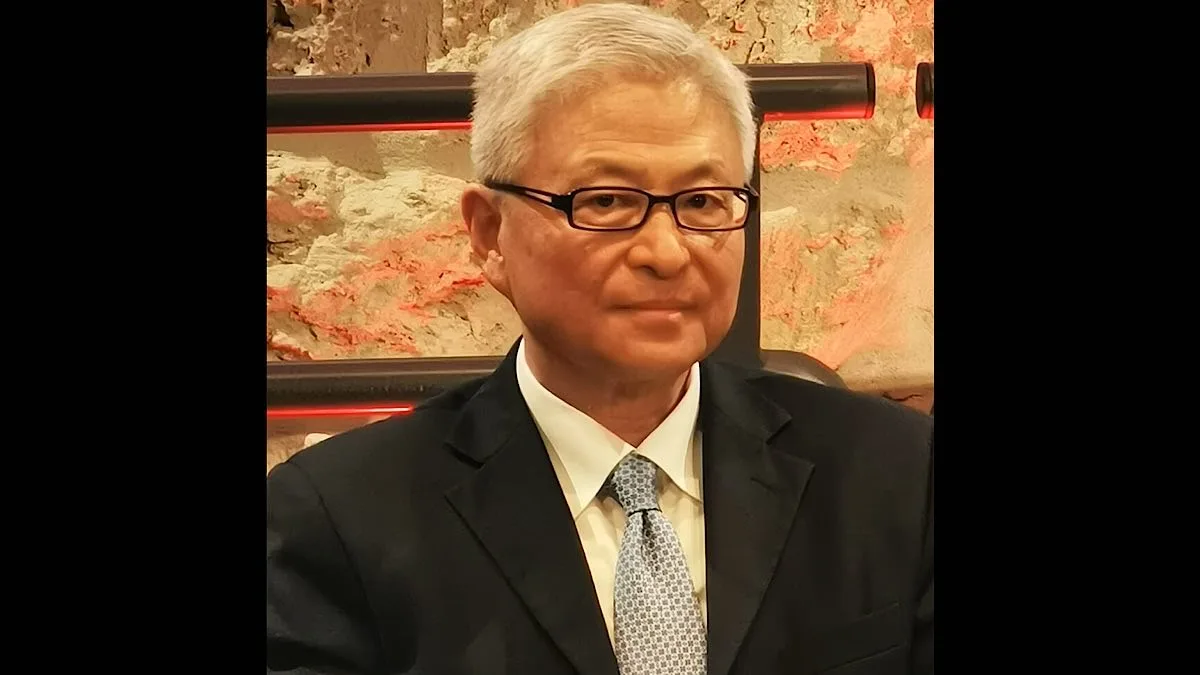
As geopolitical uncertainty deepens, middle and emerging powers are reassessing their strategic positions in a rapidly shifting international landscape. In an exclusive interview with Arti Bali, Yan Xuetong, former Director-General of the Institute of Modern International Relations at Tsinghua University and former Secretary-General of the World Peace Forum (WPF), offered a wide-ranging assessment of today’s most consequential geopolitical challenges.
Advertisement
Yan shared his perspectives on the Iran crisis, BRICS cooperation, the growing role of artificial intelligence in warfare, and the evolving dynamics of US-China relations. The conversation reflects broader global debates about how international norms, institutions, and power structures are adapting to an increasingly complex and contested world order.
Q: How do you see the role of counterbalancing powers in addressing global imbalances, especially with rising tensions around Iran?
A: Iran cannot rely on any external power to protect itself from an American attack. That’s the hard reality. The Trump administration attacked seven countries in 12 months. Now it’s Iran. After Iran, there may be another country. The pattern is not difficult to read. So, the real question isn’t just about Iran – it’s about whether any country’s sovereignty can be protected at all. The UN Charter says member states must respect each other’s sovereignty, but it doesn’t tell us how to enforce that when the violator is the most powerful nation on earth. We genuinely need new international institutions and norms that make sovereignty protection practical and realistic, not merely aspirational language in documents no one enforces. Realistically, the best starting point is regional cooperation, because internationally, a unified solution simply isn’t pragmatic right now.
Q: Is the nuclear issue really the core concern, or is it driven by other interests?
A: Any country that truly wants to build a nuclear weapon can do so within two years; it doesn’t take 30. The technology, while difficult, is not beyond reach for a state with Iran’s resources and scientific capacity. Iran has consistently maintained its programme is for peaceful purposes, and the prolonged failure to resolve this issue suggests the nuclear question may never have been the central one. The sanctions and pressure, driven significantly by Israel’s strong lobbying influence in Washington, have caused immense and lasting damage to ordinary Iranian people over the decades. Entire generations have lived under economic siege. The devastation that follows with a strike would be catastrophic, not just for Iran, but for regional stability across the entire Middle East. Attack is attack, and the consequences do not stay within borders.
Q: There’s an ongoing discussion about AI’s role in warfare and weapons. What’s your take on that?
A: AI and nuclear weapons are a genuinely serious issue. From what I understand, even before Trump, both sides, militarily, agreed on clear limitations. The final steps of any nuclear decision process cannot involve AI. Even if AI is more efficient, it’s forbidden. Both the US and China agreed that AI must not control nuclear weapons, keeping humans as the final decision-makers. Human beings must carry out the final process because humans have a conscience. They can pause and ask, should we really push this button? AI might reach a different conclusion for its own reasons, optimising for variables that have nothing to do with moral judgment or the weight of human consequences. For conventional uses, AI is allowed, but strict safeguards are needed to prevent autonomous lethal actions and maintain human oversight. But for weapons capable of civilisational destruction, the answer must remain human. That consensus, fragile as it may be, is one of the few guardrails still standing.
Q Major powers like India are all being impacted by US tariffs and economic pressure. How do you view this?
A: Among the BRICS members, India actually has the best relationship with the US compared to the other four. That gives India a unique position – but also a complicated one, because it means India faces constant pressure to choose sides rather than chart its own course. But regardless of individual relationships, the BRICS members need to first ask themselves – what kind of genuine cooperation can we build among ourselves? That has to be the foundation before anything else. If these countries cannot find common ground with each other, you can hardly expect them to take any coherent collective position when pushing back against the United States. Internal cohesion is not optional. It is the prerequisite.
Q: How can India and China manage their existing differences in a way that sustains mutual trust and ensures continued progress in economic cooperation?
A: Border disputes are a universal phenomenon – they have persisted for thousands of years across every continent in history. But history also shows us clearly that countries with unresolved border disputes sometimes cooperate and sometimes don’t. That tells us something important: a border dispute is a problem, but it is not a determining factor in the overall relationship. Even with a border dispute between India and China, that friction should not become a permanent obstacle to cooperation in economics, education, culture, tourism, and technology exchange. It can be shelved, managed, and set aside from the broader path of engagement. We should always approach potential cooperation with a constructive perspective – there is always a way to minimise the drag of negative factors if the political will exists to do so.
Q: Trump has been signalling a visit to China. How seriously should that be taken?
A: Trump has been loudly and eagerly telling anyone who will listen that he is planning to visit China. Yet China’s foreign ministry spokesperson refused to either confirm or deny that any invitation was extended. Everyone can draw their own conclusions from that asymmetry it speaks volumes about where the real leverage sits. And even if the visit happens, how much can China, or any country, trust that Trump will honour whatever agreement is reached? That scepticism is not cynicism. It is grounded in repeated, recent experience. Agreements made with this administration have a way of unravelling the moment they become inconvenient.
Q: How do you view the role in the USA in the evolving dynamics between countries?
A: That is a real concern that many countries share. The US, under Trump especially, has shown a consistent pattern of inserting itself into bilateral tensions between two countries and extracting deals – you buy my products, you give me access to your markets or resources. It is transactional diplomacy built entirely on exploiting existing friction rather than resolving it. Many governments quietly worry that China and the US might one day form a G2 arrangement and jointly manage – or dominate – the rest of the world. Their combined GDP already exceeds 50 per cent of the global total. That concentration of power is genuinely alarming to smaller nations. However, I don’t believe a lasting G2 partnership will materialise. The fundamental nature of the China-US relationship remains one of structural competition, not strategic partnership – and no single summit or deal, however grand it appears, will change that underlying reality.