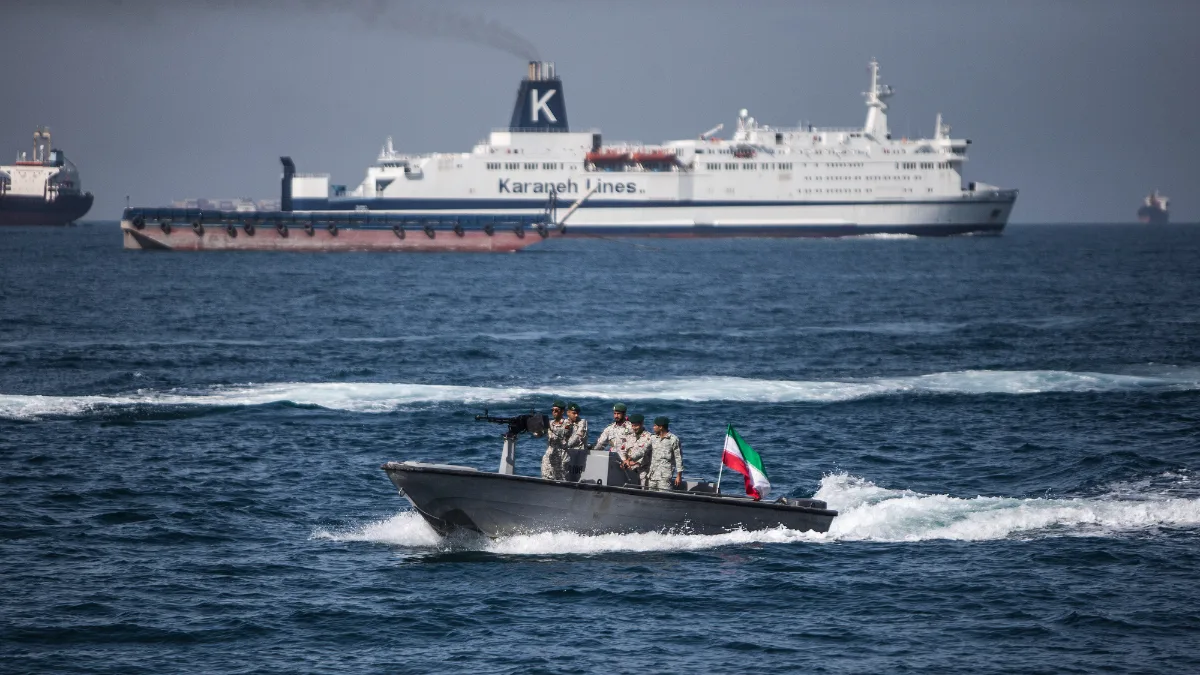
As tensions escalate following the US-Israel strike on Iran, a looming blockade of the Strait of Hormuz threatens to send global oil markets into turmoil, raising a pressing question: will Indian consumers end up paying an indirect “war tax” through higher fuel prices? With billions invested in projects like Chabahar Port and nearly half of its crude imports transiting Hormuz, India finds itself exposed to geopolitical shocks far beyond its borders.
India meets nearly 88 per cent of its crude oil requirement through imports. More than half of these supplies originate from Middle Eastern producers and pass through the narrow Strait of Hormuz, a critical maritime chokepoint now under strain amid rising tensions linked to Iran.
Advertisement
India’s total crude imports exceed 5 million barrels per day (bpd), with roughly 2.5 million bpd transiting through the Strait of Hormuz. Any prolonged disruption in this corridor could have significant implications for energy security and pricing.
Hormuz risks loom over Asia
The global oil market is once again on edge. The Brent Crude index, the world’s most closely watched oil benchmark, is reflecting cascading price volatility amid escalating tensions around the Strait of Hormuz. Brent crossed $80 per barrel, roughly 10 per cent higher than before the Iran crisis.
Investment bank Morgan Stanley has said Brent crude prices could touch $120 per barrel if a full-scale conflict in West Asia leads to sustained disruption of oil flows through the Strait of Hormuz. Another recent report said that Brent crude could climb above $90 per barrel with disruption at the strait or exceed $100 per barrel in a broader regional conflict.
While Brent prices have shown sharp swings, the real story lies in Asia, particularly for giants like India and China, whose energy security is deeply intertwined with this narrow maritime chokepoint.
Data from the U.S. Energy Information Administration for the first quarter of 2025 underscores just how critical Hormuz remains to global oil flows.
According to US EIA estimates for Q1 2025, the majority of crude and condensate passing through the Strait of Hormuz was destined for Asian markets:
- China: 38%
- India: 15%
- South Korea: 12%
- Japan: 11%
- Other Asian destinations: 14%
In comparison, Europe accounted for just 3.8%, the United States 2.5%, and other regions 4.5%.
The surge in oil prices leads to an increase in India’s oil import bill and pushes up the rate of inflation, which hurts economic growth.
India has 100M barrels in reserve, but…
India is holding an estimated 100 million barrels of crude oil in commercial and strategic storage, a buffer that could sustain the country for about 40 to 45 days if supplies through the vital Strait of Hormuz are interrupted.
The country’s strategic petroleum reserves are located at Mangalore, Padur, and Visakhapatnam. These underground facilities are designed to address short-term supply shocks rather than extended outages.
The stockpile includes crude stored in refinery tanks, underground strategic petroleum reserve (SPR) facilities, and shipments currently en route to Indian ports.
Strategic reserves for temporary shocks
The existing cushion, along with strategic reserves, would provide temporary relief in the event of a sudden disruption.
But an immediate halt in Middle Eastern crude would initially create logistical challenges and trigger price volatility.
A closure of the Strait would first affect prompt cargo loadings. However, oil already shipped would continue arriving at Indian ports, and refiners typically maintain commercial inventories to handle short-term supply interruptions.
If flows through the Strait of Hormuz were completely halted, these reserves could theoretically sustain imports for about 40 to 45 days. However, analysts caution that a prolonged disruption would lead to mounting pressures, including higher import costs, increased freight expenses, and the need to source crude from more distant suppliers.