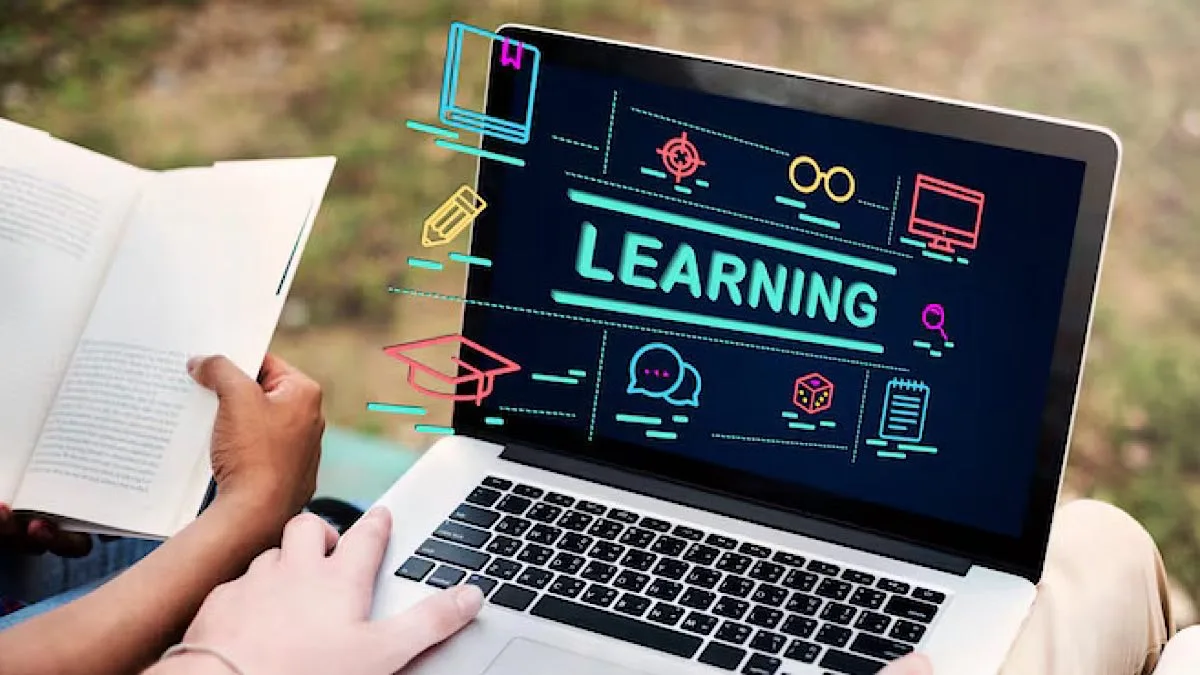
Nelson Mandela regarded education as the most powerful weapon we can use to change the world. In this information age, we are a step closer to achieving this vision. With the rise of the internet, online education is the ‘great equaliser’, which enables democratised access to learning.
An interesting statistic: In 2024, India had 886m active internet users, with 55 per cent of the users residing in rural regions. The deeper penetration of the internet, coupled with increased data affordability, acts as a digital backbone for the proliferation of online education in India.
Advertisement
This breaks conventional geographical, linguistic, and other barriers and makes education a level playing field for learners. Today, the quality of education and access to information are similar in both urban and rural regions. Besides, online education fosters anywhere-anytime learning, provides access to specialised content across streams and academic disciplines, offers resourceful platforms to learners in pursuit of additional knowledge, and even free platforms and tools for hands-on learning.
This is truly a remarkable age, where we are moving from equal to equitable education.
Preparing rural youth to actively participate in the modern workforce
The last few years have seen a dramatic rise in India’s tier 3 and 4 regions. Global enterprise mammoths and GCCs (in both tech and BFSI sectors) have been turning to non-metro cities to set up their workspaces and recruit local talent. This arrives as a great opportunity and a mandate to empower rural youth to participate in the modern workforce.
Increasing employability in such regions involves training interventions as foundational as communication and power skills to as complex as niche training in cutting-edge AI frameworks. This imperative compels the conceptualisation of new-age courses, industry-aligned training initiatives, and open-source platforms for experiential learning modules.
While several government, private, and combined initiatives are arriving to meet the demands, increased internship and job participation opportunities will enable learners to pick up job-specific skills apart from theoretical knowledge.
Online education shattering geographic barriers to foster quality education and career advancement
The contemporary way of learning represents a seismic shift in education, where technology acts as a disruptive agent that eliminates any and all limiting barriers to learning.
High-quality education and content are made available to learners across the socioeconomic and geographical spectrum. Besides, remote learning has also decentralised the specialisation of niche subjects (say astrophysics or rare languages) from universities in metro cities to even the remotest villages.
Teachers also reap benefits as they now have a smart companion to complement their existing teaching methodologies with additional, enriching content.
For working professionals, balancing work and personal aspirations has now become easier than ever, as they can pursue their passion without relocating or spending too much.
With the rise of microcredentials, we are effectively nurturing an ideology of local application, global knowledge.
The role of industry-aligned curriculum to tackle enterprise skill gaps
India stands at a pivotal moment. While urban India races ahead in digital capability, rural regions still struggle with limited exposure to quality education and employment pathways. NEP 2020, the Skill India Mission, and NSDC have created a strong policy foundation, but real progress lies in converting these frameworks into industry-ready talent across geographies.
Digital adoption
With rural internet users increasing every day, access is no longer the primary constraint. Affordable smartphones and connectivity now enable rural learners to access the same digital learning ecosystems as urban students—making scalable, personalised skilling truly feasible.
Industry alignment: The core of employability
High-growth sectors likeIT/ITeS, BFSI, EV and Industry 4.0 manufacturing, logistics, and healthcare, face a severe skilled talent shortage. With employers shifting to outcome-based hiring, curricula co-designed with industry leaders are essential. Real-world projects, AI-led assessments, and hybrid apprenticeships ensure graduates are productive from day one.
Micro-credentials: Skills with speed and relevance
As the half-life of technical skills shortens, stackable micro-credentials offer agile, job-aligned upskilling. Modular pathways paired with AI-driven personalisation allow rural learners to build in-demand capabilities without disrupting livelihoods.
Learner-centric design: Inclusion at scale
Soft skills, workplace behaviours, and gender inclusion must sit at the core of every program. Vernacular learning, adaptive pathways, and voice-based interfaces ensure accessibility even in low-bandwidth environments. Hybrid apprenticeships strengthen employability through ‘learn while doing’ exposure.
The path head
Closing India’s urban–rural talent gap requires aligning policy intent, industry relevance, and technology-led personalisation. By prioritising modular, inclusive, and market-aligned curriculum design, India can unlock its demographic dividend and emerge as a globally competitive talent hub.
Achieving inclusive economic growth and a balanced talent ecosystem
The concept of economic growth is not about being centred on clusters but on an ecosystem. Real growth is unlocked when it’s inclusive. Growth in tier 1 regions is good, but prospering tier 3 & 4 regions is great. And online education is the engine that fuels this ambition.
Be it the affordability it offers to aspirants from rural regions to learn and become entrepreneurs and professionals, the role it plays in gender empowerment by providing safe and accessible education to culturally and geographically limited women, or battle the skill gaps that spring when enterprises setup their offices in these regions, online education is the fulcrum, that strategic enabler of holistic, inclusive economic growth.
Aspects like demand-driven curriculum and skill-first approach truly supercharge the impact online education offers and the impact it creates in the lives of learners.
Online education is becoming one of India’s strongest levers for inclusive economic growth, breaking long-standing barriers of geography, income, and social disadvantage. By lowering the cost of skilling and removing the need to relocate, it gives rural, low-income, and first-generation learners access to the same high-quality programs that urban professionals receive, creating a more level talent playing field.
As employer partnerships and hybrid apprenticeships strengthen, online education becomes a strategic catalyst, expanding the talent pipeline, reducing inequity, and enabling upward mobility at national scale.
(The writer is the CEO, UNext Learning)