Extraction of minerals from the Indian offshore: Opportunities and challenges
The mineral economy of India is at a crucial moment of structural transition.
By striking down the tariffs imposed by the President of the United States, the Supreme Court of the United States (SCOTUS) has sent a powerful message to Constitutional courts across the world.




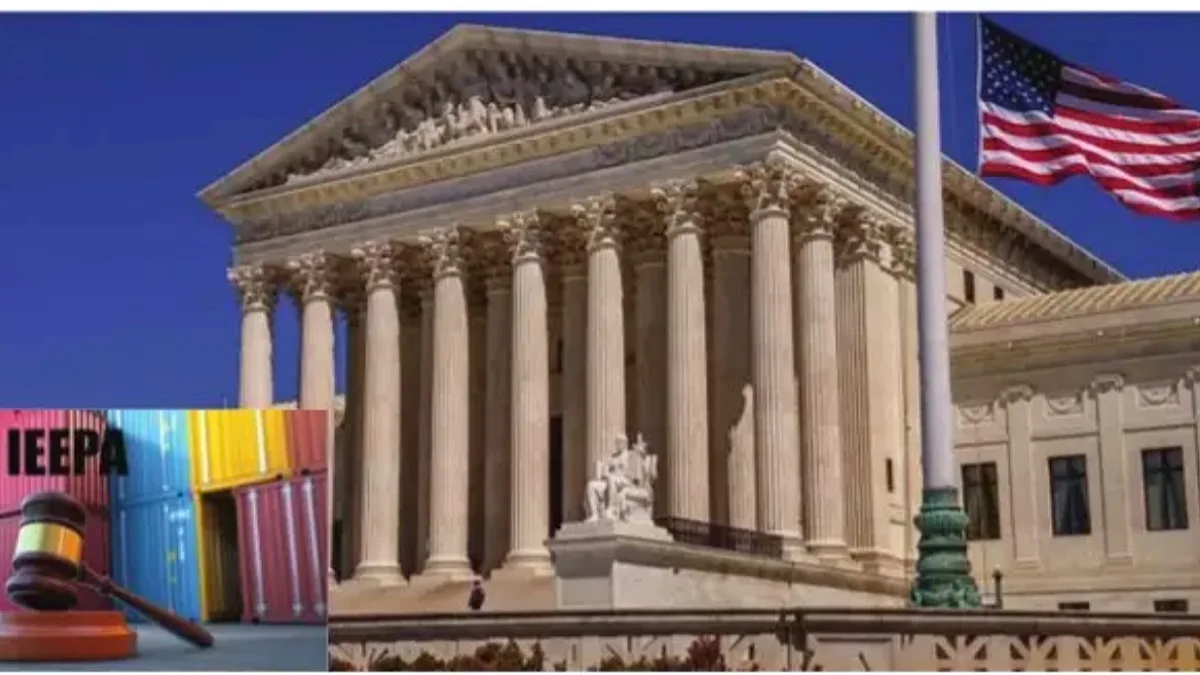
Photo:SNS
By striking down the tariffs imposed by the President of the United States, the Supreme Court of the United States (SCOTUS) has sent a powerful message to Constitutional courts across the world. The Court identified with precision the limited question of law before it, addressed that question directly, and delivered its ruling with clarity and speed.
It discharged the responsibility assigned to it by the Constitution ~ without being overwhelmed by the political or economic consequences of its decision, without venturing into the realm of policy prescription, without allowing the question before it to become academic or infructuous and without allowing the policy to remain in a prolonged phase of uncertainty pending adjudication. These are all hallmarks of an institution firmly committed to upholding the majesty of the law, conscious that it is the final interpreter of the Constitution. Under the United States Constitution, the President heads the executive branch and is charged with implementing laws enacted by the legislature ~Congress. A strict separation of powers ensures that no individual can simultaneously serve in Congress and hold executive office.
Advertisement
The judiciary, in turn, retains the final authority to interpret the law, creating a nearly perfect system of checks and balances. The narrow question before SCOTUS in the tariffs case was whether the International Emergency Economic Powers Act (IEEPA) authorized the President to impose tariffs. The Court answered in the negative and in words that merit close attention, observed: “The President asserts the extraordinary power to unilaterally impose tariffs of unlimited amount, duration and scope. In light of the breadth, history and constitutional context of that asserted authority, he must identify clear Congressional authorization to exercise it. IEEPA’s grant of authority to ‘regulate importation’ falls short. IEEPA contains no reference to tariffs or duties. The Government points to no statute in which Congress uses the word ‘regulate’ to authorize taxation.
Advertisement
And until now no President has read IEEPA to confer such power. We claim no special competence in matters of economics or foreign affairs. We claim only, as we must, the limited role assigned to us by Article III of the Constitution. Fulfilling that role, we hold that IEEPA does not authorize the President to impose tariffs.” Simply put, while the executive argued that the power to “regulate” imports was broad enough to include the “imposition of tariffs,” the Court held that such an expansive reading lacked clear Congressional authorization.
The Court neither deferred reflexively to the executive nor assumed the mantle of economic policymaker nor tried to find a viable work around leaving the issue ‘open’. It simply confined itself to interpreting the statute and enforcing constitutional limits. The clinical approach of the SCOTUS in this can be a valuable guide for Constitutional Courts in India. Hypothetically speaking, if a similar case were to arise before the Supreme Court of India, and the Court were to find tariffs imposed by the Union Government illegal, would it unhesitatingly set them aside? What if the Attorney General or Solicitor General argued that such a ruling would result in massive fiscal loss because collected tariffs would need to be refunded? Would the Court nonetheless decide the legal question squarely?
Or would it, citing lack of expertise in economics or foreign affairs, refer the matter to a committee – perhaps comprising officials appointed by the very executive whose action is under challenge – receive a report in a sealed cover, and dispose of the case in terms of that report in the name of protecting the nation’s economic security? Equally, would the Court confine itself to adjudication, or would it proceed to craft a policy framework of its own, invoking its wide discretionary powers to “balance competing claims” and “meet the ends of justice,” thereby entering the executive domain? Alternatively, would it prefer to nudge, prod, cajole or browbeat the Executive to review its stand or try the mediation approach so that somehow or the other, it does not have to decide the question before it and can dispose of the matter in terms of the undertakings given or agreements arrived at between the parties? These questions are no longer academic and require serious contemplation because in recent years, a new kind of jurisprudence appears to be emerging from the Supreme Court of India, one which has rightly been described by some as its “Illegal but Helpless and Sympathetic” Jurisdiction.
This jurisdiction encompasses those cases in which the Court identifies and acknowledges the illegality or constitutional infirmity but then declines to grant full consequential relief citing one reason or the other ranging from practical constraints, national interest, subsequent developments, actions of the parties or simply because it would be too harsh. In most cases it appears that the Court is more focused on the consequences or managing the consequences of its answer than with speedily providing the answer to the constitutional question before it. If in Subhash Desai v/s Principal Secretary to Governor of Maharashtra, concerning the Maharashtra government crisis, the Court found serious constitutional violations but stopped short of restoring the previous government then in the Ayodhya dispute case (M. Siddiq v/s Mahant Suresh Das and others), it held that the 1949 desecration and the 1992 demolition were egregious violations of the rule of law but still awarded the disputed land for the construction of a temple and an alternative five-acre site for the mosque.
If in the Enforcement Directorate Case (Dr Jaya Thakur v/s Union of India) the Court held that the Director’s extension in 2021 and 2022 was illegal and still allowed him to continue, then in the District Judge’s case of 2017 (Sivanandan v/s High Court of Kerala) it did not remove the Judges despite noting that their appointment was arbitrary by stating, ‘We cannot lose sight of the fact that all selected candidates are otherwise qualified judicial officers and have been working for a long of period time’. Even though the Demonetization case (Vivek Narayan Sharma v/s Union of India) was filed in 2016 immediately after the policy was announced, it was decided only in 2023, almost six years after the policy had been implemented and the matter had become academic. While upholding the policy decision, the Court observed that even if procedural flaws were found, “the clock cannot be put back.”
Similarly, the Association for Democratic Reforms v/s Union of India (2024) case was filed in 2017 challenging the electoral bonds scheme but instead of deciding the matter expeditiously before the General Elections in 2019, the Court struck down the scheme only in 2024 and while doing so permitted the political parties to retain the funds already received and declined to enter into questions of bribery or quid pro quo. The SCOTUS decision underscores a fundamental principle: when a constitutional court is faced with a question of law, its duty is to formulate it quickly and then proceed to decide that question alone ~ clearly and without any fear.
The moment a court avoids doing so for any reason whatsoever, defers excessively to the executive, or seeks refuge in committees and procedural devices, it risks abdicating the very responsibility the Constitution entrusts to it. Judicial review is not an exercise in governance. It is an exercise in constitutional fidelity. A court that confines itself to its assigned role does not weaken democracy; it strengthens it by ensuring that every branch of government remains within its constitutional bounds. The message from SCOTUS is simple but profound: Constitutional courts must not be overwhelmed by consequences. Their legitimacy lies not in crafting compromises, but in declaring what the law is – and ensuring that those who wield power, do so only within its limits.
(The writer is a lawyer turned entrepreneur and can be reached at amitkrishankan paul@gmail.com. He is the author of ‘Meghdoot: The Beginning of the Coldest War’ which tells the story of the race to Siachen between India and Pakistan)
Advertisement