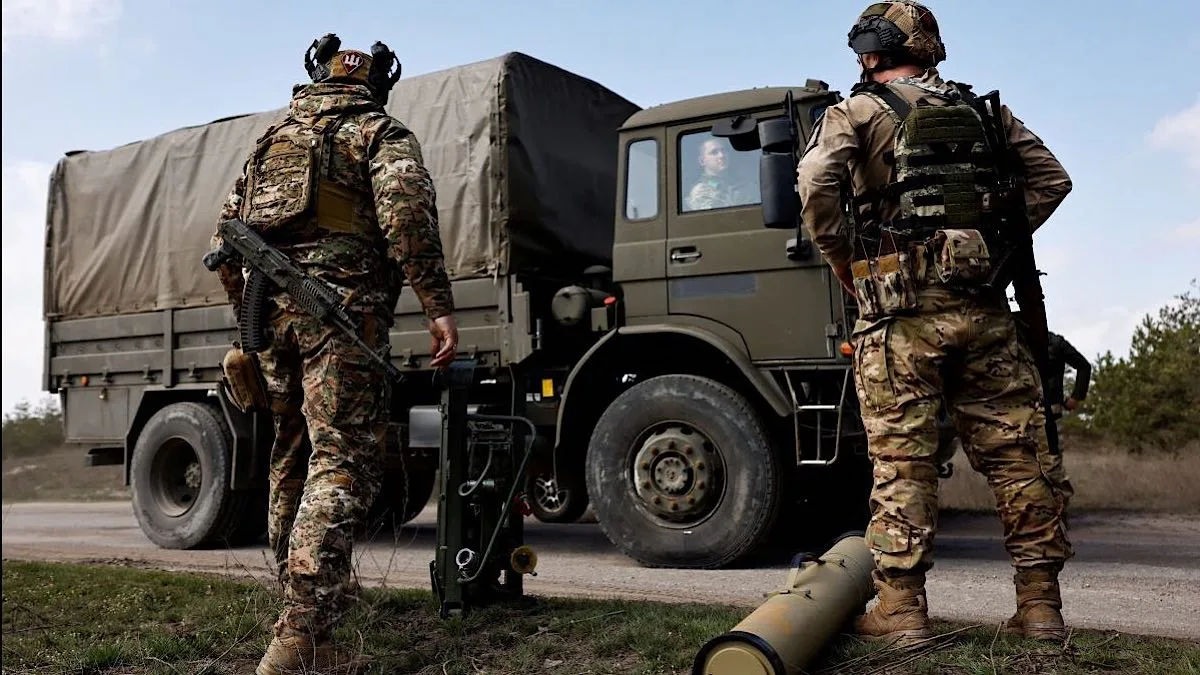
Four years (24 February 2022) after Russian troops crossed into Ukraine, the most revealing battlefield is no longer only the front line near Kharkiv or the trenches in the Donbas. It is the domestic ledger inside Russia itself, where President Vladimir Putin’s decision has turned from a promise of swift geopolitical correction into a slow, grinding tax on society, money, and morale. Wars are often sold as acts of destiny. This one was framed as necessity: a defensive move against NATO’s expansion, a historical correction, a guarantee of Russia’s place as a great power.
But history has a habit of charging compound interest. The Russian state can still mobilise men, money, and rhetoric, yet it is increasingly clear that the price is being paid not in speeches at the Kremlin but in household budgets, shuttered shops, and the quiet normalisation of emergency life. When air-raid shelters become part of urban planning and military slogans blend into commercial signage, a country has crossed an invisible line from mobilisation to accommodation. The economic story is not collapse; it is erosion. Sanctions, war spending, and the redirection of industry toward defence have produced a familiar pattern from long conflicts: higher taxes, pricier essentials, and a squeeze on small businesses that do not have state contracts to cushion the blow. The Russian Finance Ministry can adjust VAT and reallocate budgets, but it cannot decree prosperity. Pensions and wages can be nudged upward, yet inflation moves faster.
Advertisement
This is how wars persist, not through dramatic breakdowns, but through millions of small recalculations in kitchens and shops where people decide what to postpone, what to endure, and what to stop expecting. Politically, the Kremlin still commands the stage. Opposition is fragmented, independent media has been crushed or driven abroad, and the language of a “special military operation” remains the official script. Yet public loyalty is not the same as public conviction. There is a widening gap between support expressed in principle and the weariness felt in practice. The state can compel silence; it cannot manufacture meaning. The question “what is this for?” lingers even among those who accept the government’s framing of threat and sacrifice. Strategically, Moscow faces a paradox. It has not lost decisively, but it has also not won in any sense that reshapes Europe’s security order on its own terms.
Ukraine, backed by the United States and European allies, has denied Russia a clean victory. The result is a prolonged contest that drains resources and locks Russia into a war economy that narrows its future options. Great powers can survive stalemates; they are weakened when they become accustomed to them. The deeper cost, however, is cultural. A society that learns to live with perpetual war also learns to lower its horizon of expectations. That may be the Kremlin’s unspoken bet: that endurance will outlast resistance, at home and abroad. History suggests endurance is not the same as strength. Sometimes it is merely the art of waiting for a bill that will eventually become due