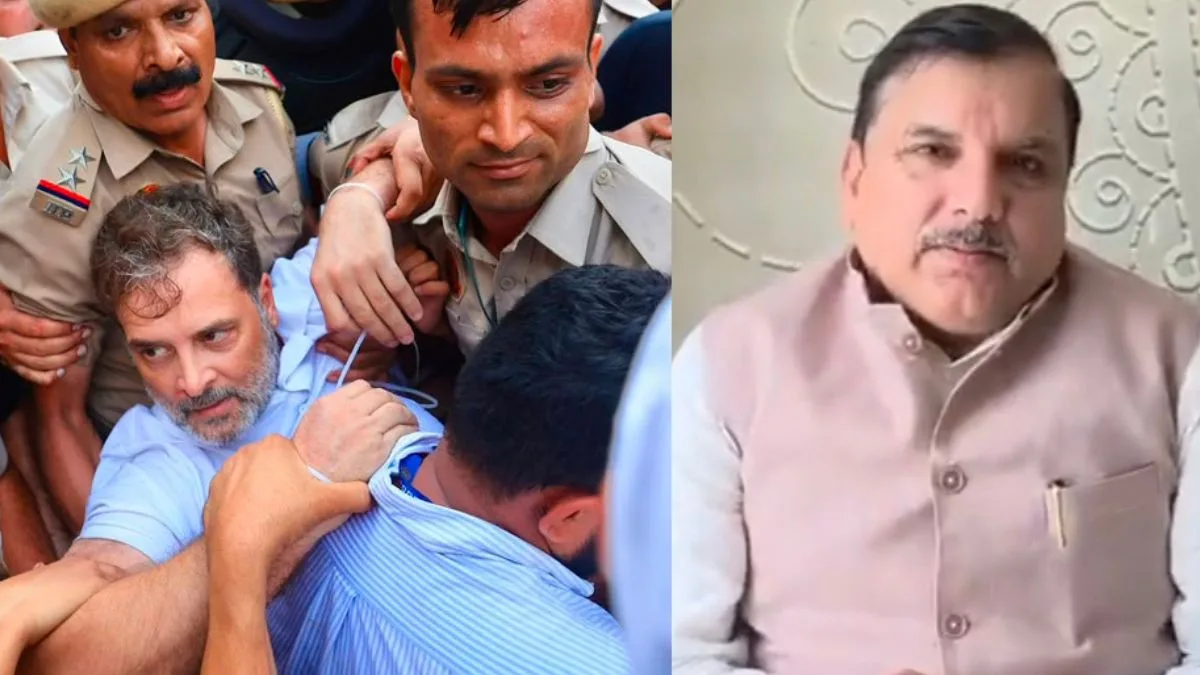
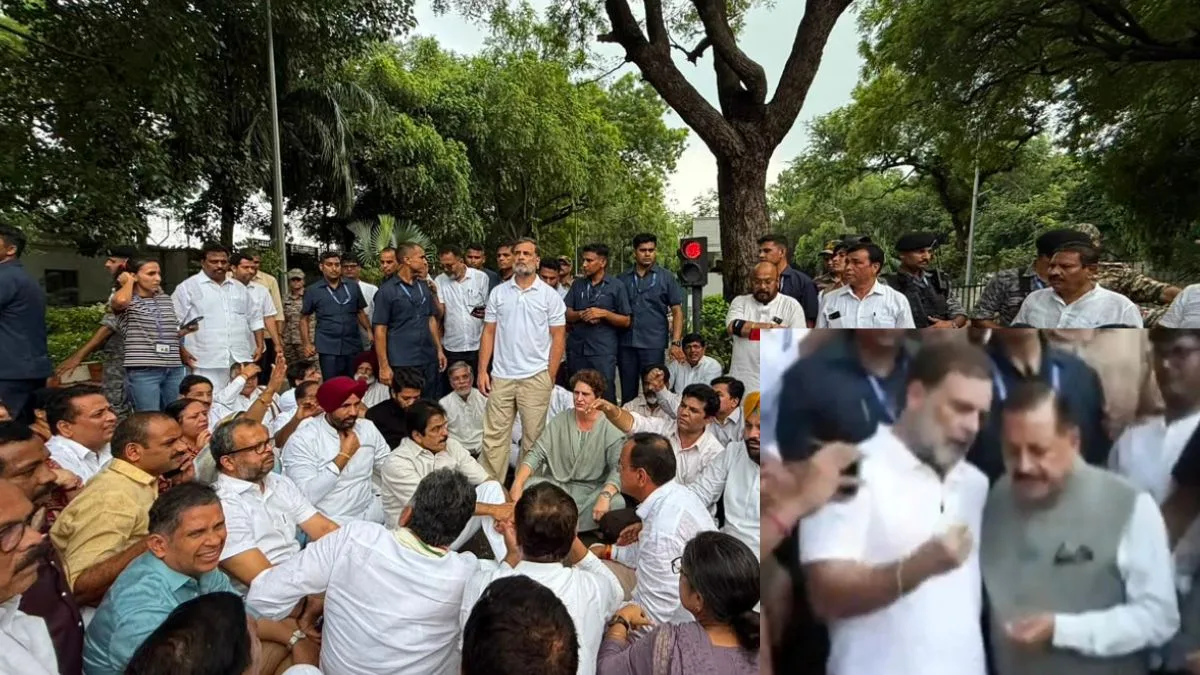
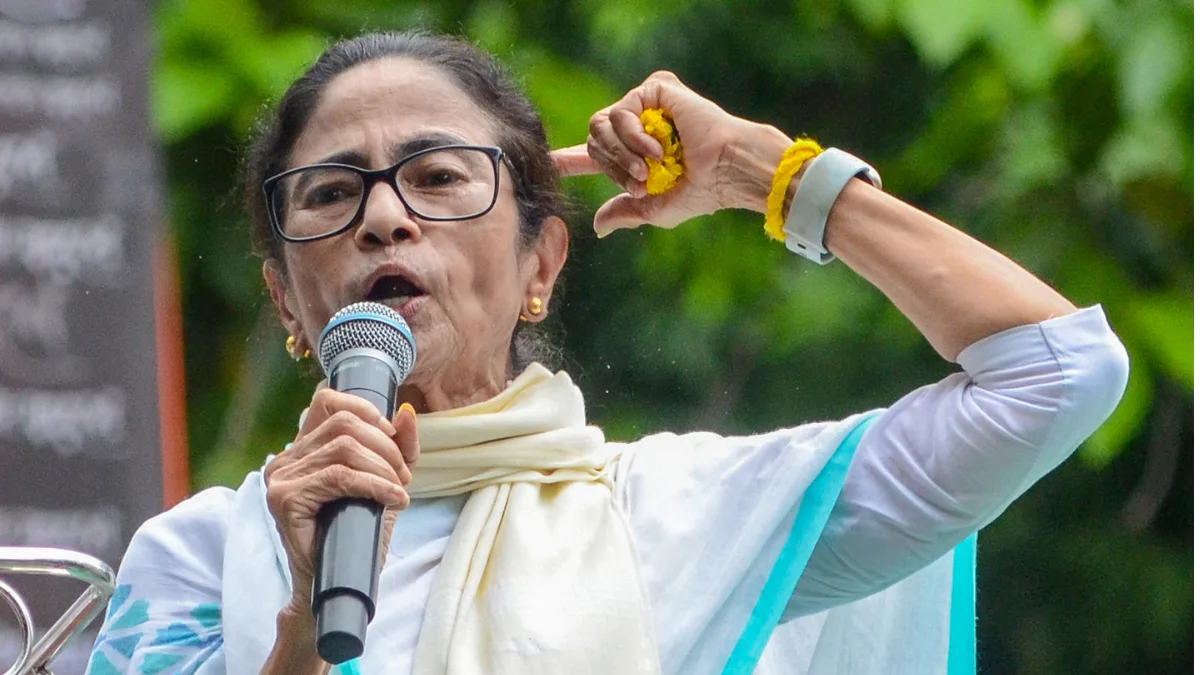
Mamata pays tribute to July 21 martyrs amid observances by multiple factions
Mamata Banerjee's message came as the TMC observed one of its most politically significant dates under dramatically altered circumstances.
A war of words has erupted between the ruling Trinamul Congress (TMC) and the Bharatiya Janata Party (BJP) over the West Bengal Budget, with welfare schemes such as Lakshmir Bhandar and the newly-announced Yuba Sathi project becoming key flashpoints ahead of the forthcoming Assembly elections.





TMC and BJP
A war of words has erupted between the ruling Trinamul Congress (TMC) and the Bharatiya Janata Party (BJP) over the West Bengal Budget, with welfare schemes such as Lakshmir Bhandar and the newly-announced Yuba Sathi project becoming key flashpoints ahead of the forthcoming Assembly elections.
Trinamul leaders have begun projecting the Budget as a people-oriented document, particularly after several women welcomed the Rs 500 increase in the Lakshmir Bhandar allowance. The Opposition, however, has criticised the Budget as election-centric, accusing the ruling party of what it termed “dole politics”.
Advertisement
Amid the criticism, TMC leaders in Siliguri convened a press conference to defend the Budget. Addressing the Media on Friday, Siliguri Mayor Goutam Deb said the Opposition’s allegations were misleading.
Advertisement
“While the Opposition has dismissed the Budget as mere dole politics, I would like to clarify that the present TMC-led government has maintained fiscal responsibility and budgetary management norms, keeping the interests of the poor, especially women, at the centre of its policies,” Mr Deb said. He added that responsible fiscal management enables the state to borrow from the market to sustain welfare programmes, noting that the government is currently running 94 such beneficiary schemes.
Mr Deb further claimed that the state government has already repaid loans worth Rs 2.56 lakh crore, along with interest, borrowed from the market in the Left regime.
Highlighting the proposed Yuba Sathi scheme, the Mayor said the government has acknowledged unemployment among youths aged between 21 and 40 years. “An allowance of Rs 1,500 per month will assist young people in their efforts towards self-employment and other livelihood activities,” he said.
Reacting to the Budget, BJP leader and Siliguri MLA Shankar Ghosh raised concerns over the absence of any enhancement in old-age pension. “Once beneficiaries of the Lakshmir Bhandar scheme turn 60, they are automatically enrolled for old-age pension. While the Lakshmir Bhandar allowance has been increased by Rs 500, there has been no corresponding increase in old-age pension—at least nothing to that effect was mentioned in the Budget speech. I sincerely request the finance minister to look into this matter,” Mr Ghosh said.
The political sparring also extended to infrastructure promises, particularly following recent announcements by railway minister Ashwini Vaishnaw regarding a proposed high-speed rail corridor linking Siliguri and Varanasi. The announcement has generated positive sentiment in parts of North Bengal ahead of the polls.
However, Mr Deb dismissed the bullet train announcement as an “election gimmick”. “There was no specific proposal for a bullet train when the railway budget was presented in Parliament. The announcement came later, based on a general proposal for high-speed trains,” he said. Drawing comparisons with the Mumbai–Ahmedabad bullet train project, Mr Deb added, “That project was initiated nearly a decade ago and is still incomplete. Though it is officially slated for completion by 2027, it may eventually be finished around 2029, just ahead of the Lok Sabha elections. There was no specific budgetary allocation for the Siliguri bullet train, making the announcement politically motivated.”
On the other hand, Darjeeling MP Raju Bista launched a sharp attack on the state budget, terming it a “Kamikaze Budget” that would accelerate the economic decline of West Bengal. “With an eye on the upcoming elections, the Mamata Banerjee government has prioritised short-term welfare handouts over long-term fiscal stability and economic growth,” Mr Bista said.
“The choice before Bengal’s youth is clear. The TMC offers monthly cash handouts of Rs 1,500, while the BJP will initiate recruitment for 10 lakh vacant government posts within six months of coming to power. The future of the State hinges on this decision,” he added.
Mr Bista also alleged regional imbalance and appeasement politics in the Budget. “While Rs 5,713.61 crore has been allocated for minority affairs and madarsa education, only Rs 920.13 crore has been earmarked for north Bengal, which comprises eight districts and nearly three crore people. Industry, commerce and enterprises have received just Rs 1,483.97 crore,” he said.
Further criticising the fiscal position, Mr Bista pointed out that despite projecting a Gross State Domestic Product (GSDP) of Rs 21.48 lakh crore, the Budget conceals a fiscal deficit of Rs 62,424 crore and a revenue deficit of Rs 21,759 crore. “These figures add to the chronic fiscal stress imposed on West Bengal during the last 15 years of TMC rule,” he claimed.
Countering Mr Deb’s remarks, Mr Bista, who is also a BJP national spokesperson, highlighted rising fiscal deficits and borrowing. “In the last five years alone, the fiscal deficit has increased from Rs 49,966 crore in FY 2022-23 to Rs 67,824 crore in FY 2025-26 (revised estimates), with a projected deficit of Rs 62,424 crore for FY 2026-27,” he said.
“To bridge this gap, the state has resorted to aggressive market borrowing ~ Rs 90,654 crore in FY 2024-25, Rs 1,03,843 crore in FY 2025–26 (RE), and a proposed Rs 1,05,387 crore in FY 2026-27. With a total Budget size of around Rs 4.06 lakh crore, over 25 per cent of expenditure is being funded through debt, pushing the state towards deeper financial distress,” Mr Bista added.
Advertisement