“Maine Khushwant Singh ko dekha hai.”
(Khushwant Singh adopted 15 August 1915 as his birthday, aligning it with India’s Independence Day, after his grandmother insisted he was born in August, though his father had enrolled him in school with a 2 February birthdate.)
Advertisement
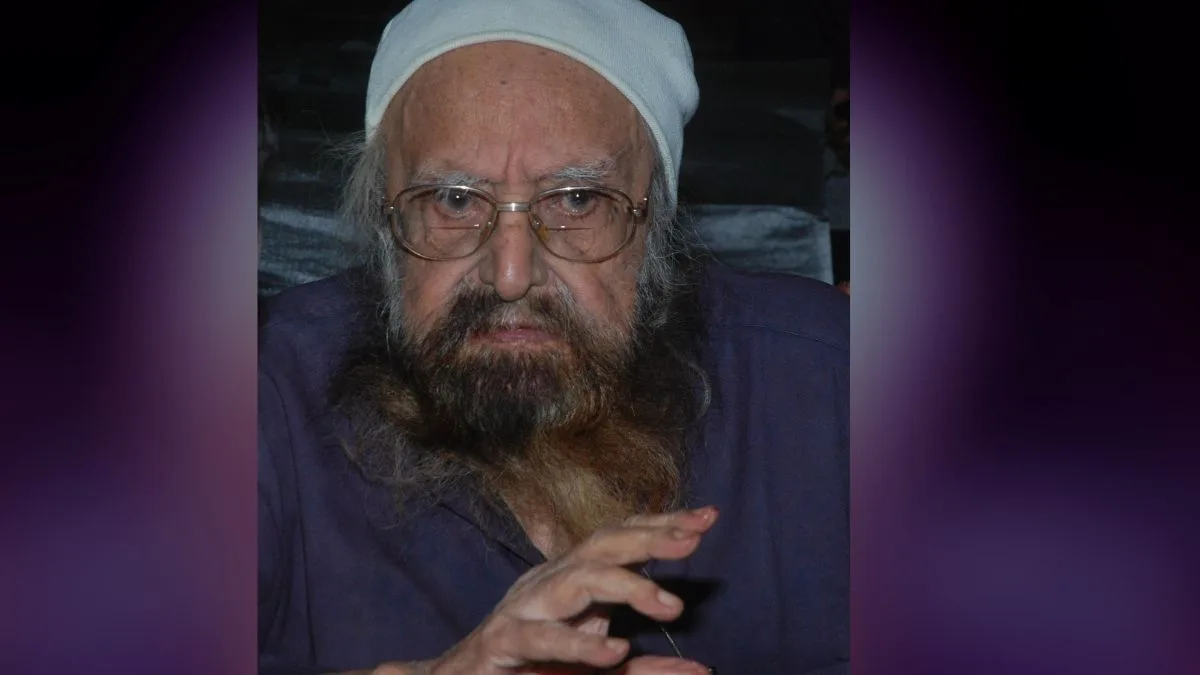
The sign beside the doorbell at Khushwant Singh’s Sujan Singh Park home in New Delhi was blunt as well as quirky, as the man was: “Don’t press the bell unless expected.” Standing there as a young journalist, still trying to find my feet in the world of writing, those words were enough to make my hands tremble. I had an appointment secured over the phone, but being at the doorstep of this literary giant felt completely overwhelming. This wasn’t just another interview. Khushwant Singh was someone I’d looked up to since I was a kid. His novel Train to Pakistan and his fearless columns had sparked my love for storytelling.
In my early days as a journalist, I was brash, chasing interviews for any publication that would have me, full of youthful confidence. But this was different.
Khushwant Singh’s reputation, as a sharp editor, prolific writer, and someone who never minced words, made me genuinely nervous. When I called him (this was before mobile phones, when getting through to someone actually meant something), his voice on the other end was surprisingly simple and direct. My throat went dry, but somehow I managed to fix a time. “Kal 3 baje aaiye” (Come at 3 tomorrow), he said, his tone gruff but not unfriendly.
The wait felt endless. Like those scenes in Mughal-e-Azam where time just stretches and stretches before something momentous happens. Those 24 hours gave me time to obsess over my questions, rephrasing them again and again, trying to match the clarity I admired so much in his writing. To calm my nerves, I actually went to Sujan Singh Park the day before, just to see the neighbourhood where he lived, to absorb the quiet elegance of it all. Like a student checking out the exam hall before the big day.
On the actual day, I made sure to arrive early. Khushwant Singh’s punctuality was legendary; he wrote about it in his memoir On Myself, how he stuck to strict schedules for writing and meetings. At exactly 3:00 p.m., the door opened. And there he was, Khushwant Singh himself. His handshake was firm and warm. “Except for the interview, talk to me in Urdu,” he said, settling into his favourite sofa, stretching his legs out onto a low stool. What followed was pure magic. We talked about Saadat Hasan Manto, Ismat Chughtai, Faiz Ahmed Faiz, Ahmed Faraz, and Firaq Gorakhpuri. His love for Urdu literature just poured out, vivid stories about their lives, beautiful shayari, all delivered with such genuine affection. You could see this love in his translations of Faiz’s poetry, too, which brought the revolutionary poet to so many readers.
The interview itself was a masterclass. His answers were crisp, to the point, completely free of fluff. Ready to type straight away, remember, this was the typewriter era when every word mattered. This precision was vintage Khushwant Singh, something he’d perfected during his years editing The Illustrated Weekly of India. Under his editorship from 1969 to 1978, the magazine became a cultural phenomenon.
Circulation jumped from around 90,000 copies to over 400,000 at its peak. He brought in bold content, sharp film reviews, hard-hitting social commentary, and features that challenged conventional thinking. He particularly enjoyed taking on Bollywood’s biggest stars, holding people like Amitabh Bachchan and Dharmendra to account for their work. His editorials, mixing humour with hard truths, made the Weekly essential reading. In an era of limited media, he shaped how people thought and talked about things.
But Khushwant Singh’s fearlessness went beyond cultural criticism into the dangerous territory of politics. During the Emergency years (1975-1977), he had a complicated relationship with the Gandhi family. He initially supported Indira Gandhi, a stance that earned him a lot of criticism, but later became vocal against her son Sanjay’s authoritarian tactics.
He wrote about this candidly in his 2004 essay ‘Why I Supported the Emergency’. His willingness to take on powerful people, even when it cost him personally, became legendary. Colleagues would later recall how he stood by his principles, completely unfazed by political pressure. This integrity defined his journalism, setting a standard for honesty at a time when censorship was trying to silence dissent. When he finally received the Padma Vibhushan in 2007, India’s second-highest civilian honour, many saw it as long-overdue recognition for someone who’d never courted official favour.
As our interview wrapped up, I couldn’t help myself. “Sir, I’ve looked up to you since I was a child,” I confessed, feeling both vulnerable and in complete awe. His response was warm and generous. “Come back anytime, but call first,” he said with a smile that softened his famously craggy face. That turned out to be our only formal interview, though I spoke to him later over the phone for work, when Qurratulain Hyder passed away in 2007, when Nirad C. Chaudhuri died in 1999, when Amrita Pritam left us in 2005, or when V.S. Naipaul won the Nobel Prize for Literature in 2001. Every conversation was a privilege. His insights were always sharp, always fresh.
Almost three decades have passed since that meeting. Khushwant Singh died on 20 March 2014, just days after what would have been his 99th birthday. The void he left in Indian journalism is impossible to fill. His legacy lives on, novels like the landmark Train to Pakistan and A History of the Sikhs, accessible histories, and countless columns that combined scholarship with earthy wisdom. What struck me most was his simplicity. He stayed in the same Sujan Singh Park flat for decades. He talked to people from all walks of life. This humility stood in such stark contrast to his towering influence. He loved good Scotch whisky (that was well-known), the nuances of Urdu poetry, and honest conversation, three things he pursued with equal passion right until the end.
Today, when corporate speak and sensationalism are eating away at what journalism should be, I miss his voice terribly. In this era that desperately needs integrity and courage, Khushwant Singh would have cut through all the noise with his characteristic wit. His absence hits me as a persistent, quiet ache, a reminder of when journalism was both an art and an act of honourable rebellion, when a columnist could shape national discourse through nothing more than clear prose and unwavering principle.
I keep coming back to Firaq Gorakhpuri’s beautiful couplet: “Aane wali naslen tum pe fakhr karengi hum asron, jab unko maloom hoga tum ne Firaq ko dekha hai” (Future generations will take pride in you, contemporaries, when they learn you witnessed Firaq). With deep respect to the poet, I’ve adapted these lines for myself: “Aane wali naslen tum pe fakhr karengi hum asron, jab unko maloom hoga tum ne Khushwant Singh ko dekha hai.” I met him. I heard that gravelly voice. I felt the force of his presence. For that singular grace, I carry a quiet pride, forever grateful that our paths crossed, however briefly, in this vast and chaotic world.
(Naseem Naqvi is a senior media person.)