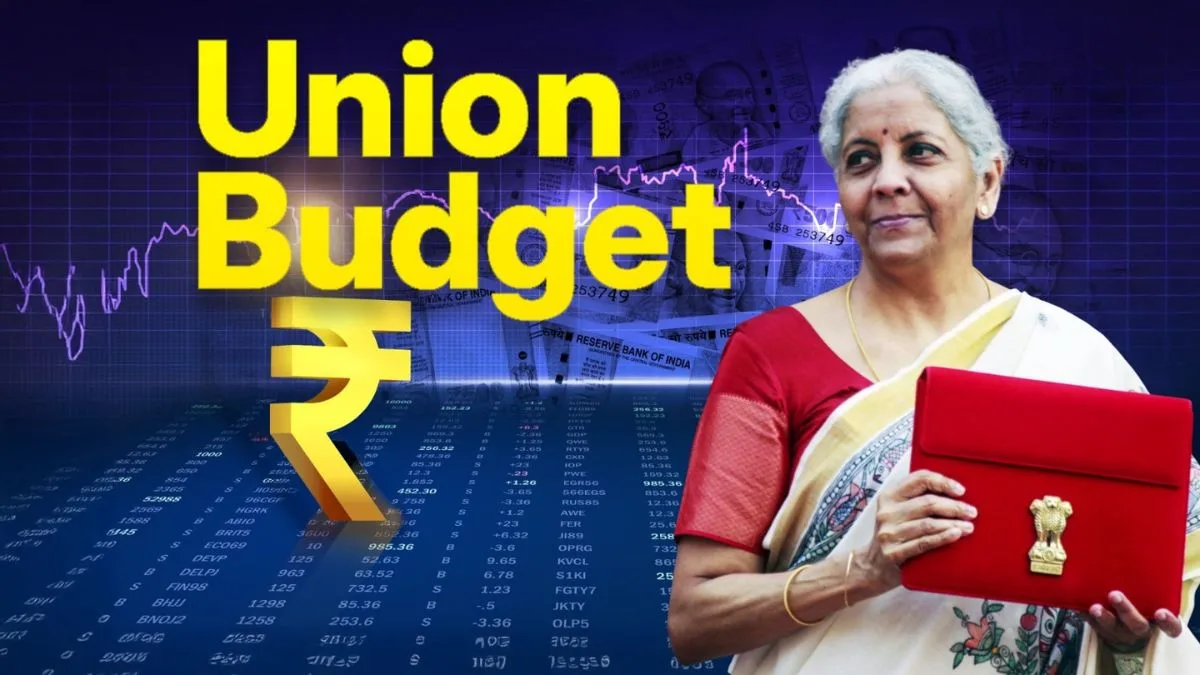
Uttar Pradesh has emerged as a central pillar in India’s development roadmap for 2026–27, with Union Finance Minister Nirmala Sitharaman outlining a series of infrastructure, tourism, social sector, and urban growth measures that closely align with the state’s geography and economic potential.
From high-speed rail corridors and inland waterway infrastructure in Varanasi to global-standard tourism development at Sarnath and Hastinapur, the new initiatives present a framework that could significantly accelerate UP’s rise as a connectivity and cultural powerhouse of North India.
Advertisement
Most of the sops announced for UP in the Union Budget 2026–27 are centred on Varanasi, which is also the parliamentary constituency of Prime Minister Narendra Modi.
Advertisement
Among the most notable developments is the creation of a ship repair ecosystem for inland waterways in Varanasi. Strategically located along the Ganga river system, this facility will support the expanding inland water transport network by enabling the maintenance and servicing of vessels operating on National Waterway-1.
The move is expected to generate skilled employment, improve logistics efficiency, and strengthen trade flows across eastern UP, reinforcing Varanasi’s growing identity as a multimodal transport hub.
Rail connectivity forms another key pillar of the state’s prominence. Two of the seven proposed High-Speed Rail growth connector corridors directly involve UP — Delhi–Varanasi and Varanasi–Siliguri. These corridors position Varanasi at the heart of a future-ready transport grid linking the national capital with eastern and northeastern India. Faster travel times and higher capacity are expected to enhance business mobility, stimulate tourism, and deepen regional economic integration.
Tourism and heritage conservation also receive a significant boost. Under a national plan to transform 15 archaeological sites into experiential cultural destinations, Sarnath and Hastinapur have been selected for development. The initiative includes curated public access, interpretation centres, conservation labs, and immersive storytelling infrastructure.
Sarnath, a major Buddhist pilgrimage site, and Hastinapur, associated with the Mahabharata era, are likely to witness upgraded visitor facilities and stronger global promotion, potentially increasing both international and domestic tourist footfall.
The measures also carry important social and healthcare interventions with wide relevance for Uttar Pradesh. District hospitals across the country will see a 50 per cent expansion in Emergency and Trauma Care Centre capacity, a step expected to strengthen critical care access in a populous state like UP, where road accidents and medical emergencies place heavy pressure on public hospitals. A new All India Institute of Medical Sciences (AIIMS) will be opened in western Uttar Pradesh, aimed at strengthening the tertiary healthcare infrastructure in the region.
Women-led rural enterprise has also been given a push. Building on the success of the Lakhpati Didi programme, the government will establish Self-Help Entrepreneur (SHE) Marts — community-owned retail outlets aimed at helping rural women transition from credit-based livelihoods to enterprise ownership. This initiative is expected to benefit women’s self-help groups across rural Uttar Pradesh by improving market access and income opportunities.
In the education sector, the government has proposed that one girls’ hostel be established in every district, particularly to support female students in higher education STEM institutions, where long study and laboratory hours pose challenges. This move could significantly improve access to and retention in higher education for girls across Uttar Pradesh. Further strengthening higher education access, Bundelkhand is set to receive an Indian Institute of Technology (IIT), a major boost for the region’s technical education landscape.
Urban development proposals further open new opportunities for the state’s expanding cities. The introduction of City Economic Regions (CERs) — supported by Rs 5,000 crore per region over five years through a challenge-based model — aims to unlock the economic potential of Tier-II and Tier-III cities, including temple towns and heritage centres. This framework aligns well with urban clusters such as Varanasi, Prayagraj, Kanpur, Gorakhpur, and emerging growth belts around Lucknow, where infrastructure expansion and economic clustering are gaining pace.
Financial innovation in city infrastructure is another area where the state stands to benefit. An incentive of Rs 100 crore for large cities issuing municipal bonds above Rs 1,000 crore encourages urban local bodies to access capital markets. Major cities such as Lucknow, Kanpur, Varanasi, Noida, and Ghaziabad could use this mechanism to fund transport systems, water supply networks, waste management, and smart city projects, reducing dependence on traditional grants while accelerating infrastructure development.
Additionally, the proposed Seaplane Viability Gap Funding Scheme and incentives for indigenous seaplane manufacturing could complement tourism circuits along the Ganga river, particularly around Varanasi and Prayagraj. Enhanced aerial connectivity to religious and heritage destinations may further strengthen Uttar Pradesh’s tourism ecosystem and create new aviation-linked service opportunities.
Urban mobility has also received a major push, with an allocation of Rs 32,075 crore for the next phases of the Lucknow, Kanpur, and Agra Metro projects, strengthening mass transit networks in key urban centres of the state and supporting cleaner, more efficient city transport systems.
A special fund has been allocated for a new industrial node in Prayagraj. Near Jewar Airport, the country’s first semiconductor design and manufacturing park has been given the green light. Budgetary support has been provided for the development of an AI city in Lucknow.
Taken together, these measures underline a strategic emphasis on Uttar Pradesh not only as a transport gateway and cultural tourism centre but also as a state where rural women’s enterprise, girls’ education infrastructure, and emergency healthcare capacity are being strengthened alongside connectivity.
Advertisement