Govt committed to modernising weather monitoring systems: Jitendra Singh
Dr. Jitendra Singh underscored the importance of real-time and impact-based weather forecasting, emphasising that no weather hazard should go undetected or unpredicted.
This information was provided by Manish Kumar, Director of the India Meteorological Department (IMD), Lucknow, here on Monday.




File Photo: IANS
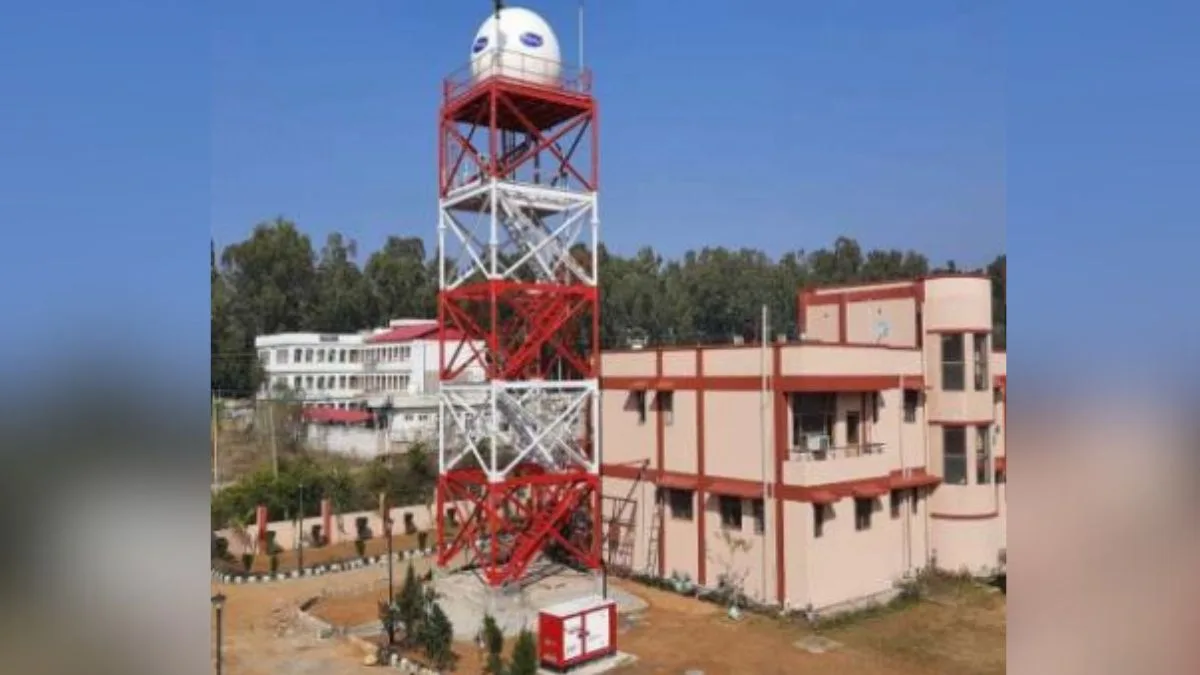
A major step is being taken to further strengthen the weather forecasting system in Uttar Pradesh. Five state-of-the-art dual-polarimetric Doppler radar systems are being installed in the state, which will become operational in the next six months.
This information was provided by Manish Kumar, Director of the India Meteorological Department (IMD), Lucknow, here on Monday.
Advertisement
He said that these radars are being installed in Lucknow, Azamgarh, Jhansi, Aligarh, and Varanasi. Four of these radars are being installed by the Uttar Pradesh government, while one radar in Varanasi is being installed by the IMD. This will ensure overlapping coverage in the radar network and significantly increase the accuracy of weather forecasts.
Advertisement
According to Manish Kumar, these advanced radars are capable of tracking the reflectivity and three-dimensional structure of clouds, which will further improve the capacity for ‘nowcasting’ or short-term weather forecasting.
Along with this, 2,450 automatic weather stations and 2,000 automatic rain gauge stations are being established at the block level across the state. This will create a robust block-level weather network throughout Uttar Pradesh.
He also informed that there is a proposal to install wind profiler radar meters in Lucknow and Varanasi. The site selection and tendering process have been completed, and these radars will become operational in the next one year, making daily weather monitoring more effective.
In addition, under IMD’s ‘Mission Mausam’ scheme, state-of-the-art observation systems will be established in Bareilly, Deoria, and Prayagraj, which will be operational in the next one and a half years. These systems will assist in surface, remote sensing, and upper atmospheric observations, strengthening forecasting accuracy and disaster management capabilities.
Senior scientist Mohammad Danish of IMD Lucknow said that the shift from traditional systems to digital systems will provide real-time data, more frequent updates, and high-quality weather data. This will make it possible to issue accurate weather warnings in a timely manner. Overall, these initiatives are expected to significantly strengthen weather forecasting, disaster management, and public safety in Uttar Pradesh.
Advertisement