If you ever believed that cracking NEET was the hardest part of becoming a doctor in India, think again. For thousands of aspirants each year, the real trauma begins after the exam—when they enter the bureaucratic labyrinth called counselling. It is here that dreams are stalled, manipulated or lost altogether—not because students lack merit, but because the system lacks logic.
Nowhere is this dysfunction more apparent than in NEET-PG, where despite hundreds of thousands of postgraduate aspirants, thousands of seats remain vacant. In 2022 alone, more than 4,000 PG seats remained unfulfilled after the final rounds—despite a shortfall of specialists in India’s public hospitals. Why? Because of a sly, semi-legal practice called seat blocking. It works like this: High-ranking candidates secure a seat in Round 1 of counselling—not because they want it, but because they can. They then wait for a more desirable seat—perhaps in a state quota, under an NRI category, or even in another private institution offering them “sponsorship”. When that better option materialises, they abandon the first seat—often at the last minute—leaving it vacant and unusable for others. It’s not just unethical; it’s an opportunistic abuse of the system, enabled by regulatory delays and poor digital infrastructure. As we discussed at length in Chapter 10, PG seat blocking has spawned an underground economy. Coaching agents and intermediaries orchestrate this seat manipulation, holding clinical seats in top private colleges like chips in a poker game. In mop-up rounds, they ‘release’ these blocked seats to lower-ranked students—sometimes in return for hefty under-the-table payments. Meanwhile, genuinely deserving candidates are left with nothing but frustration and heartbreak.
Advertisement
NEET-UG: Cleaner Surface, Cracked Core
So, is NEET-UG free of this rot? Not quite. While AIQ (All India Quota) counselling is more centralised and transparent, and withdrawal penalties are stricter, seat blocking still creeps in—particularly through state counselling overlaps and private college counselling windows. Take the case of a student who secures an MBBS seat in AIQ Round 2 but also applies under their state quota. If they later obtain a preferred seat in their home state, they withdraw from AIQ—but if this occurs after the resignation deadline, the seat remains vacant.
No new candidate can take it. Multiply this by hundreds, and the impact becomes a national tragedy: thousands of MBBS seats sitting vacant while lakhs of candidates are denied admission. The mop-up and stray vacancy rounds, intended to handle spillover admissions, have become fertile ground for manipulation—especially in deemed universities. These institutions, charging ₹25–30 lakh per year, fill their final seats with candidates who score marginally above the qualifying mark, bypassing merit through opaque internal counselling processes. Public disclosure of final seat allocation? Rare. Refunds for seat withdrawal? Don’t hold your breath.
Layered Confusion: Timelines, Rules, and Games
The root cause of this chaos? Decentralisation without coordination. AIQ, state quota, deemed universities and private colleges all conduct their own counselling with different calendars, eligibility rules and refund practices. There is no unified platform that tracks who has taken which seat, when and where. There is no real-time seat reallocation system, and there is no accountability for seats wasted due to late dropouts or parallel counselling processes. Even reservation policies, crucial in a country like India, are applied inconsistently. While AIQ follows a standard template (SC, ST, OBC, EWS), states superimpose their own quotas—some o er domicile weightage, whilst others have in-service reservations. The result is confusion, litigation and last-minute surprises, particularly for students from economically weaker or rural backgrounds who lack access to counselling expertise. For many students, simply understanding the process becomes a challenge. Complex online portals, non-uniform eligibility documents and short response windows make it easier to make mistakes than to succeed. Consultants step in—some ethical, many predatory. And amid the chaos, merit takes a back seat to manipulation.
What Needs Fixing – And Fast
Let’s be clear: the problem isn’t counselling per se—it’s how poorly synchronised, gamified and opaque the system has become. If NEET was meant to unify and simplify medical admissions, the counselling process has achieved exactly the opposite. India needs a Uni ed National Medical Admissions Portal—one that integrates All India Quota, state quota, deemed universities and private colleges, with a real-time vacancy dashboard, a single resignation cut-off and automated reallocation of vacated seats. Every candidate should have one registration, one ID and one transparent trail. Counselling calendars must be aligned, with no more state-AIQ overlaps or ghost seats. All institutions must follow standardised refund and penalty rules, which should be publicly disclosed and enforceable by the National Medical Commission (NMC). Deemed universities and private colleges must be subjected to strict auditing during stray vacancy rounds. Every filled seat must be logged, and every vacant seat must be publicly listed. No secrecy can be permitted, and seat hoarders should not be given second chances.
The process must become more inclusive. While digital, the current system is not user-friendly for rural or first-generation learners. Counselling portals should be available in multiple languages, supported by AI chatbots and backed by state-run helplines and school outreach programmes that explain counselling as clearly as a biology diagram.
End the Game Before It Kills the Dream
Every MBBS seat blocked represents a dream denied. Every PG seat left vacant means a hospital without a specialist. Every loophole betrays the faith that millions of young Indians place in the fairness of national examinations.
The Indian medical education system requires more than just additional seats. It needs a superior seat allocation system that is transparent, real-time and resistant to manipulation. When our brightest minds compete for futures in medicine, the least we can offer them is a system that rewards merit rather than manoeuvring. Until then, the NEET rank won’t be the nish line—it will merely be the entry point to another battle.
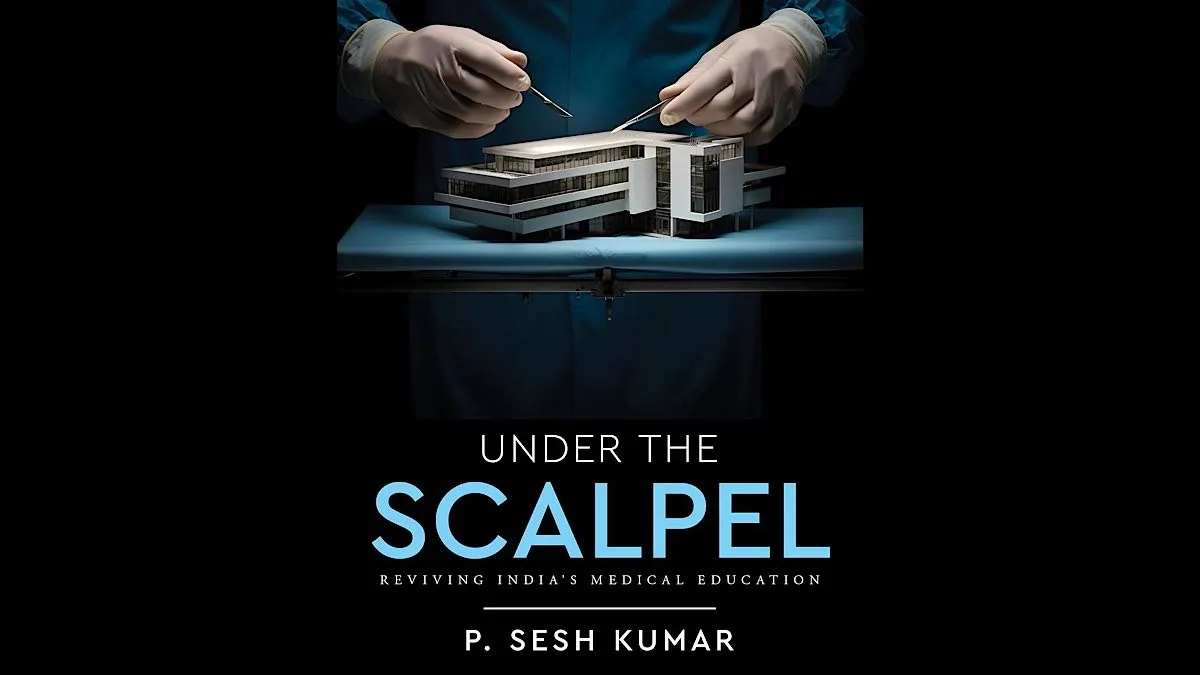
(Excerpted from Under The Scalpel: Reviving India’s Medical Education by P. Sesh Kumar, published by White Falcon Publishing)